The quarter-final between France and Morocco scheduled for Thursday carries layers of meaning that extend far beyond the 90 minutes of football. The two nations meet in Boston carrying a complex historical relationship spanning more than a century, one that has woven itself into the very fabric of their teams. From players developed in French academies to the personal friendships forged between stars like Kylian Mbappe and Achraf Hakimi at Paris Saint-Germain, the sporting connection reflects something deeper than typical international rivalry.
Morocco's status as a French protectorate from 1912 until 1956 created lasting bonds between the countries that persist through education, commerce, and the movement of people. These connections have become increasingly visible in football, where the sport has emerged as one of the clearest windows into understanding the bilateral relationship. The match in Boston may feel different from the charged atmosphere likely to surround the fixture in France itself, where security concerns are expected to be significant. The American setting promises something closer to a family gathering than a geopolitical confrontation.
The composition of Morocco's squad demonstrates how effectively the North African nation has harnessed its diaspora as a competitive asset. Six members of the squad were born in France, while numerous others gained their early development in French clubs or passed through the country's youth system before pledging their allegiance to Morocco. This pattern reflects a deliberate strategy by Morocco's football federation to identify talent within its global diaspora and channel it back toward the national team. The approach has proven remarkably successful, turning what could be viewed as a brain drain into a source of strength.
Ayyoub Bouaddi exemplifies this dual identity that defines the Morocco-France relationship in modern football. The teenager was born in France, refined his skills at Lille, represented France at youth levels, yet ultimately chose to play for Morocco. His journey encapsulates the overlapping footballing identities that give this fixture particular resonance for observers across both nations. Such players carry France within them even as they wear Morocco's colours, embodying the inseparability of the two countries' sporting histories.
France arrives in Qatar as defending world champions from 2018, carrying the weight of expectation that comes with being one of football's established superpowers. The squad demonstrates the multicultural currents that have long defined French football, a reality that the previous Morocco encounter in 2022 only underscored. That meeting, which France won 2-0, carried emotional intensity but also a sense of mutual recognition between two sides whose player pools draw from overlapping populations and shared spaces.
Morocco's progress since that 2022 encounter has fundamentally altered the dynamic of their rivalry. No longer simply the compelling underdog story that captivated global audiences four years ago, Morocco has established itself as a genuine challenger to football's traditional powers. Their achievement in becoming the first African nation to reach a World Cup semi-final has bred confidence and belief within the squad. The organisation evident in their tactical approach and the quality of their player development suggest they are no longer teams to be pitied but feared.
The Moroccan community in Boston and the wider metropolitan area, while smaller and less visible than in French cities, has established roots through residents who have built networks of families, students, professionals, and businesses. For these supporters, the quarter-final will not necessarily divide loyalties cleanly. Mohammed Saadi, a 57-year-old taxi driver, captures the sentiment precisely: neighbours living in the same buildings will watch together, shake hands afterward, and view the match through the lens of shared experience rather than tribal allegiance. The absence of tension reflects the reality that for many, soccer functions as a unifying force transcending national borders.
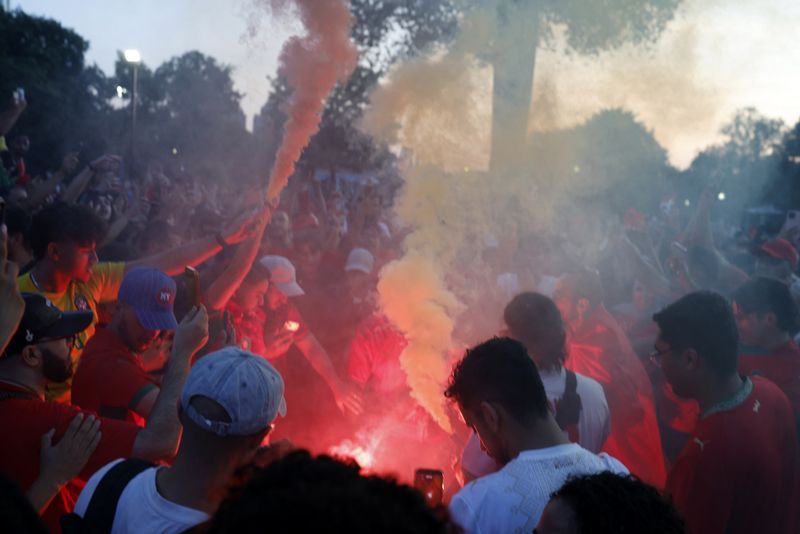
The atmosphere preceding the match has already demonstrated this character. In Boston Common, over a thousand supporters gathered to celebrate, singing Dima l-Maghrib and waving flags in what organizers described as a peaceful assembly. Youssef Bennani, a 36-year-old software engineer who travelled from Finland to follow Morocco's campaign, described the setting as the best location yet, noting that he has encountered both Moroccan and French supporters in an atmosphere poised to become a celebration rather than a confrontation.
Morocco's tactical approach has matured considerably since the previous encounter with France. Their demolition of Canada by a scoreline of 3-0 revealed a side combining pace, discipline, and genuine ambition. The federation's strategy of connecting domestic development with talent cultivated in Europe has created a squad capable of matching France's intensity and technical quality. Where once Morocco might have been content to frustrate a superior opponent, they now possess the confidence and organisation to impose their own style of play.
France, having dispatched Paraguay to reach the quarter-finals, cannot afford complacency. While their attacking potency has been among the tournament's most impressive, Morocco has demonstrated that defensive solidity and counter-attacking speed can neutralise even the most threatening offences. The French team will be acutely aware that they face opponents who have grown considerably since their previous meeting, a side that understands them intimately through shared players, coaching networks, and the constant traffic of talent between the two football ecosystems.
The Boston setting itself holds symbolic weight for a fixture laden with historical and cultural resonance. Away from the intense security apparatus that will characterise the match's reception in France, the American location allows for something more reflective of the actual relationship between these two football communities. Boston's established Moroccan population and its French speakers create a neutral ground where the match can be viewed for what it truly represents: not a clash between enemies, but a meeting between nations whose destinies have been intertwined for over a century, now expressed through the universal language of football.

