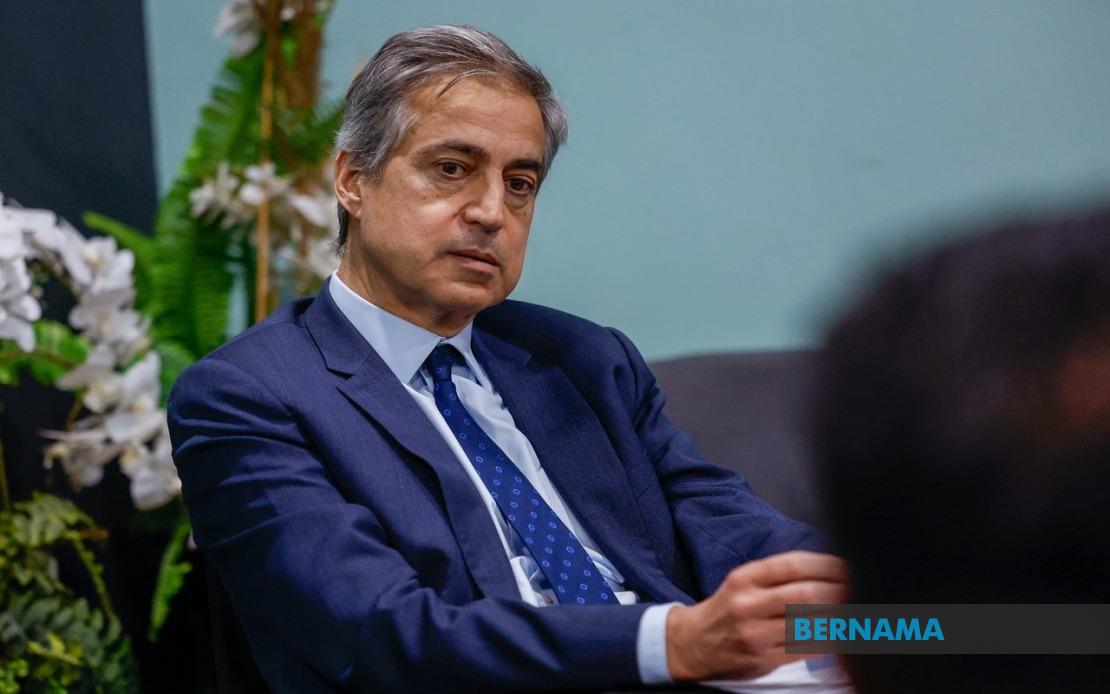
France and Malaysia are committed to broadening their partnership as both nations work to foster cooperation in an increasingly polarized international landscape, according to French Ambassador to Malaysia Marc Abensour. Speaking at a French National Day reception held at the ambassador's residence in Kuala Lumpur on Tuesday evening, Abensour emphasized that the two countries share a responsibility to build constructive bridges across global divisions rather than allow fragmentation to deepen.
The ambassador framed the relationship as multifaceted, extending well beyond traditional diplomatic courtesy. Economic cooperation forms the backbone of this expanding engagement, complemented by robust educational, cultural, and interpersonal connections that continue to strengthen the bond between Paris and Kuala Lumpur. This diversified approach reflects a deliberate strategy to anchor bilateral ties across multiple societal layers, making the partnership more resilient and mutually beneficial.
Bilateral trade figures underscore the practical depth of the relationship. Commerce between the two countries expanded by 11 per cent during the previous financial year, a significant acceleration that points toward deepening market integration. More tangibly, approximately 600 French enterprises currently maintain operations across Malaysia, collectively generating employment for more than 30,000 Malaysian workers. These companies span various sectors, contributing not only to Malaysia's economy but also transferring technical expertise and fostering skill development within the local workforce.
Malaysia's strategic importance to French capital flows extends beyond regional considerations. The country ranks among the world's top ten destinations for French foreign direct investment, placing it in an exclusive tier of nations that attract sustained French business confidence. This elevated status reflects both Malaysia's stable investment environment and the confidence French corporations maintain in the country's long-term economic trajectory, particularly given its position as a regional economic and financial hub.
Cultural and educational dimensions of the partnership carry particular significance for understanding the depth of France-Malaysia relations. The French language serves as a bridge connecting the two societies, with more than 3,700 Malaysian candidates annually pursuing formal French-language certification. This places Malaysia in third position across Asia for French language learners, trailing only India and China—a remarkable achievement for a Southeast Asian nation and testament to sustained cultural interest in France among Malaysian society. Language proficiency traditionally correlates with deeper cultural understanding and stronger people-to-people networks, suggesting that future generations of Malaysian professionals will maintain connections to French institutions, universities, and business environments.
The reception itself reflected the cosmopolitan nature of contemporary diplomacy. Federal Territories Minister Hannah Yeoh attended as guest of honour, underscoring the Malaysian government's commitment to the bilateral relationship at ministerial level. The gathering attracted approximately 800 attendees, including senior government officials, diplomatic corps members, and ambassadors representing diverse nations. This broad attendance reflected both the stature of Franco-Malaysian relations and the inclusive nature of French diplomatic engagement within Malaysia's multicultural context.
The carefully curated program demonstrated cultural sensitivity and diplomatic sophistication. While organizers offered traditional French cuisine to guests, a Malaysian durian-tasting station provided authentic local flavor, symbolizing mutual respect for each nation's distinct culinary traditions. Such details matter in diplomatic events, as they communicate genuine appreciation for the host nation's identity rather than imposing a purely French template on the occasion. The blending of culinary cultures mirrored the broader message of complementary partnership rather than cultural dominance.
French National Day itself carries symbolic weight beyond mere ceremonial significance. Celebrated annually on July 14, the observance commemorates the Storming of the Bastille in 1789, a foundational moment in the development of modern democracy and human rights frameworks. By highlighting values of liberty, equality, and fraternity, France positions these universal principles as shared aspirations that transcend national borders. For Malaysia, a multiethnic democracy navigating its own questions of inclusivity and equal opportunity, these resonances carry contemporary relevance.
The timing of expanded France-Malaysia engagement warrants consideration within broader geopolitical contexts. As major powers increasingly pursue strategic competition and regional blocs consolidate, European nations including France seek to maintain meaningful relationships with key Southeast Asian economies. Malaysia's strategic location along vital shipping routes, its role within regional institutions like ASEAN, and its significance as both an economic actor and diplomatic voice position it as an invaluable partner for France's Indo-Pacific strategy. Similarly, Malaysia benefits from maintaining strong connections with established Western economies while navigating great power tensions.
The breadth of Franco-Malaysian cooperation—spanning trade, investment, language, culture, and education—suggests a relationship designed to withstand fluctuations in any single dimension. This diversification provides resilience; if economic ties face headwinds, cultural and educational connections remain robust. For Malaysian policymakers, deepening relationships with France and other European nations offers strategic hedging opportunities, ensuring that the country maintains strong partnerships across multiple geopolitical axes rather than concentrating diplomatic and economic eggs in limited baskets.
Looking forward, the stated commitment to building bridges amid global fragmentation may prove increasingly valuable. As international tensions rise and cooperation frameworks fracture, nations that cultivate genuine, multidimensional partnerships position themselves to influence outcomes and protect interests. France and Malaysia's expanding engagement, grounded in practical economic benefits and enriched by cultural resonance, exemplifies the kind of pragmatic yet principled partnership that can help stabilize regional and global affairs during periods of heightened uncertainty.

