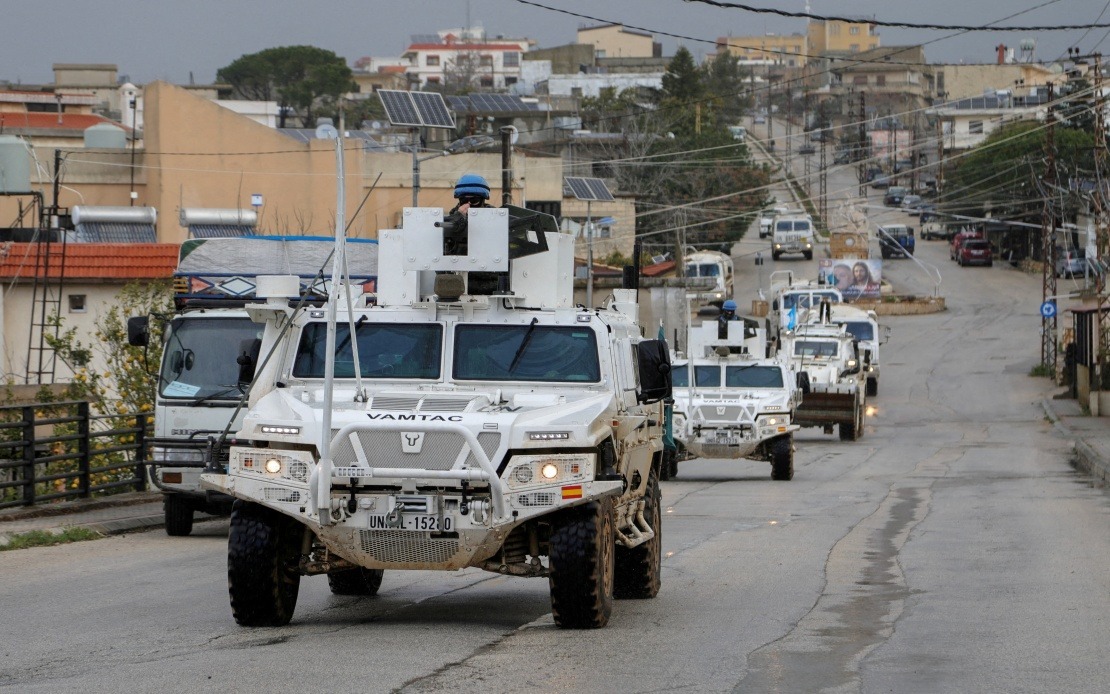
France and Italy have pledged to create a multinational coalition designed to maintain stability in Lebanon once the United Nations Interim Force in Lebanon concludes its decades-long mission on December 31, according to French President Emmanuel Macron. The two European nations outlined their coordinated strategy during a bilateral meeting in Antibes, signalling a decisive European commitment to preventing a power vacuum in the strategically significant Levantine state.
Macron framed the proposed arrangement as essential to preserving Lebanon's independence and strengthening its military institutions during a vulnerable transition period. The initiative would operate in tandem with both the European Union and United Nations structures, ensuring that international mechanisms remain aligned in their approach to Lebanese security. This coordination reflects broader European concerns about the fragility of Lebanon's institutions and the potential for renewed conflict if adequate safeguards are not in place during the withdrawal.
Italian Prime Minister Giorgia Meloni reinforced the French position, emphasising that an international military and diplomatic presence represents the only viable mechanism for preventing what she characterised as an "extremely dangerous" security vacuum. Her language underscored the acute concern among Western capitals that Lebanon's ability to maintain internal order and prevent destabilising external actors from consolidating influence remains contingent on sustained external support. The convergence between Paris and Rome suggests a unified European response to one of the Mediterranean's most pressing challenges.
The context for this initiative stems from Security Council Resolution 2790, which mandates that UNIFIL operations must conclude on December 31, with a complete personnel withdrawal scheduled to be finalised within twelve months thereafter. UNIFIL has maintained a continuous presence in southern Lebanon since 1978, serving as a buffer between Israeli forces and Hezbollah-aligned militias. The impending withdrawal thus marks a watershed moment in regional security arrangements, creating urgent necessity for alternative mechanisms to prevent the resumption of hostilities or the emergence of ungoverned spaces.
From a Malaysian and Southeast Asian perspective, the Lebanon crisis carries instructive lessons regarding regional stability and the role of international peacekeeping. Malaysia, as a long-standing supporter of UN peacekeeping operations globally, has deployed personnel to various missions and understands the delicate dynamics of maintaining neutrality while supporting sovereign state capacity. The French-Italian initiative demonstrates how developed nations with strategic interests leverage multilateral frameworks to advance their security objectives while maintaining diplomatic legitimacy through UN coordination.
The proposed coalition faces substantial implementation challenges that extend beyond operational logistics. Lebanon's internal political fractures, rooted in its complex confessional system and competing militia allegiances, mean that any external security presence must navigate treacherous sectarian terrain. The coalition's success will depend not merely on military positioning but on its capacity to support legitimate Lebanese state institutions whilst restraining the influence of non-state actors, particularly Hezbollah, which has deep roots in Lebanese society and significant popular support among Shia communities.
The European approach also reflects recognition that traditional peacekeeping models may prove inadequate for contemporary conflicts characterised by asymmetric threats and non-state armed groups. A multinational coalition structure offers greater operational flexibility than formal UN missions, permitting participating nations to adjust their rules of engagement and force posture in response to evolving security conditions. However, this flexibility also introduces questions about accountability and the potential for mission creep beyond originally articulated parameters.
Economically, Lebanon's severe financial crisis and currency collapse have weakened the state's capacity to absorb security assistance or implement institutional reforms. The incoming coalition will encounter a Lebanese government struggling with basic service delivery, capital controls, and widespread public frustration. International security guarantees alone cannot resolve Lebanon's fundamental economic and governance dysfunction, suggesting that the coalition's long-term viability depends on complementary international programmes addressing economic stabilisation and institutional development.
Regionally, the Franco-Italian initiative signals European determination to maintain influence in the Eastern Mediterranean during a period of shifting geopolitical alignments. As China, Russia, and Gulf states expand their regional engagement, the European initiative represents an attempt to preserve Western-aligned influence through burden-sharing arrangements between France and Italy. For Southeast Asian nations monitoring broader power competition, the Lebanon case illustrates how smaller states become focal points for great power competition and how external security arrangements can either stabilise or complicate internal political dynamics.
The success of the coalition will significantly influence international approaches to similar post-conflict stabilisation challenges elsewhere. If France and Italy can construct an effective model that prevents security deterioration whilst respecting Lebanese sovereignty and gradually enabling indigenous capacity, it could establish a template for future operations. Conversely, if the coalition proves ineffectual in preventing renewed violence or if participating nations face domestic pressure to withdraw, it would reinforce scepticism about multinational military interventions in deeply divided societies.
The announcement also raises questions about broader European defence autonomy and the implications for NATO structures. France has long advocated for European strategic independence, and this Lebanese initiative represents concrete expression of that vision through formats that operate outside traditional alliance structures. The coalition's composition and mandate will therefore carry symbolic significance beyond Lebanon itself, signalling European willingness to act decisively on regional security matters.

