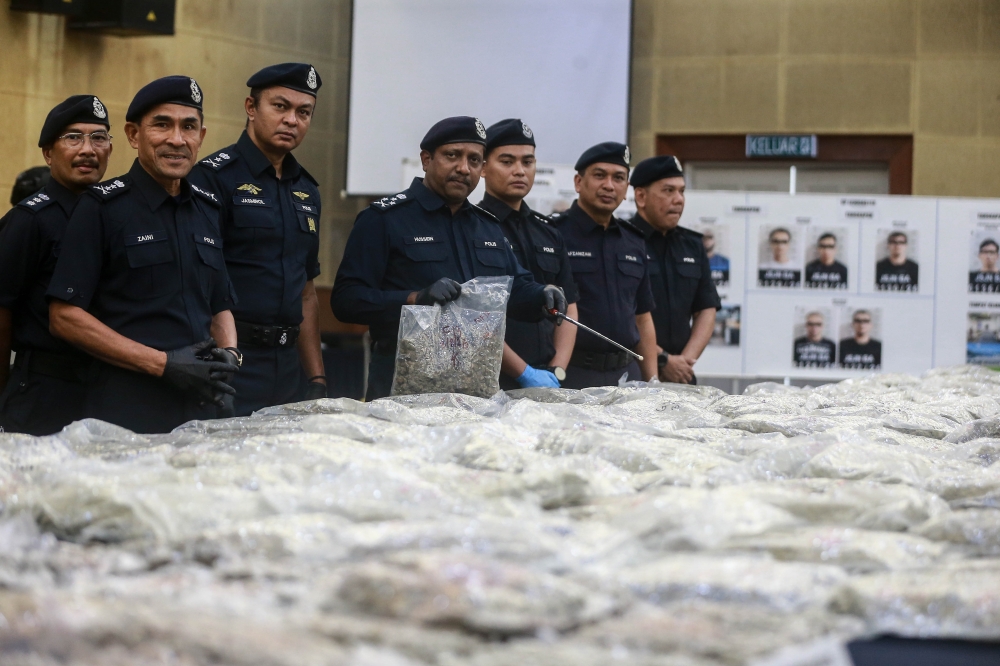
Since January this year, Malaysian law enforcement agencies have documented at least 14 cases of Malaysian nationals detained in foreign jurisdictions on charges connected to drug trafficking. The arrests, announced by police authorities in Shah Alam, underscore a troubling pattern of participation by Malaysians in international narcotics smuggling networks that exploit the country's strategic geographic position and major aviation infrastructure.
The cases reveal how KLIA functions as a critical node in transnational drug trafficking chains. Rather than Malaysia serving merely as a destination market, evidence suggests organised syndicates are deliberately positioning Malaysian citizens as couriers and facilitators in global supply networks. The arrests span multiple countries, indicating that these operations are not isolated incidents but part of coordinated international schemes. Law enforcement officials have indicated that investigation teams are actively mapping connections between arrested individuals and suspected handlers operating from within Malaysia.
The strategic choice of KLIA reflects calculations by trafficking organisations about hub vulnerabilities. As Southeast Asia's busiest airport and a major regional transit centre, KLIA processes hundreds of thousands of passengers monthly, creating opportunities for smugglers to blend contraband into mainstream passenger flows. The airport's role as a connecting point for flights heading to Europe, the Middle East, and Australia makes it particularly valuable for syndicates seeking to move drugs into markets offering higher profits than domestic consumption would provide.
What distinguishes these cases from historical patterns is the apparent deliberate recruitment of Malaysian nationals into courier roles. Rather than foreign traffickers moving drugs through Malaysian territory, organised groups appear to be systematically enlisting Malaysians—often young adults facing economic pressures—as mules for international shipments. This shift suggests that criminal organisations have identified Malaysian citizens as relatively trustworthy operatives, whether because of perceived lower suspicion at border controls or because of existing family and community networks that facilitate recruitment.
The geographic distribution of arrests provides important analytical insight. Cases spanning multiple continents indicate that Malaysia's role extends beyond a simple transit country to become a hub where drug parcels are consolidated, repackaged, and dispatched toward final destinations. Australian authorities, in particular, have reported multiple intercepts of Malaysian-origin shipments, suggesting that Oceania represents a significant end market for networks operating through KLIA. Similarly, arrests in Middle Eastern countries point to trafficking toward that region, where demand for certain drug categories remains substantial.
For Malaysia's law enforcement apparatus, these developments present significant operational challenges. International arrests complicate investigations since evidence must often be gathered through diplomatic channels, with cooperation between Malaysian authorities and foreign police services essential for building coherent cases. The distance between Malaysian investigators and detained nationals means that obtaining detailed statements and tracing connections back to domestic handlers becomes considerably more difficult than investigations centred within Malaysia's jurisdiction.
The implications for Malaysia's international standing merit consideration. The country's reputation as a reliable aviation and business hub depends partly on perceptions of security and effective governance. Drug trafficking cases involving Malaysian nationals arrested abroad risk reinforcing negative stereotypes about Malaysia's role in regional organised crime. Neighbouring countries scrutinising KLIA operations may implement more stringent security protocols, potentially affecting Malaysia's competitive position as a regional aviation hub and increasing operational costs for legitimate businesses utilising the airport.
From a broader Southeast Asian perspective, these arrests reflect how globalised drug markets now operate across the region. Criminal organisations have learned to distribute risk by recruiting operatives from multiple countries rather than concentrating trafficking activity within single jurisdictions. Malaysia's relatively stable political and security environment, combined with its aviation infrastructure and geographic position, makes it an attractive operating base for international syndicates. Without regional cooperation on intelligence sharing and coordinated enforcement, individual countries struggle to dismantle networks that deliberately operate across borders.
The police announcements indicate that investigations are ongoing and that authorities are attempting to identify command structures behind arrested individuals. Establishing whether these are cases of independent operators or whether they represent coordinated activity by larger syndicates remains crucial for understanding the scale of the problem. If investigations reveal highly organised networks systematically using Malaysia as a hub, the implications for both domestic and regional security policy would be substantial.
Looking forward, Malaysia's response will likely involve enhanced screening protocols at KLIA, intensified liaison with international counterparts, and possibly targeted operations against suspected recruitment networks. The cases also underscore why strengthening intelligence capabilities and cross-border information sharing represents a priority for regional security cooperation. Without addressing the underlying infrastructure that allows syndicates to operate across multiple jurisdictions, individual arrests—though important—represent only tactical responses to a strategically coordinated criminal challenge that continues to evolve.

