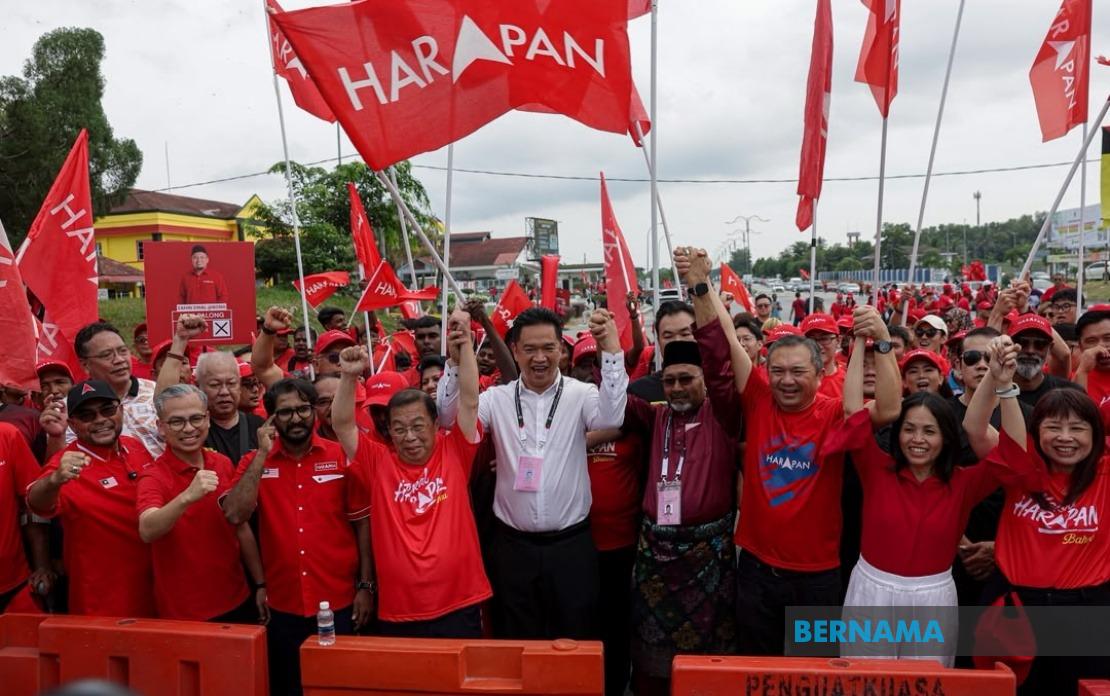
Jeram Padang has become the focal point of an unusually fragmented electoral battle in the Jempol state constituency, with four distinct political camps preparing to contest the seat in the upcoming 16th Negeri Sembilan State Election. The returning officer, Amino Agos Suyub, confirmed the multi-cornered nature of this contest after the nomination process concluded on July 18, marking a departure from the simpler two and three-cornered contests taking shape elsewhere in the constituency.
The complexity of the Jeram Padang race reflects the evolving political landscape in Negeri Sembilan, where traditional two-party competition has given way to a more fractured opposition. Four candidates filed their nomination papers in quick succession, each representing a distinct political narrative. G. Manivannan, backed by Pakatan Harapan, filed at 9.17 am and subsequently received support from PH Communications director Datuk Seri Fahmi Fadzil, underscoring the coalition's commitment to the seat. The timing of his nomination was notable given that it followed three other filings within a span of just eleven minutes, suggesting intense last-minute jostling among contenders.
The incumbent representative, Datuk Mohd Zaidy Abdul Kadir of Barisan Nasional, remains the benchmark candidate in this contest, seeking to retain his position against a divided opposition field. His arrival at the nomination office at 9.20 am, slightly after his challengers, completed the roster of four candidates. Mohd Zaidy's incumbency advantage may prove decisive in a fragmented race where the opposition vote is split among multiple players, a dynamic that could work in favour of the more established political machinery represented by BN.
Peith Pribumi Bersatu Malaysia has fielded R. Sri Sanjeevan in Jeram Padang, the first candidate to submit nomination papers at 9.09 am. Bersatu's participation in the contest adds another layer of complexity to the electoral equation, as the party has positioned itself as an alternative to both the federal government coalition and the traditional opposition. The party's performance in this particular seat will provide insights into its electoral viability in Negeri Sembilan, where it has been building its organisational presence.
The most distinctive element of the Jeram Padang contest is the candidacy of Dayana Dal, representing Parti Orang Asli Malaysia (Asli), making her the sole indigenous candidate competing for this seat. Her presence in the race highlights the growing assertion of Orang Asli political interests within state-level contests. By fielding a candidate specifically from the Orang Asli community, the party seeks to mobilise this often-marginalised segment of the electorate and challenge assumptions about voting patterns in constituencies with significant indigenous populations.
Beyond Jeram Padang, the electoral landscape in Jempol presents a more conventional political arrangement. The Serting state seat is positioned for a three-cornered contest involving PH's Yaacob Mahmood, the incumbent Mohd Fairuz Mohd Isa representing Perikatan Nasional, and Muhammad Noraffendy Mohd Salleh of Bersatu. This configuration suggests that PN retains sufficient ground organisation to field an incumbent, though the challenge from both PH and Bersatu indicates a competitive environment.
The Palong state seat will similarly witness a three-way battle, with incumbent Datuk Mustapha Nagoor of Barisan Nasional defending his position against Muhammad Zahin Zinal Abidin of PH and Rebin Birham of Bersatu. The BN incumbent's retention of the seat will be crucial for the coalition's overall performance in Jempol, as it provides a foundation upon which to build additional gains or at minimum demonstrate resilience.
In contrast, the Bahau state seat represents a return to conventional two-party competition. Incumbent Teo Kok Seong of the Democratic Action Party, representing PH, faces a challenge from Chong Fui Ming of the Malaysian Chinese Association, the BN candidate. This straight fight format indicates a polarised electorate in Bahau, where neither Bersatu nor other smaller players have chosen to contest, suggesting confidence in one of the two major coalitions among local political actors.
The Election Commission has scheduled early voting for July 28, providing voters with an opportunity to cast their ballots before the official polling day on August 1. This timeframe allows campaigns approximately ten days from the close of nominations to mobilise voters and present their respective visions for Negeri Sembilan's future governance. The compressed campaign period adds urgency to candidate outreach efforts, particularly in constituencies like Jeram Padang where four competing messages must resonate with voters simultaneously.
The electoral configuration in Jempol carries broader implications for Malaysian politics beyond the state level. The presence of multiple candidates in Jeram Padang reflects the ideological and organisational fragmentation that has characterised Malaysian politics since 2018, with Bersatu and Asli representing newer entrants challenging the BN-PH duopoly. The extent to which voters embrace or reject these alternatives will influence calculations about coalition viability at future national elections.
For Negeri Sembilan's political trajectory, the Jempol constituency results will be particularly significant. The state has served as a testing ground for various political combinations, and the performance of candidates in this election will provide early indicators of voter sentiment heading into potential federal elections. The outcome in Jeram Padang, in particular, will demonstrate whether Malaysian voters are prepared to support candidates from newer political formations or whether incumbency and established party machinery continue to command electoral loyalty.

