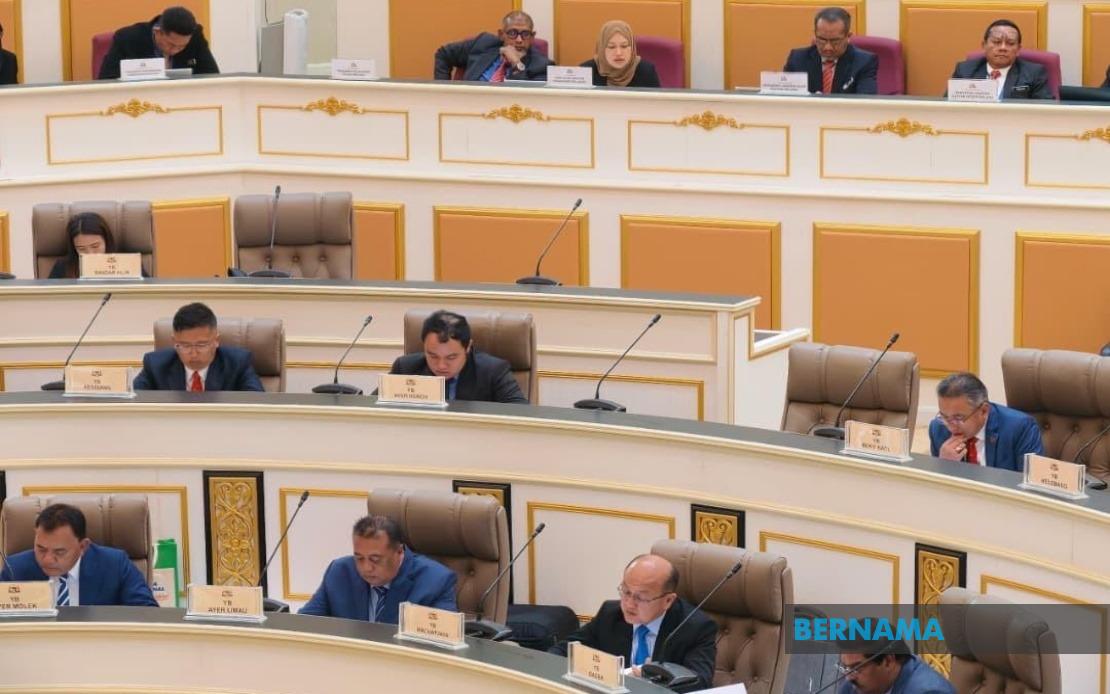
A significant political rupture fractured the Pakatan Harapan coalition in Melaka on the final sitting of the state assembly, as four DAP assemblymen physically relocated to the opposition benches following their party's dramatic exit from the ruling coalition. The symbolic move underscores escalating tensions within the state's governing structure and marks another reversal in the volatile political landscape that has characterized Melaka since 2020.
The four assemblymen crossing the floor are Allex Seah Shoo Chin representing Kesidang, Low Chee Leong from Kota Laksamana, Leng Chau Yen of Banda Hilir, and Kerk Chee Yee from Ayer Keroh. Their repositioning places them alongside members of Perikatan Nasional and Independent assemblymen in the opposition section of the chamber, physically manifesting the party's rupture with the government. The change was precipitated by DAP's announcement the previous day that it would terminate its support for the Barisan Nasional administration, a decision that sent shockwaves through Melaka's delicately balanced political equation.
The catalyst for this dramatic departure centres on constitutional amendments that the State Legislative Assembly passed, which would enable the appointment of nominated assemblymen without election. For DAP, this represented a fundamental betrayal of democratic principles. Party chairman Khoo Poay Tiong articulated the reasoning behind the withdrawal, framing the constitutional changes as antithetical to the foundations of electoral democracy. This objection reflects broader ideological positioning within DAP, which has traditionally positioned itself as a guardian of constitutional governance and electoral integrity.
However, the split was not monolithic across the PH coalition. Adly Zahari, the sole assemblyman from Parti Amanah Negara and concurrent chairman of Melaka Pakatan Harapan, maintained his position alongside government legislators rather than following his DAP colleagues into opposition. This differentiated response illustrates the complexity of coalition dynamics, where constituent parties can hold divergent policy positions even within the same electoral alliance. Zahari's decision to remain with the government bloc suggests either a different strategic calculation or disagreement with DAP's approach to the constitutional matter.
Prime Minister Datuk Seri Anwar Ibrahim had sought to forestall this outcome the previous evening, urging Melaka DAP to delay their decision in hopes of maintaining focus on development and public welfare. His intervention, while unsuccessful in this instance, reveals the federal government's investment in preserving the BN-led state administration in Melaka. The appeal to developmental priorities over partisan positioning reflects a broader governance narrative, though DAP evidently concluded that constitutional principles superseded such pragmatic considerations.
Assembly Speaker Datuk Ibrahim Durum attempted to frame the proceedings with calls for discipline and adherence to parliamentary decorum, entreating all members to conduct themselves with courtesy and respect for house rules during the sitting. Such appeals are customary when legislative bodies experience significant internal realignments, serving to maintain institutional legitimacy even as political alignments shift dramatically. The speaker's role becomes particularly important in moments of heightened tension, when maintaining procedural order becomes essential to the chamber's functioning.
Melaka has emerged as a flashpoint for Malaysia's broader coalition instability, with governing arrangements shifting multiple times in recent years as assemblymen change allegiances and party positions evolve. This latest development suggests that even within ruling coalitions, fundamental disagreements over governance principles can override short-term coalition maintenance. The constitutional amendment question—particularly whether unelected representatives should be permitted within democratic legislatures—touches on questions that resonate beyond Melaka's boundaries.
For Malaysian observers and regional watchers, this episode illustrates how subnational politics can crystallize national political contradictions. DAP's principled stance against nominated assemblymen echoes the party's broader emphasis on electoral integrity, yet this commitment came at the cost of surrendering executive influence in a state government. The decision prioritizes ideological consistency over pragmatic power-sharing, raising questions about how parties balance principle against influence in multi-party democracies.
The implications extend to the stability of Barisan Nasional's position in Melaka. With four DAP representatives now in opposition, the government's numerical strength in the assembly has contracted. This development may encourage additional political realignments or necessitate adjustments to the administration's legislative strategy. The Perikatan Nasional presence in the opposition benches adds another layer of complexity to state-level parliamentary mathematics.
Looking forward, this rupture may influence how other states manage coalition relationships and handle constitutional amendments affecting legislative composition. If similar constitutional changes are proposed elsewhere, legislators may reference the Melaka precedent when evaluating their own party affiliations. The question of whether assemblymen should be appointed or exclusively elected remains contentious across Malaysian politics, touching on fundamental questions about representation and democratic legitimacy.
The physical relocation of the four DAP members from government to opposition benches, while a procedural adjustment, carries symbolic weight in parliamentary systems where seating arrangements communicate political alignment. This visualization of political separation reinforces the material reality of DAP's withdrawal, making the split concrete and visible to the public, media, and fellow legislators. What began as a policy disagreement thus became a structural realignment within the state assembly's architecture.

