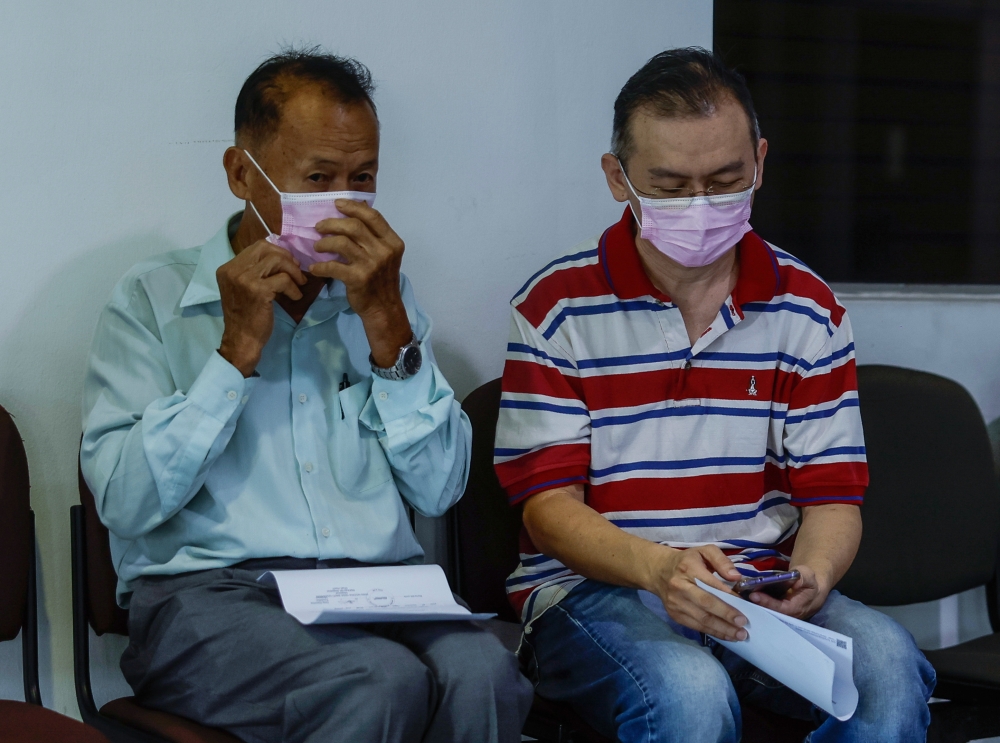
Four individuals appeared before the Sessions Court in Shah Alam on Wednesday to face charges related to submitting fraudulent applications for the Perkeso Daya Kerjaya 2.0 programme, a government initiative designed to support workers navigating economic transitions and employment challenges across Malaysia. The case underscores growing concerns about misuse of federally-funded social assistance schemes and represents authorities' efforts to maintain programme integrity during a period of significant economic uncertainty.
The Perkeso Daya Kerjaya 2.0 scheme operates under Malaysia's social security administration framework, offering employment assistance, skills training, and financial support to workers displaced or affected by economic downturns. The programme represents a substantial investment in workforce development and retraining, making it a crucial safety net for Malaysian workers experiencing job loss or transitioning between sectors. When individuals file false claims, they divert limited resources away from genuine beneficiaries who genuinely require assistance.
The charges filed against the four individuals centre on the submission of false statements and misrepresented information in their applications to the programme. Such conduct violates the statutory requirements governing how federal social assistance funds are distributed and represents a breach of public trust in the administration of state resources. The specifics of how the applicants misrepresented their circumstances—whether through fabricated employment histories, inflated income claims, or concealed assets—typically forms the evidentiary core of such prosecutions.
Authorities' decision to pursue charges through the Sessions Court, rather than in lower courts, suggests the gravity with which prosecutors view these particular cases. The selection of Shah Alam as the venue reflects the geographical jurisdiction where either the applications were submitted or where the alleged fraudulent conduct occurred. This legal action sends a deliberate message that false benefit claims constitute serious criminal conduct warranting significant legal consequences.
Malaysia's Perkeso—the Employees Provident Fund Board equivalent—plays a foundational role in the country's social safety net infrastructure. The Daya Kerjaya 2.0 initiative, introduced to help workers adapt to rapidly shifting employment landscapes, has become increasingly important as technological disruption and structural economic changes reshape local labour markets. The programme's credibility depends entirely on accurate administration and efficient distribution to legitimate claimants.
Fraud within government assistance schemes creates multiple layers of damage to the social contract. First, it reduces available funds for workers who genuinely require support, potentially pushing those individuals deeper into financial hardship. Second, it undermines public confidence in social programmes generally, which can lead to political pressure to reduce benefits or introduce more restrictive eligibility criteria that burden legitimate claimants with additional bureaucratic hurdles. Third, it diverts law enforcement and administrative resources toward investigating fraud rather than programme improvements and outreach.
The prosecution reflects a broader governmental commitment to combating social security fraud across Malaysia's welfare apparatus. Other federal agencies, including those administering social assistance for low-income households and pandemic-related relief programmes, have similarly pursued fraud cases in recent years. This coordinated approach suggests recognition at the policy level that programme integrity directly affects both the effectiveness of social spending and public legitimacy for continued funding.
For Malaysian workers and job seekers, these prosecutions serve as a cautionary reminder that false applications carry serious legal consequences. Individuals who deliberately misrepresent their circumstances risk criminal records that can fundamentally damage their future employment prospects, even in sectors where character references form part of hiring criteria. Employers and professional licensing bodies often scrutinise criminal convictions, meaning a fraud conviction from a benefits application could paradoxically worsen an individual's employment situation.
The case also highlights challenges inherent in administering large-scale benefit programmes in developing economies. Sophisticated fraud detection requires investment in data verification systems, cross-checking with other government databases, and investigative capacity. Malaysia's efforts to prosecute false applications suggest that either systems have improved to catch such fraud more reliably, or that recent cases represent particularly egregious violations that flagged themselves through preliminary screening mechanisms.
Social safety nets remain politically sensitive across Southeast Asia, where public resources are competed for across multiple development priorities. Perkeso's programmes compete for funding alongside education, healthcare, and infrastructure investments. Demonstrable fraud provides ammunition for those advocating reduced social spending, while successful prosecution shows commitment to responsible stewardship of taxpayer resources. This political dynamic adds another dimension to why authorities prioritise pursuing such cases.
As Malaysian labour markets continue experiencing disruption from digitisation and post-pandemic restructuring, demand for retraining and employment assistance programmes will likely intensify. The Perkeso Daya Kerjaya 2.0 scheme must expand its capacity while simultaneously strengthening fraud detection and enforcement mechanisms. The Shah Alam prosecutions represent one component of maintaining that delicate equilibrium between accessibility for genuine claimants and protection against exploitation of the system.
Looking ahead, the outcomes of these Sessions Court proceedings may establish important precedent regarding sentencing severity for benefit fraud and may influence how prosecutors approach similar cases across other jurisdictions in Malaysia. They also provide an opportunity for public education campaigns reminding workers about both the availability of legitimate assistance and the serious consequences of filing false claims. Effective communication from Perkeso and government agencies could prove more cost-effective than prosecution in deterring fraudulent behaviour.

