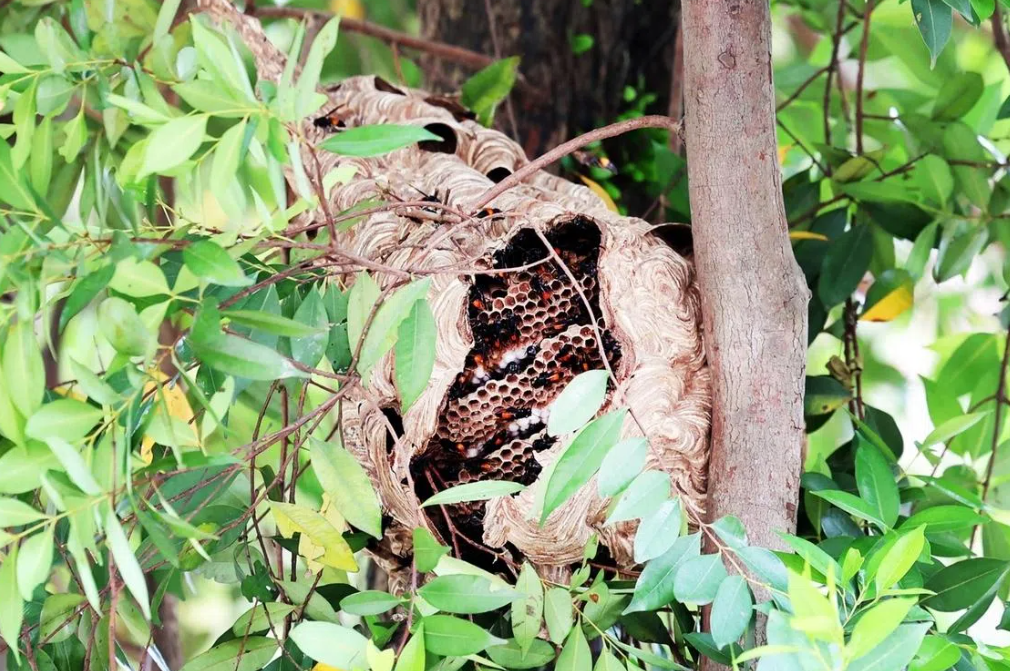
A swarm of hornets attacked multiple people near Singapore's Redhill Market on the afternoon of July 10, resulting in four individuals being rushed to Singapore General Hospital for treatment. The Singapore Civil Defence Force and Tanjong Pagar Town Council responded to the emergency alert at approximately 1pm, arriving to find a hornet nest situated on a tree along the footpath separating Block 78 Redhill Lane from a Shell petrol station. The rapid mobilisation of both civil defence personnel and the town council's dedicated pest control contractor enabled authorities to cordon off the danger zone swiftly and extract the nest without further casualties.
Eyewitness accounts paint a vivid picture of the chaos that unfolded during the incident. Chen, a witness present at the market for afternoon coffee, recounted hearing someone frantically alert fellow patrons to the presence of aggressive hornets in the vicinity. He observed an elderly male victim being pursued and stung by the insects as they descended upon him. The ferocity of the attack became even more apparent through another witness's experience. Mei Zhen discovered a woman in her seventies in considerable distress at a nearby toilet facility, where the victim was attempting to address visible injuries. The woman's ears had swollen significantly and were bleeding, symptoms accompanied by complaints of severe headaches and dizziness—signs indicating the intensity of venom exposure.
Zhen's detailed observations revealed the scale of the assault, noting that at least ten hornets had swarmed around the victim's head simultaneously. Some of the insects had crawled into her hair, while others scattered across the toilet floor and struck the door, suggesting a coordinated and persistent attack pattern typical of territorial hornet behaviour. Such aggressive responses occur when colonies perceive threats to their nests, triggering collective defence mechanisms that can overwhelm even multiple adult victims in seconds.
The medical implications of hornet stings extend far beyond the immediate pain and swelling experienced by victims. According to the National University Hospital's clinical information, hornets differ markedly from bees and smaller wasps in their capacity to inflict damage. Each hornet sting introduces a substantially larger quantity of venom into the victim's tissue. This venom contains multiple dangerous compounds: histamine triggers allergic responses that can escalate unpredictably, while melittin produces the sharp burning pain characteristic of hornet attacks. Additionally, proteins including phospholipase and hyaluronidase possess cytotoxic properties capable of damaging human cells at the injection site and beyond.
In severe cases, the systemic effects of hornet envenomation can prove life-threatening. Victims may experience dangerous drops in blood pressure, inadequate circulation to vital organs, or swelling of the airway that obstructs breathing. These complications can progress rapidly, particularly among elderly individuals or those with compromised immune systems, making immediate medical intervention critical. The four hospitalisations from this single incident underscore the genuine medical risk these insects pose in urban environments where residential areas and nesting sites intersect.
The response by Tanjong Pagar Town Council demonstrated the importance of having established protocols for such emergencies. Officers immediately established a safety perimeter around the affected footpath, preventing further public exposure to the hornets before their removal. The decision to deploy professional pest control contractors rather than attempting amateur nest removal reflects best practices in managing such hazards. The nest was ultimately removed safely, and the area declared secure for public use—a critical measure given the market's regular foot traffic and the likelihood of residents traversing that footpath daily.
Authorities have emphasised preventive measures and appropriate emergency responses for residents encountering similar situations. The town council advises calm and immediate withdrawal from any area where hornets or active nests are visible. Rather than confronting the insects or attempting removal, residents should seek shelter inside the nearest building and immediately report the incident to emergency services. Those who sustain stings should evacuate the vicinity promptly and contact 995 for emergency medical assistance, particularly if symptoms include difficulty breathing, chest pain, severe swelling, or signs of allergic reaction.
This incident follows a troubling pattern of hornet-related emergencies across Singapore's public spaces. In 2024, a separate attack at Sungei Buloh resulted in five people requiring hospitalisation, demonstrating that such incidents are not isolated anomalies but recurring risks in the island's tropical environment. More gravely, that same year witnessed a fatality when a cyclist was attacked by hornets along the Sembawang Park Connector, highlighting the potential for hornet encounters to prove fatal, particularly in circumstances where victims cannot immediately reach medical care.
The presence of such dangerous insects in areas frequented by the public, including markets, parks, and recreational connectors, presents an ongoing public health consideration for Singapore's urban planning and maintenance authorities. The National Parks Board has been contacted for additional information regarding nest prevention strategies and monitoring protocols. As Singapore continues to develop and densify its urban landscape, balancing human habitation with wildlife management remains a complex challenge. The Redhill Market incident serves as a reminder that tropical hazards require constant vigilance, swift emergency response systems, and public education to minimise harm when human and insect territories overlap.

