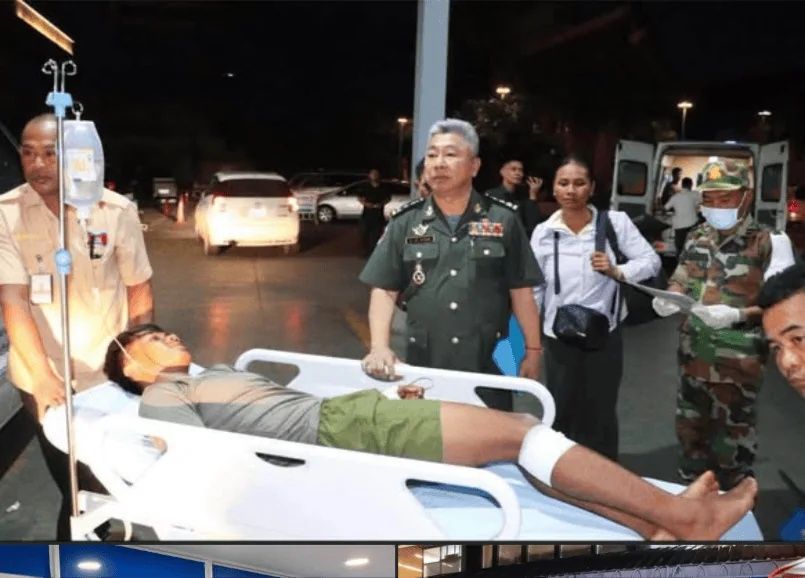
An explosive device detonated along the Cambodia-Thailand border on Sunday, leaving four Cambodian military personnel with injuries during a scheduled patrol operation. The incident occurred at 12:35 p.m. in a cashew cultivation zone spanning Chouk Kruos and Thma Don villages in Oddar Meanchey province, Cambodia's northwestern territory. Authorities confirmed all wounded service members are receiving medical treatment from dedicated healthcare personnel and relevant defence ministry staff.
Lieutenant General Maly Socheata, serving as an undersecretary of state and official spokesperson for Cambodia's Ministry of National Defence, publicly disclosed details of the incident on Monday. The explosive detonation took place during routine border patrol operations, part of regular security protocols maintained in the region. The incident highlights ongoing security challenges in border areas that have historically served as sensitive zones between the two neighbouring nations.
Thailand's military rapidly responded to the incident with a formal statement, confirming that Royal Thai Army personnel stationed on the Thai side of the frontier heard the explosion emanating from Cambodian territory. Thai Army spokesperson Winthai Suvaree made clear that Thai forces conducted only routine patrols at the time and did not deploy any weaponry or throw explosive devices. The statement emphasised transparency regarding Thai military involvement—or more precisely, the complete absence thereof.
A comprehensive investigation involving responsible Thai military units concluded that the explosion occurred entirely within Cambodian sovereign territory. Thai authorities confirmed their forces bore no responsibility for the blast, underscoring that the incident resulted from causes unrelated to Thai military activity. This swift clarification represents a standard diplomatic protocol designed to prevent misunderstandings between neighbouring militaries operating in proximity along shared borders.
The Cambodia-Thailand frontier remains a geographically complex zone marked by periodic security incidents, demarcation challenges, and sporadic military incidents. Explosive devices, whether deployed decades ago during various regional conflicts or planted more recently, continue posing risks to personnel conducting border patrol duties. Both nations maintain active military presence along their shared boundary, necessitating careful coordination and transparent communication protocols to prevent escalation of minor incidents into broader tensions.
Oddar Meanchey province, where Sunday's incident occurred, sits at Cambodia's northwestern extremity and has experienced multiple border-related security issues over preceding years. The province's geography, featuring agricultural areas including cashew plantations alongside military demarcation zones, creates environments where personnel from both nations regularly operate in close proximity. Such circumstances inherently carry elevated accident risks, particularly given the region's legacy of conflict-related ordnance remaining from earlier decades.
The injury of four soldiers, while serious for the individuals affected and their families, remains relatively contained in terms of casualty figures for such incidents. However, each explosion serves as a reminder of the persistent hazards facing military personnel tasked with border security responsibilities. Medical evacuation and treatment procedures have advanced considerably, potentially improving outcomes compared to historical incidents, yet the fundamental dangers of patrol operations in potentially contaminated areas persist.
From a regional perspective, the incident underscores the ongoing importance of military-to-military communication channels between Cambodia and Thailand. Rapid clarification regarding responsibility and cause helps prevent the emergence of conspiracy theories or misattributions that could inflame public sentiment or government relations. Both nations have established diplomatic mechanisms specifically designed to address such situations, reflecting lessons learned from previous border tensions.
The incident also illustrates broader challenges facing Southeast Asian nations with shared borders where unexploded ordnance, landmines, and other weapons remain buried in soil decades after major conflicts concluded. Cambodia, in particular, continues managing substantial quantities of such munitions despite decades of post-conflict clearance efforts. Military personnel conducting routine operations in rural border regions necessarily accept certain risks inherent to their environment and responsibilities.
For Malaysia and other ASEAN neighbours observing the incident, the situation exemplifies how professional military conduct and transparent communication can prevent minor accidents from escalating into diplomatic crises. Both Cambodia and Thailand demonstrated mature crisis management by quickly investigating, clarifying responsibilities, and publicly communicating findings. Such professionalism serves the broader regional stability that benefits all Southeast Asian nations, including Malaysian interests in maintaining peaceful, cooperative relations throughout the association.

