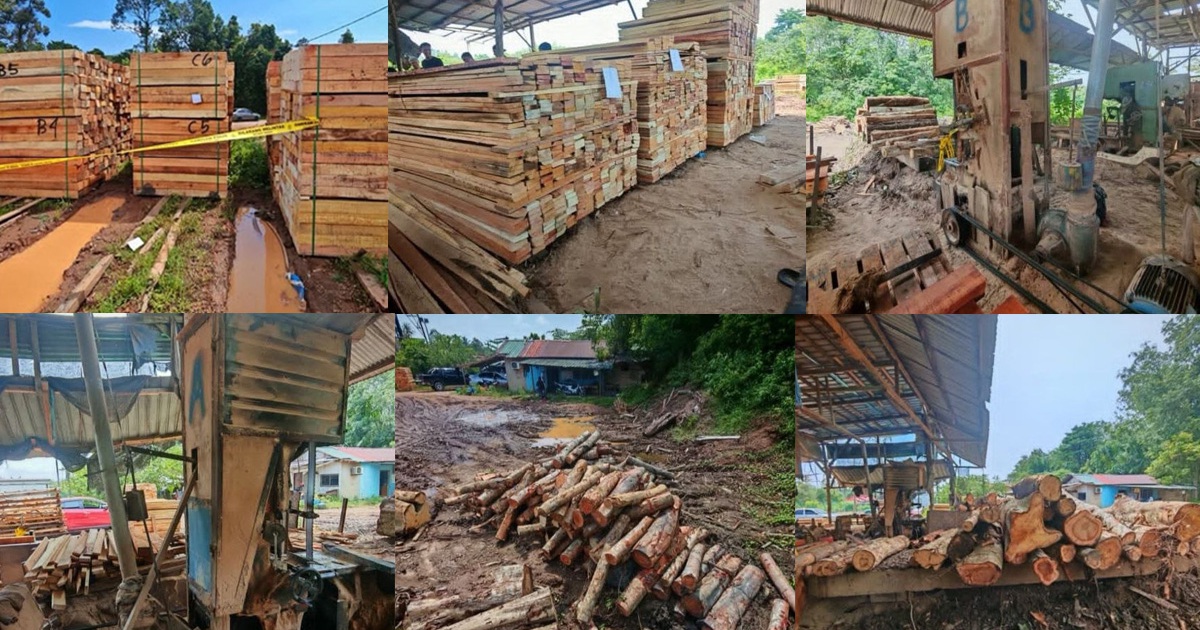
Authorities in Kelantan have intensified their crackdown on illegal forestry operations following a successful enforcement action in the Tanah Merah district. During the raid on an unlicensed sawmill facility located in Kampung Bukit Kechik, enforcement teams arrested the premises operator along with three workers engaged in the unauthorised timber processing activities. The operation represents part of a broader initiative to combat the proliferation of illegal logging and milling operations that continue to plague Malaysia's timber sector despite regulatory efforts.
The confiscated items recovered during the raid included substantial quantities of processed and unprocessed timber, alongside various industrial machinery utilised in the milling operation. Authorities valued the total seizure at approximately RM600,000, representing a significant financial impact on the illegal operation. The machinery and timber will be held pending legal proceedings and potential disposal in accordance with forestry regulations. Such seizures serve as critical deterrents against illicit timber processing, which remains a persistent challenge for enforcement agencies across the country.
Unlicensed sawmill operations represent a particular concern for Malaysian forest management authorities because they circumvent the rigorous licensing and environmental compliance requirements imposed on legitimate timber businesses. These informal operations frequently operate without proper environmental impact assessments, waste management protocols, or safety standards, creating both ecological and occupational hazards. The financial incentives to operate outside regulatory frameworks remain substantial, as illegal operators avoid taxation, licensing fees, and the costs associated with sustainable forest management certification.
Kelantan has emerged as a focal point for timber-related enforcement operations in recent years, reflecting the state's significant forestry resources and the corresponding pressure from illegal extraction. The porous border regions and complex logistical networks connecting Malaysia to Thailand complicate efforts to track timber movements and prevent cross-border smuggling of processed and raw timber. Local communities in timber-dependent districts often face pressure from organised networks engaged in illegal logging, sometimes presenting employment opportunities that incentivise participation in unlicensed operations.
The arrest of three workers alongside the operator highlights the multi-layered nature of illegal timber enterprises, which typically employ workers with limited awareness of the legal ramifications of their employment. However, Malaysian enforcement agencies have increasingly pursued charges against workers as well as operators, recognising that prosecuting the entire operational chain strengthens deterrent effects. Workers facing penalties may develop greater reluctance to accept employment in similar illegal ventures in the future, though economic desperation often overrides such considerations.
Licensed timber operators across Malaysia have expressed frustration at the competitive disadvantage created by illegal mills, which undercut legitimate market prices by eliminating compliance costs. This dynamic distorts timber markets and threatens the viability of properly regulated businesses that invest in environmental management, worker safety standards, and community relations programmes. The presence of unlicensed operations also undermines Malaysia's international reputation for sustainable forestry practices, potentially affecting market access and certification status in environmentally conscious consumer markets.
The enforcement action in Tanah Merah occurred within the broader context of Malaysia's commitment to forest conservation and sustainable resource management. The Malaysian government has committed to maintaining at least 50 per cent of the country's land area as forest cover, a target that faces persistent pressure from both legal conversion of forestland to agriculture and urban development, and illegal extraction activities. Effective enforcement against unlicensed operations remains essential for achieving these conservation objectives while ensuring that legitimate timber harvesting proceeds according to sustainable management principles.
Future legal proceedings against the arrested individuals will likely reveal details about the operation's scope, duration, and market channels for its output. Such investigations frequently uncover connections to larger criminal networks involved in coordinating timber extraction, processing, and distribution across Malaysia and into regional markets. Understanding these networks enables authorities to identify systemic vulnerabilities in forest protection and develop more targeted enforcement strategies.
The raid underscores the ongoing necessity for sustained enforcement resources and coordination between federal and state forestry authorities, environmental agencies, and local enforcement bodies. Effective interdiction of illegal timber operations requires not only inspections and seizures but also intelligence gathering, prosecution of offenders, and disruption of supply chains. Cooperation between Malaysia and neighbouring countries to prevent cross-border timber trafficking remains an essential component of regional forest protection efforts, particularly given the extensive trade networks connecting Southeast Asian timber markets.

