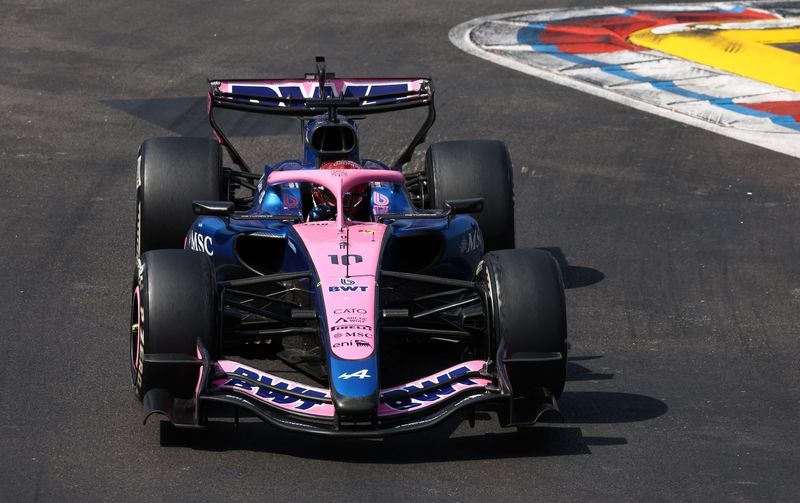
The sport of Formula One faces an unusual situation as its highest court of appeal prepares to render a final judgment on a podium result from the Monaco Grand Prix more than eight weeks after the race itself concluded. The hearing, scheduled to take place in Paris, will examine the disputed third-place finish that has remained in legal limbo since the stewards issued contradictory rulings in June, creating uncertainty for multiple teams and drawing attention to the sport's regulatory processes.
Alpine's Pierre Gasly originally crossed the line in third place on June 7, but stewards immediately penalised him with two five-second penalties for excessive speed in the pit lane. The decision meant Gasly was demoted to seventh position, allowing Red Bull's Isack Hadjar to be elevated to the podium and take his place on the rostrum. However, this outcome proved short-lived when Alpine presented evidence of a timekeeping error just five days later, prompting stewards to reverse their decision, remove both penalties, and restore Gasly to third place while Hadjar returned his trophy.
The reversal created significant complications for other competitors, particularly McLaren's Oscar Piastri, who had received identical pit-lane speeding penalties during the same race. Unlike Gasly, whose penalties were assessed after the race and could theoretically be served through added time, Piastri had served his penalties in real time during the event. The Australian driver consequently lost track position and competitive advantage with no opportunity to recover those positions once the Gasly penalties were removed, creating what McLaren considered an unfair disparity in how identical infractions were treated.
McLaren team principal Andrea Stella articulated the team's frustration when speaking to journalists at the Dutch Grand Prix, expressing concern that the stewards' post-race process lacked fairness and consistency. He emphasised that the situation raised fundamental questions about the integrity of Formula One's regulatory framework, arguing that the ability to overturn penalties retroactively created dangerous precedent for the sport's competitive principles. Beyond these broader concerns about fairness, Stella also highlighted McLaren's material interest in the outcome, noting that the penalty Piastri served without the ability to appeal had cost the team valuable championship points.
The complexity of the situation deepened when both McLaren and Red Bull filed formal appeals to the international court on June 16, triggering the current appeal process. Red Bull's involvement underscores how the original reversal decision affected multiple teams up and down the grid, since Hadjar's temporary promotion and subsequent demotion had direct consequences for the championship standings and the sporting record books. The involvement of these two major teams elevated what might have seemed a routine penalty matter into a high-profile test case for the FIA's appellate procedures.
The international court's task involves weighing several competing interests within the sport. The first concerns whether the stewards correctly identified and corrected the alleged timekeeping error that led to the initial reversal of Gasly's penalties. The second relates to the fundamental fairness of allowing one driver to have identical penalties removed after the race while another driver was forced to serve theirs in real time with no recourse. The third addresses whether the procedural path taken by the stewards in Monaco created broader concerns about regulatory consistency that could affect future races and decisions.
Paddock insiders have warned that the stewards' initial reversal opened what has been described as a can of worms, suggesting that the precedent could encourage other teams to challenge penalty decisions if they can produce evidence of timekeeping irregularities. This concern reflects the tension between allowing flexibility to correct genuine errors and maintaining the finality of on-track decisions, which teams and drivers rely upon when planning their race strategy and managing their competitive positions.
The FIA has indicated that the hearing will take place at its Paris headquarters and will be conducted with confidentiality, meaning the public and media will not have access to the proceedings. This approach is standard for international court proceedings and allows the panel to deliberate without external pressure or commentary. Once the court reaches its decision, the FIA has committed to publishing the ruling as soon as possible, providing clarity that has been absent for the entire post-Monaco period.
For Malaysian and Southeast Asian motorsport enthusiasts, this dispute carries broader implications about how international sporting organisations manage disputes and maintain competitive integrity. The extended timeline from June to August highlights the labour-intensive nature of high-level appeals, even in a sport with sophisticated infrastructure and resources. The case also demonstrates that Formula One, despite its technological sophistication, remains vulnerable to procedural complications that can affect championship standings and individual driver records.
The outcome will likely set important precedent for how the FIA handles similar situations in future seasons. Whether the court upholds Gasly's reinstatement, orders his demotion back to seventh, or charts some alternative course, the decision will signal how the sport's highest authority approaches the balance between correcting administrative errors and maintaining the integrity of competitive outcomes. For Piastri and McLaren, the ruling carries direct championship implications as the season approaches its conclusion, making the court's deliberations consequential not just for the historical record but for the 2024 competitive standings.
The Paris hearing represents the culmination of a complicated regulatory saga that has exposed procedural questions within Formula One's governance structure. As the sport continues to evolve and competition intensifies, ensuring that similar situations do not recur will require clear guidelines about how timekeeping errors are identified, reported, and remedied within the established regulatory framework. The court's decision will inform not just this case but the sport's approach to penalty management and appeals for seasons to come.

