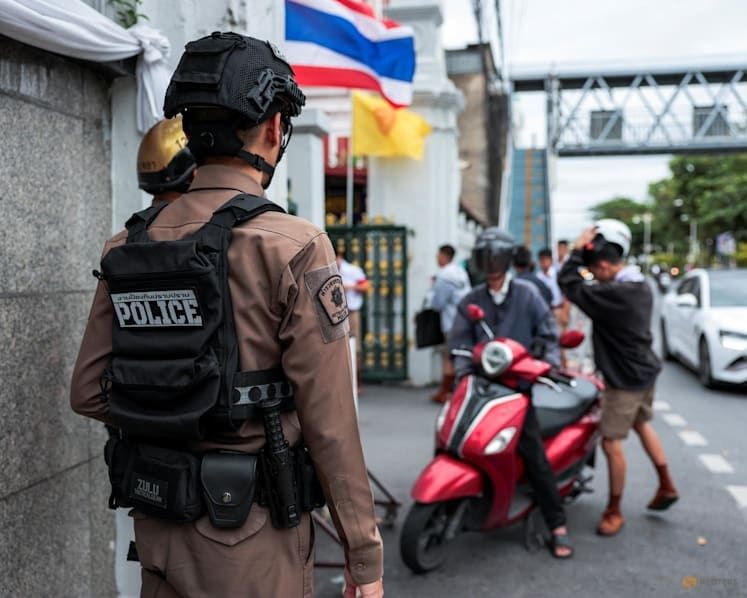
Thai authorities arrested a former member of parliament on Monday after allegedly shooting and injuring a local government official and his driver in Nonthaburi province, underscoring the country's persistent struggle with armed violence. Nonthaburi police chief Dejrapee Kongdee confirmed the arrest of Chalong Riewrang, who previously served in the legislature as a member of Prime Minister Anutin Charnvirakul's party. The incident marked another flashpoint in a troubling pattern of gun-related incidents that has sparked renewed debate about firearms regulation across Thailand.
The wounded individuals included the chairman of the Nonthaburi local government administration, who sustained serious injuries, and his driver. Both men were transported to hospital for treatment, though police provided limited detail about the extent of the driver's condition. Investigators have begun examining the motivations behind the alleged attack, though local media outlets suggested a private dispute may have precipitated the incident. Police authorities remained cautious about speculating on specifics, declining to elaborate on the potential trigger for the violence.
The arrest arrives at a particularly sensitive moment for Thailand's public safety conversation. Just three days earlier, the same Nonthaburi province witnessed a devastating school shooting when a 14-year-old boy opened fire on his grandparents before targeting classmates and teachers at his school. The teenager subsequently turned the weapon on himself, resulting in multiple fatalities and intensifying scrutiny over how Thailand manages civilian access to firearms. The proximity of these two incidents within days has amplified concerns among policymakers and the public alike about the adequacy of existing gun control mechanisms.
Thailand's relationship with firearms reveals a complex social reality that distinguishes the kingdom from many neighbouring countries. The nation maintains one of the highest rates of gun ownership across Southeast Asia, with approximately 10 million firearms believed to be circulating among the population—a ratio of roughly one weapon for every seven inhabitants. This prevalence reflects historical patterns of private gun ownership alongside weak enforcement of licensing and registration protocols. The sheer volume of weapons in private hands has created conditions enabling both criminal violence and tragic accidents involving minors gaining access to unsecured firearms.
Official responses to recent tragedies have followed a familiar trajectory in Thai politics. Following Friday's school shooting, government officials and security agencies pledged to introduce stricter legislation governing gun acquisition, ownership, and use. These announcements typically include proposals for enhanced background checks, more rigorous licensing procedures, and stricter penalties for illegal weapons possession. However, the track record of such commitments reveals a persistent gap between rhetoric and implementation. Previous pledges made after earlier shooting incidents have failed to translate into meaningful legislative reform or sustained enforcement improvements.
The challenge facing Thai authorities extends beyond parliamentary debate. Implementing effective gun control requires sustained bureaucratic commitment, adequate funding for enforcement mechanisms, and sustained political will—particularly when traditional gun ownership remains embedded in rural communities and among former military personnel. Cultural attitudes toward firearms, rooted in Thailand's history of militia traditions and security concerns, create resistance to restrictions that might be accepted more readily in urban centres. Bridging this cultural divide while addressing legitimate security anxieties represents a persistent obstacle to comprehensive reform.
Chalong's background as a former parliamentarian adds a political dimension to the current investigation. His membership in Anutin Charnvirakul's party, a coalition component of Thailand's government, raises questions about potential political ramifications and whether his arrest might complicate existing coalition dynamics. The circumstances surrounding his alleged actions—whether driven by personal grievance, political motivation, or other factors—remain subjects of ongoing police investigation. These details will likely attract intense media scrutiny given his parliamentary history and political affiliations.
The recurring nature of armed violence in Thailand reflects systemic vulnerabilities that episodic legislative responses have struggled to address. School shootings, workplace violence, domestic incidents involving firearms, and criminal activity involving weapons recur with troubling regularity, suggesting that addressing the root causes requires more comprehensive approaches than restrictive laws alone. Mental health support systems, community intervention programmes, and effective disarmament initiatives targeting illegal weapons all merit greater attention and resources.
Regional observers have noted Thailand's challenges with gun violence place the country at variance with some neighbouring states that maintain stricter regulatory frameworks. Singapore and Malaysia, for instance, enforce licensing systems that have demonstrably reduced civilian gun ownership and associated violence. Thailand's experience offers cautionary lessons about the consequences of permissive weapons policies and insufficient enforcement infrastructure. Southeast Asian policymakers examining gun control approaches increasingly reference Thailand's experience as an example of how inadequate regulation creates dangerous conditions.
The investigation into Chalong's alleged shooting will proceed through Thai legal channels, with police seeking to establish motive and gather evidence from witnesses. The case may provide an opportunity for prosecutors to test existing firearms laws and potentially influence forthcoming legislative debates. Depending on investigation findings and court proceedings, the outcome could either reinforce calls for stricter regulation or reveal further gaps in current legal frameworks that require amendment.
Government officials have indicated that comprehensive gun policy review remains under consideration, though the timeline and scope remain uncertain. Any meaningful reform would likely require consensus among coalition parties and navigation of competing interests within parliament. Public pressure following multiple shooting incidents within days may create political momentum for action that previous incidents failed to generate. Whether this moment catalyses substantive legislative change or follows the pattern of unfulfilled reform promises remains to be determined.

