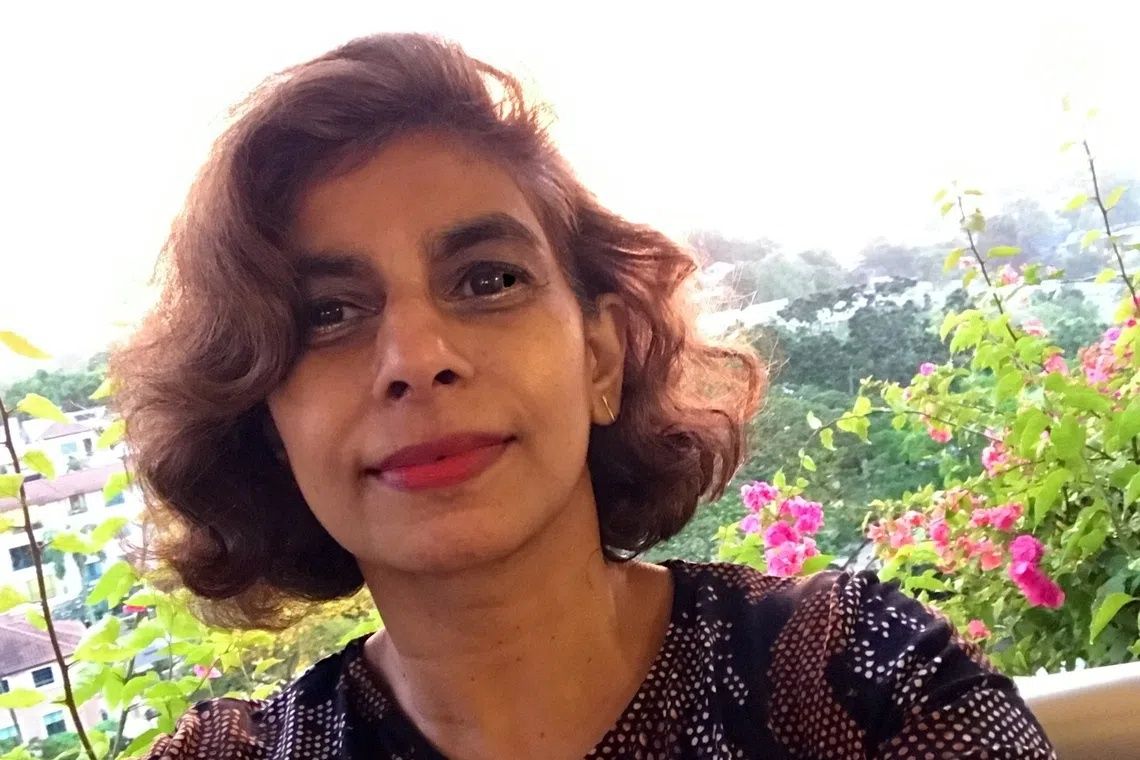
A former Singapore broadcaster has regained her freedom on personal bond after languishing in remand for more than five months, marking a significant development in her legal proceedings. Haseenah Koyakutty, aged 57, appeared in court on August 5 where a bail review was conducted, resulting in her release under a S$5,000 personal bond with minimal conditions attached. The prosecution declined to oppose the application, acknowledging the extended period she had already spent in custody awaiting trial.
Koyakutty's case represents a notable chapter in Singapore's legal landscape, touching on complex issues of journalism, public conduct, and the boundaries of protected speech within the city-state's highly regulated environment. Her release comes after she had completed more than five months and seven days in remand, a duration that prompted even the prosecution to reconsider its position on continued detention. The decision reflects judicial recognition that bail conditions could be modified without compromising public safety or court proceedings.
The charges against Koyakutty span multiple alleged incidents across different venues and timeframes, painting a picture of escalating tensions with authorities. One charge relates to an incident on December 17, 2025, at Takashimaya Shopping Centre, where she allegedly made insulting remarks concerning Singapore's Chief Justice, behaviour that violates the Protection from Harassment Act. This particular charge carries potential penalties of up to six months imprisonment, a fine reaching S$5,000, or both if she is eventually convicted.
Her alleged criminal trespass offences add additional layers of complexity to her legal troubles. Prosecutors allege that Koyakutty unlawfully remained at Shangri-La Hotel in 2023, and later at a Bukit Timah property in May 2025. Criminal trespass convictions in Singapore carry a maximum sentence of three months imprisonment and fines up to S$1,500. These accusations suggest a pattern of unauthorized entry and presence that authorities view as problematic, though the circumstances and motivations behind each incident remain largely undisclosed in public court documents.
A particularly troubling aspect of her charges involves allegations that she refused to cooperate with police procedures. Court documents indicate she declined to sign police statements in both April 2023 and June 2025, obstruction that constitutes a separate category of breach. Such refusals to comply with police investigations can substantially complicate legal defence strategies and may influence judicial assessment of an individual's willingness to abide by court orders.
Koyakutty's previous release on bail between May 2023 and May 2025 ended when authorities alleged she breached the conditions of her release by failing to report to her investigation officer as required. This violation triggered her subsequent remand, transforming what might have been a straightforward criminal investigation into a custody issue that extended her time behind bars significantly. The breach of bail conditions sometimes carries greater weight in judicial calculations than the underlying charges themselves.
Her professional background adds context to understanding her public profile and potential motivations. Koyakutty spent the 1990s as a broadcast journalist with the Television Corporation of Singapore, later advancing to become Indonesia bureau chief for Channel NewsAsia, a position that would have exposed her to complex regional politics and media dynamics. Subsequently, she transitioned into academia as a visiting public diplomacy fellow at the Institute of Defence and Strategic Studies at Nanyang Technological University, suggesting intellectual engagement with governance and international relations.
The case emerges during a period when Southeast Asian democracies, including Singapore, face ongoing debates about the balance between maintaining public order and protecting individual freedoms of expression and movement. Singapore's robust legal framework emphasizing social harmony and respect for institutions reflects the nation's distinctive governance philosophy, one that sometimes creates tension with international standards regarding free speech and assembly.
Looking ahead, Koyakutty's case is scheduled for a pre-trial conference on September 1, where procedural matters and potential plea negotiations may be addressed. This conference will determine the trajectory toward trial and could influence whether the case proceeds through full adjudication or alternative resolution. The pre-trial stage often proves decisive in shaping legal outcomes and determining the evidence that will be presented before a judge.
For Malaysian observers, this case offers insight into how Singapore's legal system handles complex allegations involving former media professionals and matters touching on institutional respect. The incident underscores how Singapore's emphasis on maintaining public confidence in government institutions, particularly the judiciary, translates into specific legal prohibitions that differ from approaches in other democracies. The case will likely continue attracting attention as it progresses through the courts, particularly given Koyakutty's journalism background and the public dimensions of her alleged conduct.

