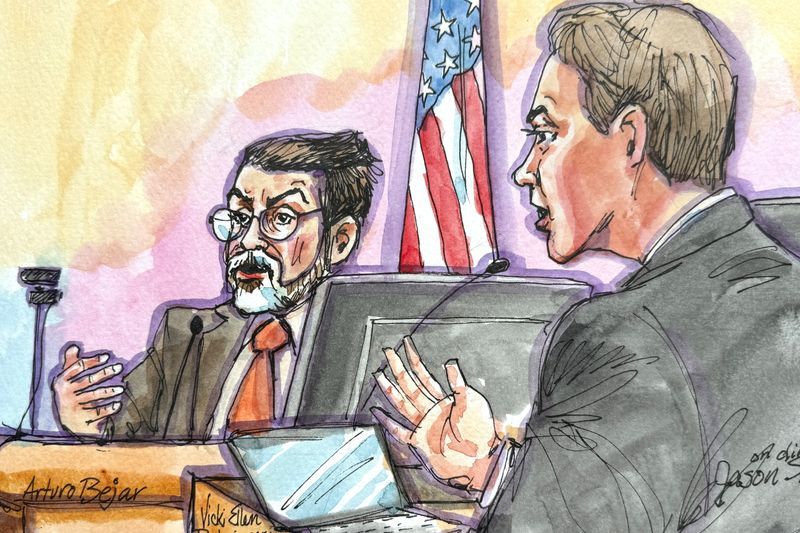
A former Facebook engineering director who worked at Meta for over a decade is pressing ahead with testimony in what legal experts consider the most significant courtroom challenge yet to social media's effects on young people. Arturo Bejar, who spent time at the company between 2009 and 2015 before returning as an independent contractor from 2019 to 2021, has become a central figure in a high-stakes trial at the Oakland federal courthouse in California. His continued testimony on Wednesday marks a pivotal moment in litigation that threatens to fundamentally reshape how Meta operates both Facebook and Instagram in the United States.
The trial itself represents an unusual coalition of legal action. Four states—California, Colorado, Kentucky and New Jersey—are pursuing claims that Meta deliberately engineered its platforms to captivate young users, precipitating widespread anxiety, depression and in some cases suicide. Additionally, 29 states are pursuing separate allegations that Meta violated federal law by unlawfully gathering and exploiting personal information belonging to children under 13. The case is currently projected to run for six weeks, with opening arguments from both sides having concluded on Tuesday.
Bejar's role in this litigation carries particular weight because he witnessed the company's internal operations firsthand during a critical period. Between 2019 and 2021, he participated in survey work examining teen experiences and overall wellbeing on Instagram. According to his testimony, he repeatedly communicated his growing alarm about the platform's consequences for younger users to senior leadership at Meta. This direct exposure to both the data and the company's response—or lack thereof—positions him as one of the most compelling witnesses prosecutors can call.
At the heart of Bejar's testimony lies a stark contradiction. He argues that Meta's internal monitoring systems were fundamentally flawed in their design and scope. Rather than measuring the actual damage inflicted on young people, the company's surveillance mechanisms focused narrowly on tallying how often content breached Meta's stated policies. This distinction matters enormously: a platform might contain policy-violating material relatively infrequently while simultaneously causing tremendous psychological injury to users. Bejar has made this gap explicit before jurors, drawing from his own email communications with Chris Cox, Meta's chief product officer at the time.
In that correspondence, Bejar documented what he characterised as a substantial and troubling disparity between the prevalence figures Meta reported publicly and the actual harm that young users experienced on the platform. His testimony to the jury was direct: "Young people were experiencing harm at extraordinarily high rates." He further emphasised that parents deserved access to this reality—a statement that underscores the broader allegation that Meta misled consumers about safety. The implication is damning: a company with detailed internal knowledge of harm chose not to act decisively or disclose findings transparently.
Meta has mounted a robust defence, denying all allegations and insisting that the company prioritises the protection of teenagers on its platforms. The company has also attempted to undermine Bejar's credibility, arguing that his expert opinions exceed the boundaries of his actual work at Meta. This line of attack reflects a strategy common in complex litigation: if the witness's testimony can be portrayed as speculation rather than direct knowledge, its persuasive power diminishes. However, such arguments have faced considerable scepticism from U.S. District Judge Yvonne Gonzalez Rogers, who is presiding over the trial.
Notably, Meta attempted to block Bejar's testimony entirely, claiming he failed to preserve crucial evidence by deleting communications with other former employees via the encrypted messaging platform Signal. This technical objection, which Meta linked to comments Bejar had made in an ongoing Tennessee trial, represented a last-ditch effort to exclude a witness the company clearly views as exceptionally damaging. Judge Gonzalez Rogers rejected the attempt, describing it as a long-shot manoeuvre designed to eliminate a key witness—a characterisation that suggests the court itself sees Bejar's role as pivotal.
Bejar's prominence in this case extends well beyond the current Oakland proceedings. He has already testified as a key witness in three Meta-related cases that have advanced to trial, including litigation brought by New Mexico. That case resulted in a settlement of $942 million in damages and penalties, along with a court order requiring Meta to implement specific changes to its platforms within the state. These prior victories suggest that jurors find Bejar's testimony compelling and that his ability to articulate the gap between internal knowledge and public-facing safety claims resonates with decision-makers.
Over the past several years, Bejar has become increasingly vocal about his concerns regarding Meta's approach to child safety. In 2023, he testified before a U.S. Senate committee, where he elaborated on allegations that the company understood the harassment and other harms facing teenagers on its platforms but systematically failed to address them adequately. This pattern of public criticism and legal testimony reflects a former insider who has chosen to hold his former employer accountable, a role that inevitably casts him as both authoritative and controversial.
The broader context for this trial is the explosive growth in litigation against Meta and other major social media companies. The company now faces thousands of similar lawsuits alleging harm to children, many still in preliminary phases. What unfolds in Oakland matters well beyond California's borders because the trial is being watched by courts, legislators and regulators across the United States and internationally, including in Southeast Asia where social media adoption among youth is particularly high. A significant judgment against Meta could establish legal precedent and force the company to implement design changes affecting its global user base.
For Malaysian readers and the region more broadly, the implications are substantial. Southeast Asia has some of the world's highest rates of social media penetration among young people, with Instagram and Facebook proving particularly popular. Any legal outcomes from US trials become reference points for regulators considering similar actions. The testimony about algorithmic addiction and deliberate design choices that prioritise engagement over wellbeing speaks to concerns that have emerged in the Malaysian regulatory environment and across ASEAN nations regarding technology company accountability.
The trial's outcome could establish whether tech companies can be held legally responsible for designing platforms that deliberately exploit psychological vulnerabilities in young users. Bejar's testimony, grounded in his direct experience of Meta's internal processes and data, provides the kind of insider evidence that jurors find difficult to dismiss. As proceedings continue over the coming weeks, his account of what Meta knew and when it knew it will likely prove central to whether the company faces significant financial liability and operational constraints on two of the world's most influential social platforms.

