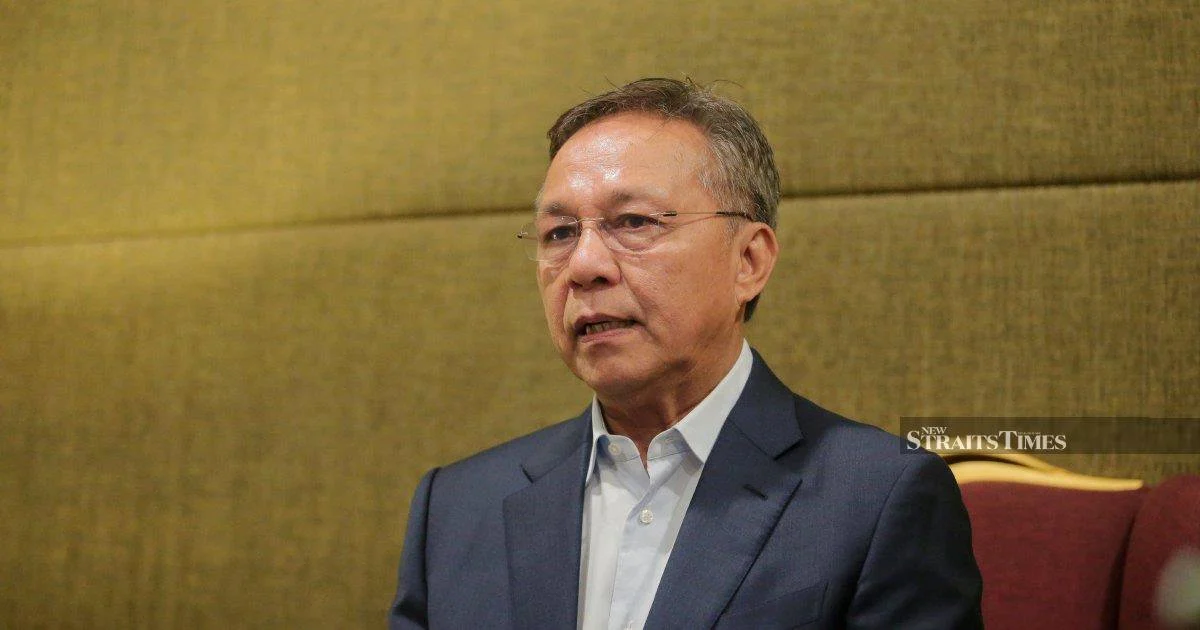
Datuk Seri Hasni Mohammad, who previously held the position of Johor menteri besar, has been excluded from the Johor Barisan Nasional candidate roster for the upcoming state elections. The decision marks a notable shift in the coalition's electoral strategy for the southern state and has prompted widespread conjecture about the veteran politician's future political direction.
The removal of Hasni from the state ballot represents a significant development in Johor's political landscape. As a figure who had held the highest executive position in the state, his absence from the slate signals a restructuring of the Barisan Nasional camp as it prepares for electoral contests. Political observers have begun analysing what this move portends for both the state-level competition and the broader national political scene.
Speculation has immediately emerged that Hasni may be repositioning himself to contest at the federal level rather than in state assembly elections. This strategic shift would represent a different approach to his political career, potentially allowing him to focus on parliamentary representation instead of state-level contests. The timing of his exclusion coincides with discussions surrounding the composition of candidates for the next general election, lending credence to theories about his possible transition to federal politics.
Johor remains a crucial battleground in Malaysian politics, and the composition of Barisan Nasional's candidate list carries substantial implications for the coalition's prospects in the state. The decision to exclude Hasni must be understood within this competitive context, where resource allocation and candidate selection can significantly influence electoral outcomes. His departure from the state slate may indicate a recalibration of the coalition's approach to state assembly representation.
For Malaysian readers, particularly those in Johor, this development underscores the fluid nature of political positioning between state and federal elections. Politicians often reassess their electoral strategies based on ground sentiment, party dynamics, and perceived opportunities. Hasni's potential shift from state to federal politics exemplifies how seasoned politicians navigate the complex terrain of Malaysian electoral politics, where multiple contests at different governmental levels require strategic decision-making.
The exclusion also raises questions about party hierarchy and succession planning within Barisan Nasional's Johor chapter. The coalition has been undergoing various structural adjustments in recent years, and candidate selection decisions frequently reflect internal deliberations about which figures should be prioritised in which electoral contests. The choice to keep Hasni off the state list while potentially reserving him for a federal contest suggests careful consideration of where his political capital might be most effectively deployed.
Historically, Johor has been a Barisan Nasional stronghold, though recent electoral cycles have demonstrated increased competitiveness. The coalition's candidate choices therefore carry weight in maintaining the state's traditional alignment with the ruling coalition at both state and federal levels. Any exclusion of prominent figures must be weighed against the strategic importance of retaining political ground in this influential state.
For the broader Southeast Asian context, Malaysia's internal political manoeuvres reflect patterns seen across the region where established coalitions must continually adjust their strategies to maintain relevance. The movement of experienced politicians between electoral levels and constituencies demonstrates how regional political systems remain dynamic, with parties constantly recalibrating their approaches in response to changing circumstances.
The timing of Hasni's removal from the Johor slate comes amid broader discussions within Barisan Nasional about candidate quality, electoral viability, and optimal representation at various levels of government. Such decisions are rarely made in isolation; they typically reflect consultations between party leadership, state chapters, and strategic planners assessing the political terrain.
Moving forward, observers will closely monitor whether Hasni does indeed emerge as a parliamentary candidate in the next general election. His experience as a former menteri besar would presumably make him a competitive federal candidate, possessing both administrative credentials and established political networks. The decision to exclude him from the state race may thus represent not a diminishment of his political status but rather a redeployment of his experience to a different arena.
For voters and political analysts in Malaysia, Hasni's situation illustrates how electoral strategies continuously evolve at the intersection of personal political ambition, party requirements, and electoral arithmetic. His case will likely inform discussions about how other senior figures position themselves across multiple electoral contests as Malaysian politics continues its cyclical pattern of elections at state and federal levels.