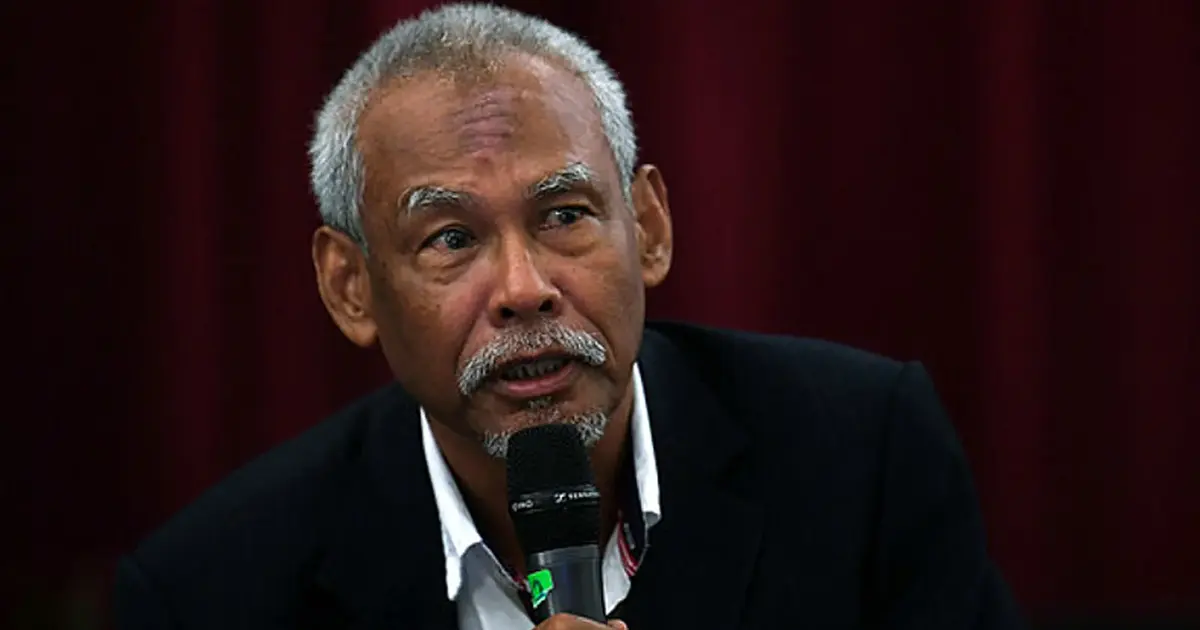
The Federal Court has dealt a significant blow to former Inspector-General of Police Musa Hassan by declining to review his legal challenge in a high-profile defamation dispute. The apex court's decision effectively closes the door on arguments Musa Hassan had sought to advance concerning the intersection of public office, reputational protection, and press freedom in Malaysia's legal framework.
Musa Hassan had presented nine distinct constitutional and legal questions to justify a judicial review of the case, framing the dispute as one that reached beyond his personal interests to touch on matters of broader principle. These questions centred on whether a public officer serving in a capacity of significant authority and responsibility should retain the right to pursue defamation claims against critics, and how such claims should be balanced against freedom of expression—a right fundamental to a functioning democracy. The former top cop's legal team argued these questions were sufficiently novel and important to warrant the court's intervention.
The Federal Court's rejection of the application signals that the judiciary was not persuaded that the case presented unresolved constitutional issues requiring clarification. This decision effectively upholds the trajectory established by lower courts, which had proceeded with the defamation case without accepting that larger principles of law needed reconsideration. The ruling carries implications for how Malaysian courts will treat similar cases involving public figures and allegations against them.
The Musa Hassan case touches on a tension that exists in many Commonwealth legal systems, including Malaysia. On one hand, individuals—regardless of their professional standing—maintain a legal interest in protecting their reputations from false statements that cause demonstrable harm. On the other hand, public officers, particularly those in law enforcement and security, operate in fields where public scrutiny and accountability are deemed essential to democratic governance. The courts must navigate this difficult terrain with care, ensuring neither reputation nor accountability becomes subordinate to the other.
What makes this outcome particularly significant for Malaysian legal observers is the court's apparent view that existing jurisprudence provides adequate guidance for handling such disputes. The refusal to grant a review indicates confidence that earlier decisions and established precedents contain sufficient framework to address the factual and legal questions at hand. This approach provides some certainty but may also be seen as limiting the opportunity to update legal doctrine in light of contemporary understandings of press freedom and public discourse.
For public officers in Malaysia, the decision suggests they retain meaningful recourse through defamation law when false statements cause harm, provided they can meet established legal tests. However, the fact that Musa Hassan's appeal failed at the final stage suggests that courts will scrutinise such claims carefully, particularly when they involve matters of public interest or when the plaintiff held significant governmental authority. The burden of proof remains on the plaintiff to demonstrate falsity and damage, principles that are unlikely to shift dramatically in future litigation.
The implications for media freedom in Malaysia warrant careful consideration. Malaysia's press operates within a defined legal environment where defamation suits serve as one mechanism through which subjects of reporting can seek remedy. The court's decision to proceed without reconsidering fundamental principles suggests the existing legal framework—with its balance between reputational protection and expression—is viewed as adequate by the judiciary. This does not mean the system is perfect, but rather that the court believes incremental adjustment through ordinary litigation remains preferable to wholesale reconsideration.
International observers monitoring judicial developments in Southeast Asia will note that Malaysia's apex court has chosen to rely on its established jurisprudence rather than embark on a comprehensive reexamination of how public officer status affects legal rights. This stands in contrast to some regional neighbours where courts have undertaken more expansive reviews of speech-related issues in recent years. The Malaysian approach reflects a preference for stability and reliance on precedent, though this inevitably means that questions left unresolved by past judgments may persist.
The broader context of this decision includes ongoing global debates about accountability in law enforcement and policing. With international attention focused on police conduct across many countries, questions about the relationship between police leadership and public criticism have become more acute. Musa Hassan's unsuccessful attempt to advance constitutional questions might be read as one instance in a wider pattern where former security chiefs seek to manage their public legacies through litigation, a phenomenon observed in other jurisdictions.
For Hannah, the defamation plaintiff in this matter, the Federal Court's decision removes a significant legal obstacle. The case can now proceed to resolution through the ordinary courts without the complication of a pending constitutional review. This accelerates the timeline for determination and allows the parties to move toward final judgment on the substantive merits of their dispute.
Moving forward, practitioners and commentators will likely examine how this decision influences the calculus of similar cases. Public figures contemplating defamation suits face the knowledge that Malaysian courts are unlikely to entertain sweeping reconsiderations of the legal framework governing their claims. Instead, those pursuing such litigation must focus on meeting concrete legal requirements within the existing structure. For critics and media outlets, the decision confirms that the legal risks of defamation remain genuine, even as courts maintain oversight of such claims.
The Federal Court's ruling ultimately reflects a judicial philosophy that favours incremental development of law through specific disputes rather than abstract constitutional pronouncements. Whether this approach serves Malaysian society well depends partly on whether the existing framework continues to accommodate legitimate interests in both reputational protection and free expression as circumstances evolve.

