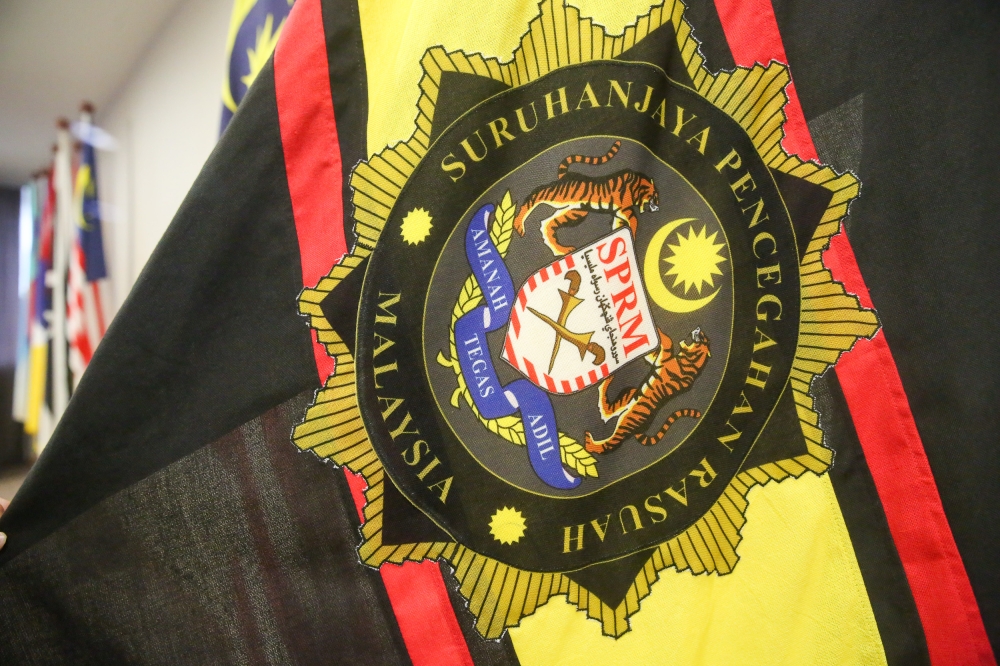
The Malaysian Anti-Corruption Commission (MACC) has placed in detention a former estate manager working for a rubber sapling supply enterprise operating in the Klang Valley region, signalling an escalation in its ongoing investigation into procurement irregularities valued at approximately RM8 million. The detention, announced in Putrajaya on August 4, forms part of a broader probe into supply contracts that have become entangled with the Tabung Haji Royal Commission of Inquiry, which has been examining alleged mismanagement of the Islamic pilgrimage fund's assets and investments.
The focus on the rubber sapling supply chain represents a notable shift in how Malaysian authorities are pursuing graft investigations linked to Tabung Haji. Rather than concentrating exclusively on senior management decisions or investment strategies, anti-corruption investigators are now tracing the downstream procurement processes through which government-linked entities may have channelled funds to private contractors. This methodical approach reflects growing awareness among enforcement agencies that complex financial misconduct often leaves a trail at operational and administrative levels, particularly when suppliers inflate costs or fail to deliver goods meeting contractual specifications.
The Klang Valley, Malaysia's industrial and economic heartland, has emerged as a focal point for scrutiny in recent months. The concentration of rubber processing facilities, palm oil infrastructure, and related agricultural supply chains in this region makes it susceptible to procurement schemes that exploit institutional purchasing power. Tabung Haji, as a major investor in agricultural enterprises and infrastructure development, has historically maintained significant commercial relationships with companies based in and around the Klang Valley, making the geography of this investigation particularly relevant to understanding where irregularities may have occurred.
The quantum of RM8 million underscores the scale of potential loss involved in these transactions. For context, this sum represents a substantial portion of operating budgets for medium-sized agricultural cooperatives or small enterprise development programmes, yet for a fund managing hundreds of billions of ringgit in assets, it illustrates how systematic fraud or mismanagement—even at seemingly modest individual contract values—can accumulate into significant losses when multiplied across numerous transactions. The discovery suggests that investigators may be uncovering a pattern rather than an isolated incident.
The detention of the former estate manager signals that the MACC believes this individual possesses material knowledge of how the supply contracts were structured, executed, and potentially manipulated. Estate managers typically oversee day-to-day operations including procurement verification, quality assurance, and inventory management. Their cooperation or testimony could prove crucial in establishing whether companies deliberately inflated invoices, supplied substandard materials, or diverted funds through complex payment arrangements designed to obscure the actual flow of money.
The Royal Commission of Inquiry into Tabung Haji, established to investigate governance failures and alleged financial improprieties within the fund, has already uncovered a series of concerning transactions and investment decisions spanning several years. This detention suggests that the RCI's findings have provided law enforcement with sufficient leads to pursue criminal investigations, representing a progression from fact-finding inquiry to prosecutorial action. The coordination between the RCI and MACC demonstrates how Malaysia's anti-corruption institutional framework increasingly involves cross-agency intelligence sharing and joint investigative efforts.
For Malaysian readers and businesses operating in the agricultural supply sector, this development carries important implications. First, it signals heightened regulatory scrutiny of government procurement contracts, particularly those involving Islamic funds or religiously-designated financial institutions. Companies bidding for such contracts should expect enhanced due diligence from both procurement officials and external auditors. Second, employees and managers at private suppliers face increased personal liability if they participate in or have knowledge of inflated billing, phantom deliveries, or other supply chain fraud.
The investigation also raises broader questions about procurement governance within entities linked to pilgrimage and religious affairs. Tabung Haji occupies a unique position as both a commercial investment vehicle and a fund entrusted with savings from hundreds of thousands of Malaysian Muslim pilgrims. The convergence of religious purpose with substantial financial assets has historically created tension between profit maximization and fiduciary responsibility to contributors. The current investigation suggests that this tension may have been exploited through poorly overseen commercial relationships.
From a regional perspective, Malaysia's willingness to investigate and prosecute procurement fraud within Islamic funds represents a potentially important signal to other Muslim-majority nations grappling with similar governance challenges. As Southeast Asia's Islamic finance sector expands, questions of accountability and transparency in fund management become increasingly consequential. How Malaysia handles high-profile cases involving religious entities will likely influence governance standards across the wider region.
The detention represents one of several recent enforcement actions targeting commercial relationships involving government-linked entities and private suppliers. A pattern is emerging suggesting that anti-corruption authorities have shifted from primarily targeting senior decision-makers to systematically pursuing operational-level participants in fraudulent schemes. This comprehensive approach, though resource-intensive, offers greater likelihood of disrupting organized procurement fraud networks that might otherwise persist across multiple administrations and institutional cycles.
Looking forward, this detention may be merely the initial phase of a broader investigation. The MACC's track record suggests that cooperation from detained individuals often yields additional leads, potentially implicating other managers, company executives, or government officials higher in the decision-making hierarchy. The extent to which investigators can establish whether senior Tabung Haji management authorized irregular procurement practices, versus whether lower-level employees exploited gaps in oversight, will prove decisive in determining the ultimate scope and seriousness of charges.

