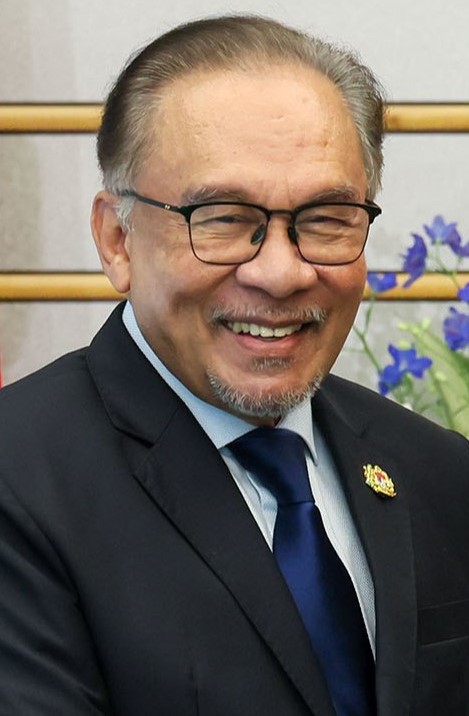
Captain (Rtd) Najib Lep is preparing to re-enter the political arena in the Johor state election, this time banking on support from Pakatan Harapan—a striking shift for the former Bukit Pasir assemblyman whose career has traced a winding path through Malaysia's major political coalitions. The retired military officer's decision to contest comes as the opposition coalition intensifies efforts to strengthen its presence in Johor, a state that has been under Barisan Nasional administration for decades and remains critical to any party's national ambitions.
Najib Lep's political journey reflects broader currents within Malaysian electoral politics, where candidates often traverse between parties seeking relevance or opportunity. His earlier tenure representing Bukit Pasir demonstrates he has maintained a connection to local constituents, though his absence from elected office raises questions about grassroots momentum. The selection of his candidacy under the PH banner signals the coalition's strategy of fielding experienced candidates with established track records, even if those records span multiple political homes.
Packatan Harapan's recruitment of established figures like Najib Lep underscores the coalition's calculated approach to the Johor contest. Rather than relying exclusively on fresh faces, the opposition has consciously balanced new candidates with those carrying previous parliamentary or state assembly experience. This tactic aims to project stability and competence to voters who may harbour reservations about opposition governance. In a state where memories of Barisan Nasional administration run deep, PH's messaging emphasises continuity with proven administrators rather than wholesale political disruption.
The timing of Najib Lep's comeback warrants scrutiny within the context of Johor's political evolution. The state has witnessed shifting voter sentiments, particularly after the 2022 federal election when Barisan Nasional lost its parliamentary supermajority. Younger voters and urban constituencies have grown more receptive to alternative political narratives, creating openings for opposition parties to consolidate support. Najib Lep's candidacy targets constituencies where his military background and previous assembly experience may resonate with voters seeking proven administrators untainted by recent federal controversies.
Johor's electoral significance cannot be overstated. As the nation's second-largest state by population and a crucial economic hub, control of its state government carries implications extending beyond regional politics. A strong PH showing in Johor could reshape the national political balance, particularly if momentum builds from state-level victories toward federal contests. Conversely, a solid Barisan Nasional performance would reinforce the ruling coalition's grip on what many analysts regard as a bellwether state for national trends.
Najib Lep's earlier representation of Bukit Pasir provides him with name recognition and potential grassroots networks, though political memories in Malaysia fade rapidly when candidates remain absent from the public eye. His transition between PAS, Umno, and now PH mirrors the fluidity characterising Malaysian politics, where party-switching among candidates has become increasingly commonplace. This pattern raises enduring questions about political principle versus pragmatic advancement, though voters have grown accustomed to such movements.
The Pakatan Harapan strategy of fielding candidates with established political credentials reflects lessons learned from previous contests. Campaigns in states like Johor demand candidates capable of articulating sophisticated policy positions while maintaining credibility with diverse voter demographics. Najib Lep's military background potentially appeals to older voters and security-conscious constituencies, demographic segments that traditionally favour ruling coalitions but have shown willingness to consider opposition alternatives when convinced of competent governance.
Johor's political landscape has fractured somewhat from the monolithic Barisan Nasional dominance of preceding decades. Multiple opposition parties now compete for voter attention, and Pakatan Harapan must navigate this complexity while consolidating sufficient support for seat gains. Candidates like Najib Lep serve this consolidation strategy by offering voters familiar figures within a reformed political structure. His candidacy also signals PH's confidence in its capacity to attract experienced administrators from across the political spectrum.
The implications of Najib Lep's candidacy extend to how Malaysian voters perceive political commitment and consistency. His journey through three distinct parties raises legitimate questions about which principles guided his political choices, though observers note that party-switching has become sufficiently normalized that it rarely generates sustained voter backlash. More significant than his previous affiliations is his capacity to deliver effective constituency representation and articulate Pakatan Harapan's vision for Johor's development.
Packatan Harapan's campaign messaging in Johor will likely emphasise governance competence, economic development, and administrative reform. Candidates like Najib Lep provide concrete examples of individuals with experience in public administration who have embraced the opposition's political project. This positioning attempts to counter Barisan Nasional's traditional advantages in claims to administrative stability and development delivery, historically powerful arguments in Johor where federal infrastructure investment has been substantial.