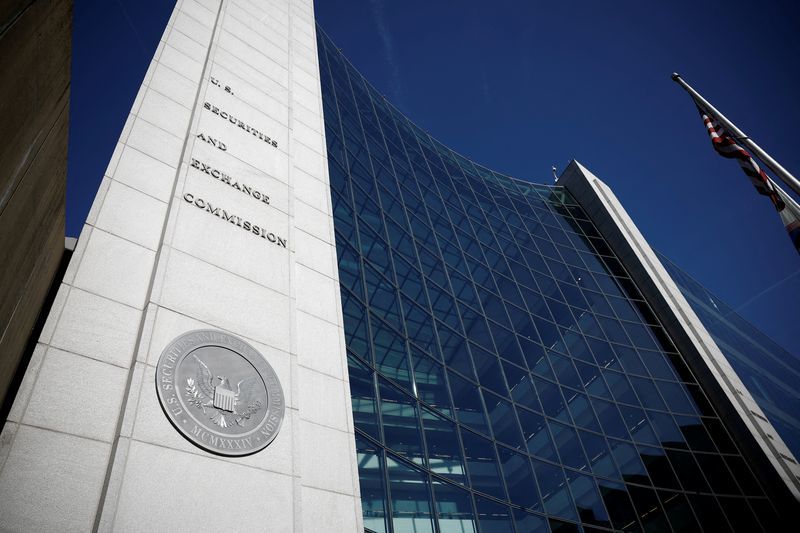
The United States Securities and Exchange Commission has filed charges against Jason Satsky, a former co-head of Bank of America's Americas power and renewable energy banking division, accusing him of disclosing material non-public information about a major merger to a personal associate. According to the SEC's allegations, Satsky's tipoff enabled Gavin Wolfe, an investment manager who had known Satsky for over two decades, to accumulate South Jersey Industries shares that ultimately generated roughly $18.5 million in illegal gains when the company announced a $8.1 billion acquisition in February 2022.
The case underscores persistent vulnerabilities in insider trading detection within the financial sector, where trusted relationships between bankers and investors can create opportunities for the transmission of confidential deal information. Satsky, aged 59 and based in New York, held considerable sensitivity regarding the South Jersey Industries transaction, given Bank of America's advisory role in the acquisition process. His relationship with Wolfe, now 55 and operating the New York and Florida-based Evergreen Capital, provided a direct channel through which valuable intelligence allegedly flowed.
The timeline of the alleged conduct reveals sophisticated coordination between the two individuals. In late 2021, as the potential acquisition of South Jersey Industries was taking shape within Bank of America's deal pipeline, Satsky purportedly initiated communications with Wolfe about the impending transaction. These discussions reportedly continued throughout the months preceding the public announcement, with one particularly brazen instance occurring when both men and their wives attended a Duke versus Kentucky college basketball game at Madison Square Garden in December 2021. Satsky had access to luxury box seating through Bank of America, a comfortable setting where sensitive deal discussions could occur away from typical banking venues.
Wolfe's investment strategy demonstrates the magnitude of confidence he placed in Satsky's information. The Evergreen Capital manager purchased more than 2.2 million shares of South Jersey Industries' parent company, representing an investment of approximately $53 million. This substantial position was accumulated during the period when Satsky possessed advance knowledge of the acquisition discussions. When South Jersey Industries publicly announced its acquisition on February 24, 2022, the shares appreciated significantly, and Wolfe realised a 36 percent gain—translating to the $18.5 million in alleged illegal profits that now forms the basis of the SEC's enforcement action.
The regulatory response demonstrates the SEC's continued focus on prosecuting insider trading schemes that exploit information asymmetries between corporate insiders and market participants. The commission's complaint seeks comprehensive remedies, including the disgorgement of Wolfe's ill-gotten gains, the imposition of civil penalties against both defendants, and officer-and-director bars that would restrict their future participation in securities markets. Such sanctions represent not merely financial punishment but effectively permanent exclusion from high-level roles within the financial industry.
Both defendants have mounted vigorous denials through their legal representatives. Satsky's attorney, Robert Anello, characterised his client's conduct as entirely proper and asserted that no material non-public information was ever communicated to Wolfe. Anello's statement emphasises Satsky's confidence in vindication, suggesting that the evidence will demonstrate compliance with securities regulations. Similarly, Wolfe's lawyer, Reed Brodsky, rejected the allegations categorically and announced plans for vigorous defence, arguing that his client's share purchases reflected an independent investment thesis rather than reliance on information obtained through Satsky.
Brodsky further contended that the SEC overlooked sworn testimony and documentary evidence supporting Wolfe's account. This defensive posture raises questions about whether Evergreen Capital maintained investment records, market research, or equity analysis that might independently justify the decision to accumulate such a large South Jersey Industries position. The defence strategy appears to centre on demonstrating that Wolfe possessed legitimate reasons to invest in the company separate from any conversation with Satsky.
The professional histories of both men reveal the potential conflict of interest embedded in their relationship. Prior to 2012, when they both joined Bank of America, Wolfe held a senior power and renewable energy banking position at Credit Suisse, giving him substantial experience evaluating energy sector transactions. Bank of America's decision to hire both individuals simultaneously into senior roles suggests they were recognised as accomplished professionals in their sector. However, their long-standing friendship and complementary career trajectories created precisely the conditions under which insider trading schemes might develop—mutual trust, sector expertise, and opportunities for frequent interaction.
Bank of America itself faces no allegations of institutional wrongdoing in the SEC's action. The company terminated Satsky's employment in March 2025, a decision that came several years after the alleged misconduct occurred. This substantial delay between the conduct and the termination raises questions about when Bank of America became aware of the allegations or whether the termination was prompted by the SEC's investigation. The bank's swift confirmation that Satsky no longer works there suggests an interest in separating the institution from the conduct and cooperating with regulatory processes.
For investors and market participants across Southeast Asia and beyond, the case illustrates why diligent regulatory oversight remains essential. Even within ostensibly well-governed institutions like Bank of America, personal relationships and informal communications can create pathways for securities law violations. The sophistication of the alleged scheme—orchestrated through luxury sporting events and conducted by individuals with decades of experience in investment banking—demonstrates that insider trading risks transcend unsophisticated actors or obvious suspicious transactions.
The Evergreen Capital investment fund's silence regarding the allegations represents another notable aspect of the case. As the entity through which Wolfe deployed the $53 million investment in South Jersey Industries shares, the firm presumably maintained records related to the investment thesis and decision-making process. Evergreen's failure to provide immediate comment suggests its management is awaiting legal strategy decisions or that the firm is attempting to distance itself from Wolfe's personal conduct.
The resolution of this case will likely take considerable time through the regulatory and judicial processes. However, the SEC's willingness to pursue charges indicates confidence in the evidence supporting the allegations. For financial professionals managing client assets or advising on transactions, the Satsky-Wolfe matter serves as a potent reminder that friendships with counterparts at advisory firms can create legal hazards if they facilitate the exchange of material non-public information. The case reinforces the principle that securities laws apply equally to sophisticated investors and accomplished bankers, and that the financial sector's self-policing mechanisms require support from active regulatory enforcement.

