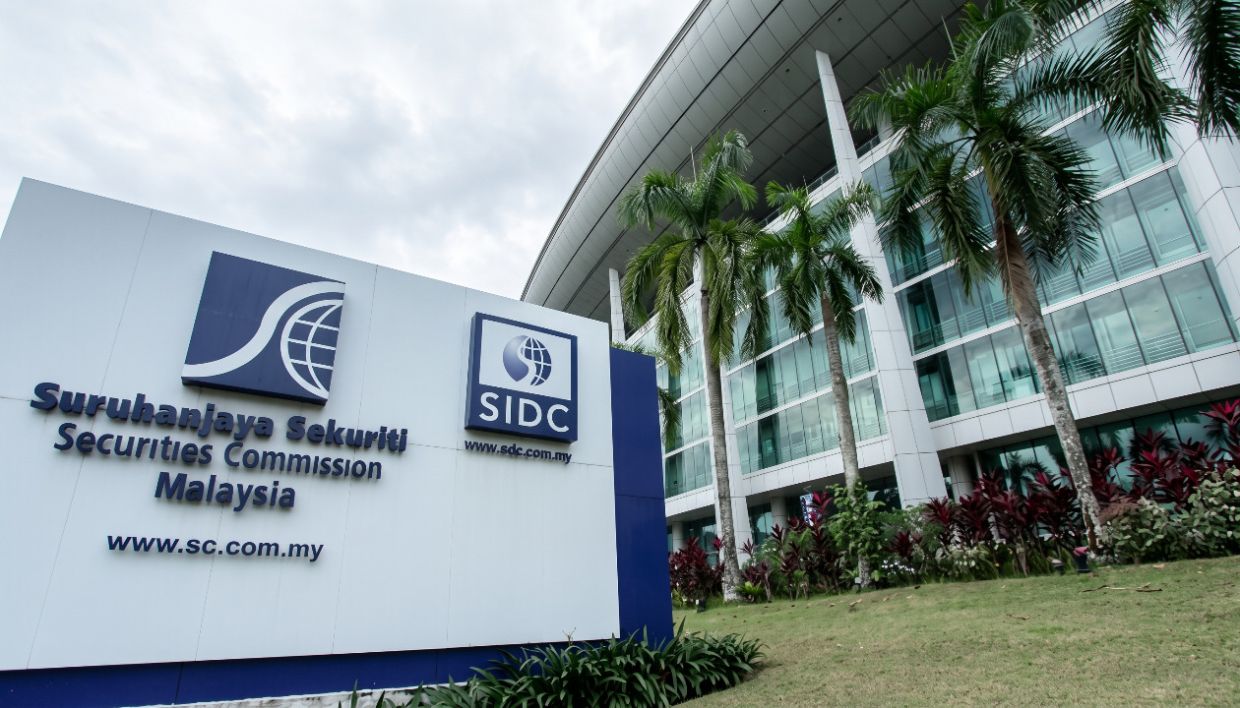
The Kuala Lumpur Sessions Court has handed down a three-year prison sentence to Mohd Arif Fadzlee Mohd Arifin, a former bank analyst, after determining he engaged in regulated securities activities without the required authorization from Malaysian regulators. The conviction stems from activities spanning back more than a decade, highlighting persistent enforcement challenges within the nation's capital markets sector.
The Securities Commission Malaysia brought the original charges in January 2024 under two separate provisions of the Capital Markets and Services Act 2007. The first charge accused Mohd Arif of presenting himself as a representative of CIMB Wealth Advisors Berhad while conducting securities dealing transactions, despite lacking the mandatory Capital Markets Services Representative's Licence from the SC and failing to register as an authorized person. The second charge targeted his misuse of the Unit Trust Consultant title, which he wielded to create a false impression among clients that he possessed legitimate licensing for securities transactions.
Securities dealing represents one of the most tightly regulated activities within Malaysia's capital markets framework, as specified in Schedule 2 of the CMSA. The regulatory architecture requires every individual executing such transactions to obtain explicit licensing from the Securities Commission, a foundational safeguard designed to protect retail investors from unqualified advisors and fraudulent schemes. Mohd Arif's conduct violated this fundamental requirement, operating in Petaling Jaya and Nilai throughout 2011 without any legal authorization to engage in these activities.
The trial process revealed the systematic nature of his violations. The prosecution marshalled ten witnesses, including two individuals directly harmed by his unlicensed operations, to establish their case against him. The court found this evidence sufficiently compelling to rule in February 2026 that the prosecution had established a prima facie case, obligating Mohd Arif to mount a defence against both allegations. Rather than presenting additional witnesses or documentary evidence, he chose to testify on his own behalf, a high-risk strategy that ultimately failed to generate reasonable doubt in the minds of the presiding judge.
The court's reasoning focused on Mohd Arif's inability to undermine the prosecution's narrative through credible counter-evidence or legal argument. His personal testimony proved insufficient to convince the bench that he had acted within regulatory bounds or possessed legitimate authority to conduct the disputed transactions. This outcome underscores the difficulty defendants face when challenging witness testimony and documentary evidence in financial crime cases, particularly when the regulatory violations are straightforward factual matters rather than matters of legal interpretation.
Both convictions carry identical custodial sentences of three years, running concurrently rather than consecutively, meaning Mohd Arif will serve a single three-year term encompassing both offences. This concurrent approach reflects judicial discretion and consideration of proportionality, though the sentence remains substantial given the magnitude of potential penalties available under the legislation. The court had authority to impose up to five years imprisonment for the first charge under section 59(1) and an identical five-year maximum for the section 362(3) offence, demonstrating that the handed-down sentence represents a moderate application of sentencing guidelines.
The statutory frameworks surrounding these offences demonstrate the gravity with which Malaysian law treats unauthorized securities dealing. Conviction under section 59(1) exposes offenders to fines reaching RM5 million or imprisonment spanning five years, or both penalties concurrently. The section 362(3) violation carries maximum fines of RM1 million alongside imprisonment not exceeding five years. These substantial penalties reflect policymakers' determination to deter fraudulent financial services and protect the investing public from deceptive practices.
Mohd Arif's case illuminates a critical vulnerability within Malaysia's retail investing community: the susceptibility of unsophisticated clients to recommendations from individuals who project confidence and expertise but lack proper credentials. By appropriating the Unit Trust Consultant designation, he effectively weaponized a seemingly legitimate-sounding title to overcome investor hesitation and secure their trust. This approach exploits the information asymmetry between professional advisors and individual savers, particularly among older demographics and those with limited financial literacy.
The Securities Commission's successful prosecution sends an important signal about regulatory enforcement priorities and the commission's commitment to pursuing historical violations despite the passage of considerable time. The offences occurred in 2011, yet formal charges did not follow until 2024, suggesting that investigation and case-building consumed multiple years. This extended timeline, while frustrating for victims, reflects the investigative complexity inherent in financial crimes where evidence may be scattered across multiple transactions and client interactions.
For the Malaysian investment industry, the conviction reinforces mandatory licensing requirements and the reputational risks associated with facilitating unlicensed operators. Financial institutions like CIMB face reputational exposure when their names become associated with unauthorized representatives, even where the institution itself bears no culpability for individual misconduct. This reality incentivizes more rigorous vetting of individuals claiming affiliation and heightens awareness among compliant advisors about the competitive threat posed by unscrupulous practitioners willing to operate outside regulatory frameworks.
The broader implications extend across Southeast Asia, where regulatory environments remain at varying stages of maturity and enforcement capacity. Malaysia's demonstrated willingness to prosecute violations occurring over a decade prior demonstrates institutional persistence and commitment to investor protection that exceeds capabilities in some neighbouring jurisdictions. However, the years-long investigative timeline also highlights resource constraints that may limit the Securities Commission's capacity to address the full universe of unlicensed securities activities occurring across the nation.

