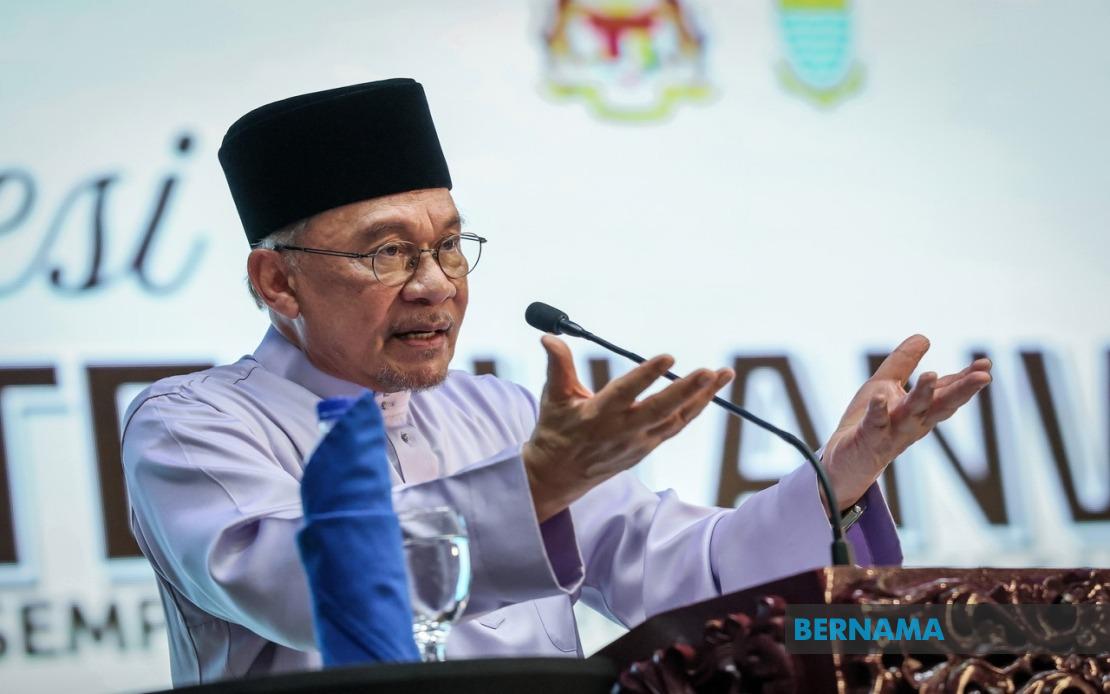
The Malaysian government will allocate funds to provide a new allowance scheme for Form Six students, Prime Minister Datuk Seri Anwar Ibrahim announced at an event in Bukit Mertajam today. The initiative, to be formalised in Budget 2027 when it is tabled in October, represents a significant expansion of the government's student assistance framework and acknowledges a long-standing disparity in financial support across different education levels.
Anwar, who doubles as Finance Minister, revealed that the decision emerged from recognition that Form Six students currently fall through a financial support gap. While the government provides allowances to primary and secondary school pupils through Form Five, and extends similar assistance to university undergraduates, pre-university students at the Form Six level have remained excluded from these schemes. This inconsistency prompted the government to reconsider its approach to equitable educational funding.
During a dialogue session with pre-university students, Anwar acknowledged the disparity and committed to addressing it through the upcoming budget cycle. He explained the rationale behind the move, noting that the absence of support at this critical educational juncture placed unnecessary financial strain on families preparing their children for tertiary education. The announcement reflects broader government recognition that pre-university education represents a crucial transitional phase requiring adequate financial backing.
Education Minister Datuk Seri Fadhlina Sidek, present at the Tuanku Bainun Teacher Education Institute event, confirmed that the allowance proposal emerged from the MADANI Pre-University Congress held in Klang earlier that day. The congress, which brought together student representatives and education stakeholders, generated twelve resolutions addressing various concerns within the pre-university sector. The allowance initiative ranked among the most significant recommendations accepted by the Education Ministry for implementation.
Fadhlina stated that the ministry had formally accepted all twelve resolutions presented by student delegates during the congress and committed to studying each proposal for practical implementation. Beyond the allowance scheme, the resolutions encompassed broader issues affecting pre-university education quality, student welfare, and institutional support structures. The ministry indicated its intention to explore implementation pathways for each resolution while considering budgetary constraints and feasibility timelines.
However, Anwar tempered immediate expectations by clarifying that the specific amount allocated to the Form Six allowance scheme remains undetermined. The final quantum will depend on the government's overall fiscal position at the time Budget 2027 is finalised in October. This approach reflects the broader budgetary process, whereby specific allocations are calibrated against competing priorities and the state of government finances. Nevertheless, the firm commitment to inclusion signals the government's determination to proceed with the initiative regardless of the eventual allocation magnitude.
The announcement carries particular significance for Malaysian education policy, as it demonstrates responsiveness to student advocacy and recognition of structural gaps in the social safety net. Form Six students, typically aged seventeen to nineteen, represent a vulnerable demographic caught between secondary school support mechanisms and university-level assistance. Many families struggle with the cumulative costs of examination fees, tuition, and living expenses during this two-year phase, particularly in middle and lower-income households.
For Southeast Asian observers, Malaysia's commitment to pre-university education support reflects regional trends toward expanding educational investment as economies compete for human capital development. The allowance scheme aligns with broader government initiatives to enhance educational access and reduce socioeconomic barriers to academic progression. By formalising support at this level, Malaysia positions itself within a cohort of developing nations prioritising equitable education outcomes.
The timing of the announcement also underscores the government's engagement strategy with student constituencies ahead of Budget 2027. The Temu Anwar programme, held under the MADANI framework emphasising inclusive development, provided a platform for direct policy dialogue between government leadership and educational stakeholders. This participatory approach, wherein student representatives can articulate concerns that directly influence budgetary priorities, reflects evolving governance practices in Malaysia's public administration.
Implementation details remain to be determined as the Education Ministry undertakes detailed planning for the scheme's mechanics. Questions regarding eligibility criteria, payment mechanisms, disbursement frequencies, and coordination with existing assistance programmes will require clarification in subsequent policy documents. The ministry will need to establish clear guidelines ensuring that the allowance reaches intended beneficiaries efficiently while maintaining administrative accountability.
The allowance initiative also prompts consideration of complementary measures that might enhance pre-university education outcomes. Beyond financial support, stakeholders have raised concerns about curriculum relevance, teaching quality, university preparation rigour, and mental health support—dimensions that allowances alone cannot address. The Education Ministry's commitment to studying the eleven other congress resolutions suggests recognition that holistic improvement requires multifaceted intervention beyond financial assistance.
As Budget 2027 approaches, the government faces the challenge of calibrating pre-university support within broader fiscal allocations competing for resources. Education traditionally claims substantial budget shares, yet demands consistently outpace available funding. The introduction of Form Six allowances, while welcome, will require careful sequencing alongside other educational priorities and socioeconomic demands. The coming months will reveal how seriously the government prioritises this commitment within its fiscal framework and broader policy architecture.

