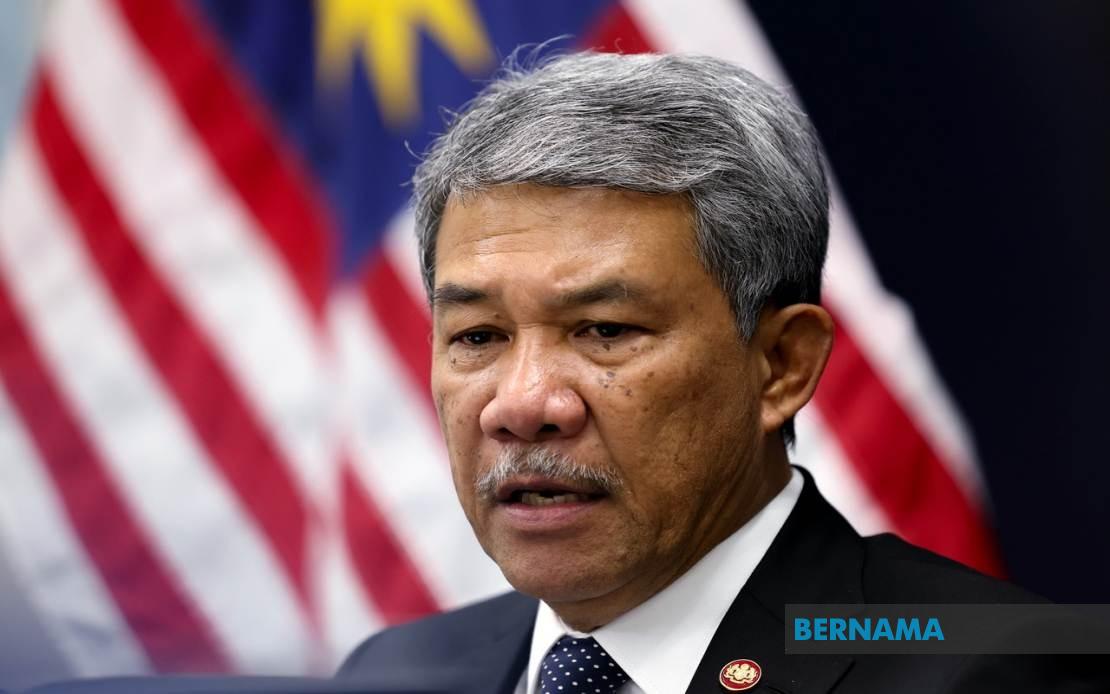
Datuk Seri Mohamad Hasan touched down in Manila on July 20 to participate in the 59th ASEAN Foreign Ministers' Meeting (AMM), marking a significant diplomatic engagement for Malaysia in the Philippine capital. The Foreign Minister was received at Ninoy Aquino International Airport by Philippines Department of Foreign Affairs Assistant Secretary and Chief of Protocol Ariel Rodelas Peñaranda, with Malaysian Ambassador to the Philippines Datuk Abdul Malik Melvin Castelino Anthony also attending the reception. His arrival signals Malaysia's active involvement in a series of high-level regional consultations that will extend through Thursday.
The 59th AMM is being convened under the Philippines' stewardship of ASEAN in 2026, with the organisational theme "Navigating Our Future, Together." This thematic framing reflects the bloc's preoccupation with managing multiple overlapping crises that demand coordinated regional responses. Malaysia's participation, through Mohamad's delegation, underscores the country's commitment to ASEAN's collective agenda-setting, particularly as regional geopolitical tensions escalate and humanitarian concerns mount across Southeast Asia's periphery.
Among the most pressing issues expected to dominate discussions is the ongoing West Asia conflict, which has increasingly rippled across Southeast Asian policy discourse and regional stability calculations. The crisis has compelled ASEAN members to reassess their positioning on international security matters and their relationships with major powers directly invested in Middle Eastern developments. For Malaysia, which maintains significant economic and cultural ties to the Arab world, the convergence of these discussions offers an opportunity to articulate how regional concerns intersect with broader global instability.
A central focus of the ministerial engagement will be Myanmar's deteriorating humanitarian and political situation. Mohamad will participate in an extended informal consultation on implementing the Five-Point Consensus, which ASEAN adopted to guide its diplomatic approach to Myanmar. The consultations will build on recommendations from the ASEAN Leaders' Review and Decision on the 5PC, reflecting the bloc's ongoing frustration with Myanmar's limited compliance with regional mediation efforts. This discussion carries particular significance for Malaysia, which has sought to balance diplomatic engagement with acknowledgment of the scale of internal displacement and suffering within Myanmar.
Beyond Myanmar, the Foreign Minister's schedule encompasses a meeting with representatives of the ASEAN Intergovernmental Commission on Human Rights (AICHR). This interface is strategically important for Malaysia, given its ongoing navigation of international human rights scrutiny and its desire to shape regional norms around how human rights concerns are addressed within ASEAN's consensus-based framework. The dialogue allows Malaysia to engage constructively with human rights discussions whilst maintaining ASEAN's principle of non-interference in internal affairs.
The Southeast Asia Nuclear Weapon-Free Zone (SEANWFZ) Commission meeting will also occupy Mohamad's attention, underscoring ASEAN's continuing commitment to regional non-proliferation frameworks. Amid growing strategic competition between major powers and the modernisation of military capabilities across the Indo-Pacific, this discussion carries heightened relevance. Malaysia's participation reinforces Southeast Asia's collective interest in preventing weapons of mass destruction from becoming flashpoints in regional power competition, a concern that has grown more acute as tensions between major powers have intensified.
Mohamad's bilateral engagement with Chinese Foreign Minister Wang Yi merits particular attention, given Malaysia's complex balancing act between its largest trading partner and its security partnerships with Western nations. As Malaysia's country coordinator for ASEAN-China Dialogue Relations for the 2024-2027 period, Mohamad will co-chair the Post Ministerial Conference with China on Wednesday. This role positions Malaysia as a crucial intermediary in managing ASEAN-China relations during a period of elevated strategic tension, particularly regarding South China Sea disputes and competing economic visions for the region.
The broader Post Ministerial Conference agenda, encompassing dialogue with Australia, Canada, the European Union, India, Japan, New Zealand, the Republic of Korea, the Russian Federation, the United Kingdom, and the United States, reflects ASEAN's effort to maintain strategic autonomy amid great power competition. Malaysia's engagement across this diverse partnership spectrum exemplifies the delicate diplomatic choreography required of ASEAN members to avoid being forced into exclusive alignments. Each bilateral encounter offers an opportunity to calibrate Malaysia's relationships and communicate shared regional interests.
The 27th ASEAN Plus Three Foreign Ministers' Meeting will allow extended discussion of intra-regional economic and security cooperation involving Japan, China, and South Korea alongside ASEAN members. This platform has become increasingly important for coordinating responses to transnational challenges, from pandemic preparedness to supply chain resilience and technological standardisation. Malaysia's participation ensures the country remains engaged in shaping the contours of East Asian cooperation frameworks that extend beyond ASEAN's narrower membership.
The 33rd ASEAN Regional Forum and 16th East Asia Summit Foreign Ministers' Meeting provide platforms for engagement with major powers, including Russia and the United States, which are not part of ASEAN. These meetings are vital for conveying ASEAN's collective preferences on regional security architecture and conflict resolution approaches, particularly regarding hotspots outside Southeast Asia that nonetheless have consequences for regional stability. Malaysia uses these forums to advocate for ASEAN's principle of centrality in regional arrangements and to resist external attempts to impose divisive geopolitical choices.
A notable addition to this year's agenda is Malaysia's participation in the fifth Conference on Cooperation among East Asian Countries for Palestinian Development (CEAPAD). This reflects growing Southeast Asian engagement with Palestinian development issues, driven by the region's significant Muslim populations and their sentiments regarding Middle Eastern affairs. Malaysia's attendance signals its willingness to connect development cooperation with broader diplomatic positions on regional conflicts, though the conference also represents a delicate balancing act between various regional constituencies.
Mohamad's scheduled bilateral meetings with counterparts from various nations will provide occasions for Malaysia to address bilateral concerns, coordinate on specific regional issues, and reinforce strategic partnerships. These side meetings often prove as consequential as the formal sessions, allowing for candid exchanges on sensitive matters that multilateral forums cannot adequately address. The bilateral dimension of this visit underscores how Malaysia leverages its ASEAN participation to advance both regional and national interests through strategic diplomatic engagement.
The concentration of ministerial meetings in Manila reflects ASEAN's commitment to maintaining robust diplomacy despite external pressures and internal divergences. For Malaysia, the visit represents an opportunity to demonstrate leadership within the bloc whilst managing complex relationships with major powers and addressing critical regional challenges ranging from Myanmar's humanitarian crisis to the implications of West Asian conflicts for Southeast Asian stability.

