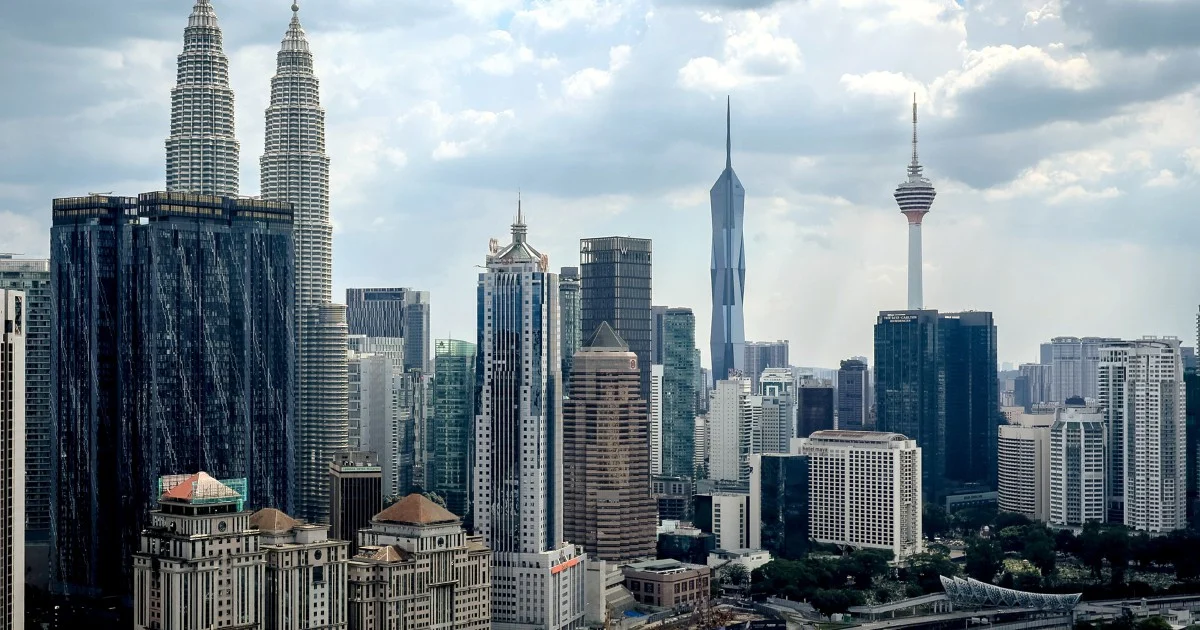
Malaysia's foreign investment outlook is being driven by fundamentals rather than political gossip or speculation about the timing of the 16th general election, according to officials from the Ministry of Investment (Miti). While geopolitical uncertainty and domestic political developments do factor into how multinational corporations and institutional investors assess risk in the country, the constant chatter surrounding GE16 has proven less influential than market observers might assume.
The distinction drawn by Miti reflects a broader reality about how institutional capital moves across borders. Foreign direct investment decisions typically hinge on measurable factors such as labour costs, regulatory efficiency, infrastructure quality, access to raw materials, and proximity to regional supply chains. Malaysia's established manufacturing sectors, its position as a critical node in semiconductor and electronics production networks, and its relatively developed business environment have long supported investor confidence regardless of electoral cycles. When multinational companies conduct due diligence before committing capital, they are scrutinising tax policy stability, court system reliability, customs procedures, and the predictability of government procurement rather than tracking who holds parliamentary seats.
Political stability, however, remains a foundational consideration that separates Malaysia from riskier alternatives in the region. Investors distinguish sharply between periodic electoral turbulence and genuine institutional dysfunction or governance breakdown. The Malaysian system, despite its contentious political landscape over recent years, has maintained core institutional continuity. Investors have observed multiple changes of government through constitutional processes, civil service continuity, and established legal frameworks remaining in place. This track record provides reassurance that Malaysia will not experience the kind of sovereign risk associated with countries where political transitions threaten property rights, contract enforcement, or regulatory consistency.
The speculation around GE16 timing and possible outcomes, however, occupies significant space in local political discourse and media coverage. Analysts in Kuala Lumpur and regional investors have spent considerable effort parsing potential coalition formations, demographic shifts, and policy platform differences. Yet Miti's assessment suggests this speculation has not meaningfully altered investment flows or investor sentiment in measurable ways. A multinational looking to expand automotive manufacturing capacity or establish a data centre is unlikely to delay or redirect decisions based on when the next election might occur, provided the political system itself demonstrates resilience.
This resilience has been tested repeatedly in Malaysia's recent history. The country navigated transitions in 2018, 2020, and 2023 without collapsing institutional structures or experiencing severe economic disruption. Foreign investors have learned from observing these transitions that Malaysia's public institutions, while imperfect, operate according to established rules rather than personalised whim. The judiciary, regulatory agencies, and civil service have demonstrated capacity to function across different governments. This predictability, rather than the colour of the governing coalition, is what shapes investment decisions.
Miti's position aligns with broader patterns visible in how multinational companies evaluate emerging markets and regional hubs. Political noise is filtered out in favour of quantifiable metrics. A manufacturing investor considering Vietnam or the Philippines alongside Malaysia will compare factory rents, utility costs, worker productivity metrics, and shipping times far more seriously than guessing which party might control parliament six months ahead. Election speculation is background noise; infrastructure reliability and regulatory clarity are determinative.
The ministry's framing does contain an implicit acknowledgment that political stability matters as a baseline condition. This suggests a threshold effect: investors require sufficient stability to plan and execute long-term operations, but variations in domestic political rivalry within a stable system do not meaningfully affect their calculations. Malaysia clears the stability threshold; therefore, speculation about electoral outcomes operates below the signal-to-noise ratio that would shift investment decisions.
This interpretation carries implications for Malaysian policymakers. It suggests that the government need not prioritise responding to electoral speculation or positioning for GE16 at the expense of addressing concrete investor concerns: port infrastructure congestion, skills shortages in technical fields, broadband availability in industrial zones, or permitting delays. The investors most likely to be swayed by political considerations are those already hedging bets and looking for reasons to exit; the core foreign investor base remains anchored to Malaysia's operational and strategic advantages regardless of election schedules.
For Malaysia's regional position, Miti's analysis reinforces the country's value proposition as a stable investment destination within Southeast Asia. While Vietnam and Thailand have experienced more dramatic political upheavals in recent decades, Malaysia has avoided military intervention and constitutional breakdown. Thailand's repeated coups and Vietnam's single-party concentration of authority create different risk profiles. Malaysia's competitive advantage, therefore, rests on offering democratic institutional continuity without the volatility of coup risk or the governance opacity of authoritarian systems. Election speculation, in this context, is almost a luxury problem indicating that the system is functioning normally.
The ministry's statement also implicitly advises investors not to read too much into Malaysian political commentary. Foreign funds should focus on sector-specific opportunities, regulatory changes affecting their industries, and macroeconomic indicators rather than attempting to time investments around electoral cycles. Malaysia's openness to foreign capital and its diversified economy provide sufficient stability that even animated domestic political competition does not threaten the investment climate. As long as Malaysian governments across the political spectrum continue defending property rights, respecting contracts, and maintaining functional institutions, GE16 speculation will remain a sideshow to the fundamentals driving foreign investment flows.