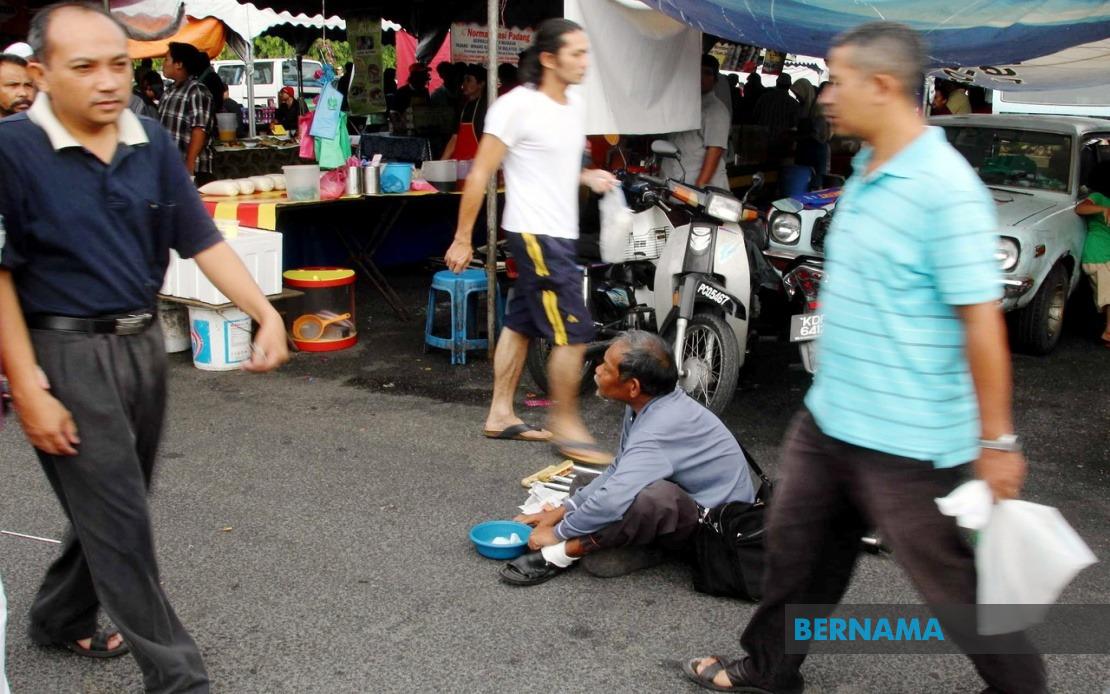
The Malaysian government is treating the proliferation of foreign begging operations as a serious organised crime issue requiring coordinated enforcement across multiple agencies. Speaking through Parliament, the Ministry of Home Affairs revealed that immigration authorities have conducted 836 separate enforcement sweeps across Kuala Lumpur and its surrounding districts from January through May this year, resulting in the detention of 5,411 foreigners for immigration-related violations. Among these cases, 42 individuals were specifically identified as engaged in begging activities, underscoring how the phenomenon remains relatively concentrated within broader immigration enforcement efforts.
What distinguishes this crackdown from routine immigration work is the ministry's explicit acknowledgment that organised syndicates appear to be orchestrating these begging operations rather than individuals acting independently. The Home Ministry's response to parliamentary questions from Fong Kui Lun, the Bukit Bintang representative, highlights growing concern that vulnerable foreigners—particularly children—are being exploited by criminal networks with local connections. The admission that investigations are ongoing against Malaysian citizens suspected of serving as protectors, organisers, or financial beneficiaries reveals the systemic nature of the problem and suggests that successful prosecution will require dismantling entire operational chains rather than simply removing street-level beggars.
The geographic concentration of these activities in high-traffic tourist zones presents a particular challenge for authorities. Areas such as Bukit Bintang, Jalan Alor, and Changkat Bukit Bintang have become recognised begging hotspots, which both complicates enforcement and raises questions about the visibility of exploitation in Malaysia's premier shopping and entertainment districts. The consistent presence of foreign beggars in these locations over recent months suggests either systematic replacement of detained individuals or inadequate capacity to dismantle operational structures faster than syndicates can replenish street-level workers. The concentration in tourist areas also carries reputational implications, as international visitors are disproportionately exposed to these activities, potentially affecting perceptions of urban safety and social stability.
To counter these networks, the Ministry has implemented a multi-agency coordination framework centred on the newly established KL Strike Force, which brings together the Royal Malaysia Police, Kuala Lumpur City Hall, the Department of Social Welfare, and the Immigration Department. This integrated model represents a deliberate shift from siloed enforcement toward information sharing and joint intelligence analysis designed to identify syndicate networks and operational patterns. The inclusion of social welfare services alongside law enforcement suggests official recognition that addressing this phenomenon requires intervention beyond deportation—possibly rehabilitation pathways for exploited individuals and trauma-informed approaches to vulnerable persons, particularly children.
The ministry's emphasis on enhanced intelligence capabilities and analysis of modus operandi indicates that authorities are attempting to profile how syndicates recruit, transport, and deploy workers across different locations. Understanding these patterns is essential for predicting where begging operations will next concentrate and for identifying key organisational nodes that can be targeted for disruption. The expansion of integrated operations with local authorities such as DBKL reflects a pragmatic acknowledgment that immigration enforcement alone cannot solve a problem rooted in local urban dynamics and community-level enabling factors.
From a Southeast Asian perspective, Malaysia's experience with organised begging syndicates mirrors challenges documented in other major urban centres across the region. Thailand, Singapore, and Indonesia have all reported similar patterns of foreign nationals being trafficked or coerced into street-level begging operations, often controlled by transnational criminal organisations. The Malaysian authorities' public acknowledgment of syndicate involvement puts the issue squarely within anti-trafficking frameworks rather than treating it merely as an immigration or public order matter. This conceptual shift could have implications for how cases are prosecuted and what support is extended to victims identified during enforcement operations.
The parliamentary response also addresses a secondary but significant issue: the regulation of foreign worker quotas. The Home Ministry noted that 314 out of 1,919 employers received recommendations for foreign worker allocations during a special application window from January to March. This extended deadline was introduced to accommodate employers who had missed the December 2024 registration closure, suggesting administrative flexibility in response to sector demands. These approved recommendations now await deliberation by the Department of Labour Peninsular Malaysia before formal authorisation under the Employment Act. The distinction between recommendation and final approval creates a window where employers remain uncertain about their workforce availability, potentially driving informal or irregular labour market activity.
The intersection of these two policy areas—irregular foreign begging and formal foreign worker quotas—reflects underlying tensions in Malaysia's labour market governance. The existence of organised begging syndicates exploiting foreign nationals operates in parallel to formal foreign worker programmes, suggesting that different segments of Malaysia's economy operate under substantially different regulatory regimes. While certain employers navigate multi-stage quota approvals, other sectors may tacitly tolerate or benefit from irregular labour arrangements, including those involving trafficking-like conditions. Addressing this inconsistency would require not only enhanced enforcement but also examination of labour market demand drivers that incentivise irregular employment arrangements.
The ministry's reiteration that Malaysia will not compromise on legal breaches or exploitation affecting the nation's image indicates awareness of Malaysia's standing within international frameworks addressing human trafficking and labour exploitation. As a signatory to relevant International Labour Organization conventions and ASEAN protocols, Malaysia faces reputational stakes in demonstrating effective responses to documented cases of vulnerable persons being commercially exploited. Public acknowledgment of syndicate involvement and investigative action against local facilitators signals commitment to these international obligations, though implementation effectiveness will ultimately determine credibility.
Looking forward, the success of coordinated enforcement will likely depend on several factors beyond operational intensity. First, adequate resource allocation to specialised units trained in victim identification and trauma-informed interviewing will be essential for distinguishing between trafficking victims requiring protection and individuals engaged through coercion versus voluntary participation. Second, effective prosecution of local organisers and financiers requires robust evidence collection and witness protection mechanisms, which may be administratively demanding. Third, addressing root causes requires understanding why certain foreigner cohorts become vulnerable to recruitment by syndicates—whether through initial trafficking, immigration status vulnerability, economic desperation, or deception about income expectations. Without addressing these drivers, enforcement alone risks becoming a cycle of apprehension and replacement rather than genuine disruption.
The implications for Malaysia's broader migration governance framework are substantial. The Home Ministry's integrated approach suggests recognition that multiple policy domains—immigration, labour, social welfare, and law enforcement—must be coordinated to achieve coherent outcomes. The KL Strike Force model could potentially be replicated in other major urban centres experiencing similar issues. Additionally, the acknowledgment of local complicity in syndicate operations creates potential for expanded investigation into businesses and property owners who may be benefiting from begging activity concentration near their premises, whether through deliberate facilitation or wilful blindness to visible exploitation.

