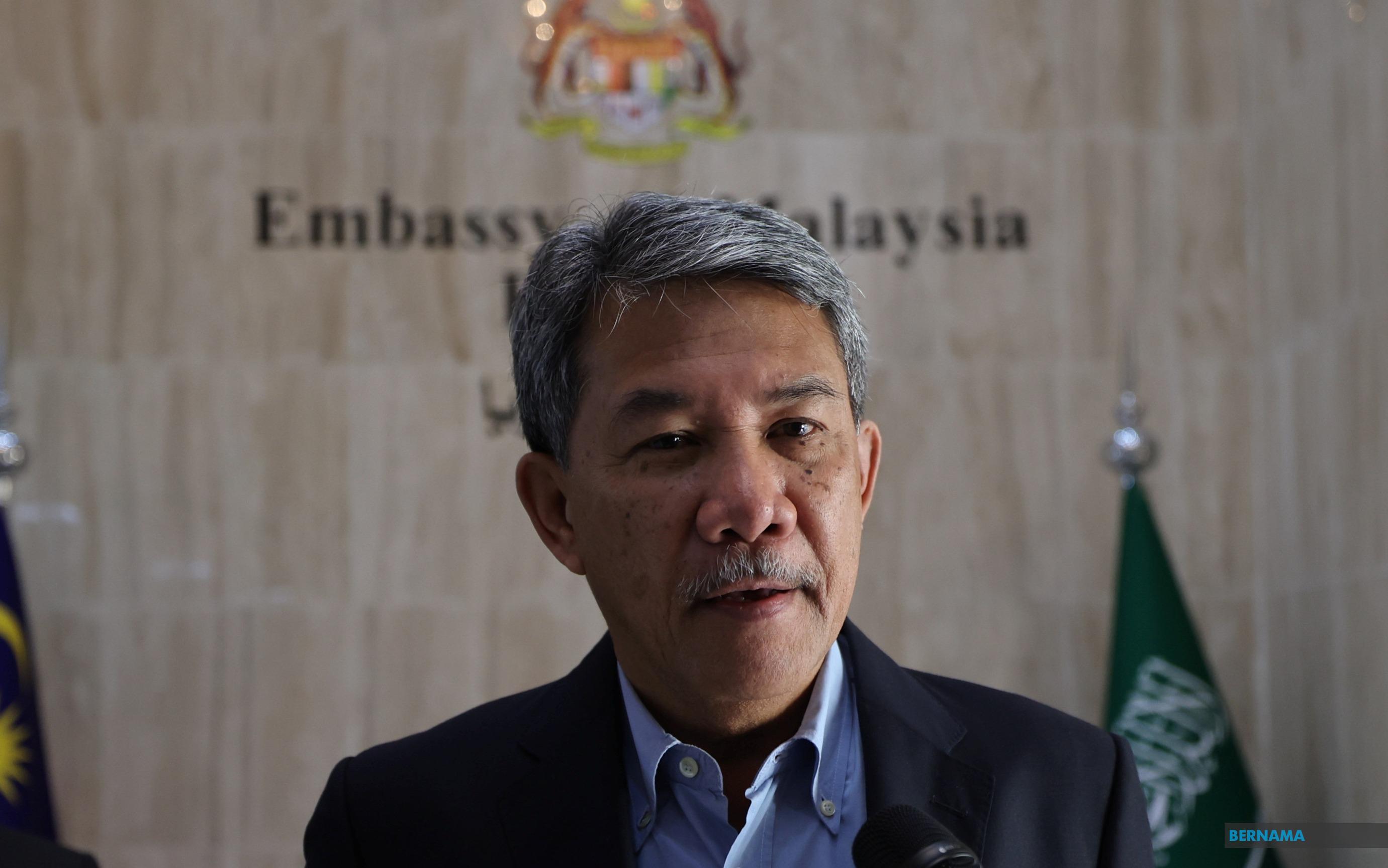
Foreign Minister Datuk Seri Mohamad Hasan touched down in Jeddah on August 26 to participate in an emergency gathering of the Organisation of Islamic Cooperation's Council of Foreign Ministers, underscoring Malaysia's continued diplomatic engagement on Middle Eastern affairs. His arrival at King Abdulaziz International Airport at 5.45 pm marked the beginning of a significant diplomatic mission centred on one of the region's most pressing geopolitical challenges. Malaysian Ambassador to Saudi Arabia Datuk Syed Bakri Syed Abdul Rahman greeted the minister, signalling the importance Kuala Lumpur places on this multilateral engagement.
The extraordinary meeting convenes against a backdrop of sustained tensions in the Israeli-Palestinian territories. The agenda encompasses recent developments affecting Palestinians, with particular focus on the humanitarian and political situation in Gaza and the West Bank, alongside the contentious issue of unlawful Israeli settlement expansion in occupied territories. These matters remain pivotal to regional stability and have long commanded Malaysia's diplomatic attention across multiple international forums.
Leading a full Malaysian delegation to the one-day session, Mohamad will articulate the nation's established position on the conflict through a formal National Statement. This address will reaffirm Malaysia's steadfast backing for Palestinian self-determination and their entitlement to establish a sovereign, independent state anchored on territorial boundaries recognised prior to 1967—a foundational principle in Malaysia's Middle East policy that has remained consistent across successive administrations.
According to Syed Bakri, Malaysia's active participation in this OIC forum reflects the imperative to amplify the country's voice against what Kuala Lumpur characterises as Israeli aggression and territorial violations in Palestinian lands. Malaysia has consistently positioned itself as a vocal advocate within the Islamic world and the Non-Aligned Movement, viewing such gatherings as essential platforms to mobilise collective Islamic and international opinion. The ambassador's comments underscore how Kuala Lumpur views multilateral channels as instrumental for translating diplomatic rhetoric into coordinated regional action.
Beyond the formal agenda, Mohamad's visit affords opportunity for bilateral consultations with fellow foreign ministers attending the gathering. These side meetings carry strategic weight, allowing Malaysia to explore avenues for deepening economic partnerships and broadening cooperation frameworks with key Muslim-majority nations. Such diplomatic engagements often yield substantive discussions on trade liberalisation, investment facilitation, and sectoral collaborations in areas ranging from technology to tourism.
Malaysia's diplomatic approach to Palestinian affairs balances principled advocacy with pragmatic engagement. By participating in OIC-coordinated responses, Kuala Lumpur signals solidarity with the broader Muslim world while positioning itself as a constructive voice within Islamic consensus-building. This strategy reflects Malaysia's strategic location and role within ASEAN, where it must manage complex relationships across multiple geopolitical spheres without appearing to narrow its international engagement exclusively around single issues.
The OIC itself has intensified its diplomatic focus on Palestinian matters following escalations in hostilities and humanitarian crises. As the principal international body representing Muslim-majority states, the organisation's extraordinary meetings typically signal heightened concern and warrant coordinated diplomatic response. Malaysia's participation at ministerial level demonstrates Kuala Lumpur's commitment to engagement beyond rhetorical support, investing political capital and high-level representation in collective problem-solving forums.
From a Southeast Asian perspective, Malaysia's visibility at such meetings reinforces its identity as a bridge between the Islamic world and broader international community. The country's active OIC membership contrasts with several ASEAN neighbours who maintain more measured diplomatic profiles on Middle Eastern conflicts. Kuala Lumpur's approach reflects both its substantial Muslim population and historical positioning as a champion of developing-world causes within multilateral institutions.
The timing of this extraordinary convocation, concurrent with broader Middle East instability, positions Malaysia alongside other nations seeking to prevent further deterioration while advocating for sustainable political solutions grounded in international law and human rights standards. Mohamad's National Statement will likely echo these themes while emphasising Malaysia's view that genuine peace requires addressing root causes of Palestinian grievances through meaningful implementation of previously negotiated frameworks and international resolutions.

