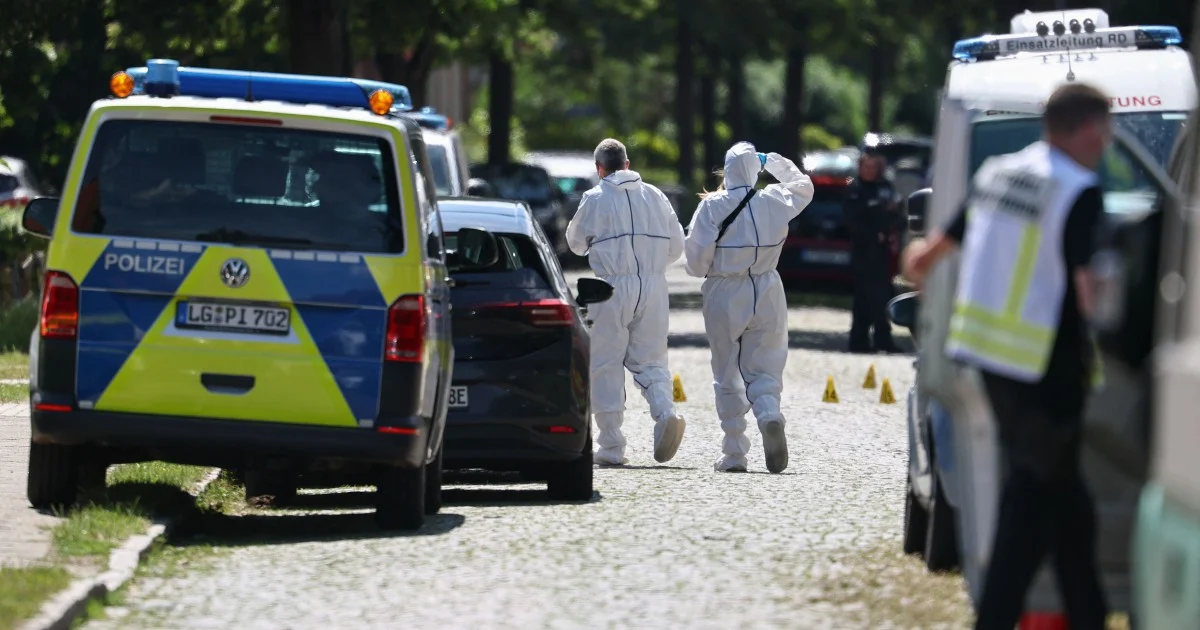
A shooting at a youth welfare facility in Stade, Germany on Monday claimed five lives, marking a significant security incident in a country where armed violence remains relatively rare compared to other developed nations. The suspected perpetrator was apprehended by police shortly after the attack, bringing the immediate threat to an end and prompting authorities to launch a full investigation into the circumstances surrounding the tragedy.
The incident represents one of Germany's most devastating mass shooting events in recent memory, a distinction that underscores both the rarity and severity of such violence within the nation's borders. Germany maintains strict gun control legislation and has experienced far fewer mass shootings than comparable countries, making this event particularly shocking to the German public and international observers. The shooting's occurrence at a youth welfare centre—an institution designed to support vulnerable young people—adds another layer of tragedy to the incident.
Youth welfare centres in Germany provide crucial social services to at-risk adolescents and young adults, offering counselling, vocational training, housing assistance, and other support services. These facilities serve as safe spaces where young people can access help navigating personal, economic, or social challenges. The targeting of such a centre raises urgent questions about security protocols at social service institutions and whether additional protective measures are necessary.
The rapid arrest of the suspected gunman suggests that law enforcement responded swiftly and effectively to the emergency. German police protocols for active shooter situations have evolved over the years following previous incidents, and the speed with which the threat was neutralised may reflect improvements in emergency response training and coordination between local security forces.
For Malaysian and Southeast Asian readers, the incident serves as a stark reminder that gun violence, whilst statistically uncommon in highly regulated countries like Germany, remains a persistent global concern. Both regions have implemented varying approaches to firearm regulation, and such incidents prompt comparative analysis of how different jurisdictions balance public safety with individual rights.
The psychological impact on German society following such incidents is considerable. Germany, despite its economic strength and developed infrastructure, grapples with the same underlying social tensions present in other wealthy democracies—isolation, mental health crises, and access to weapons among individuals in psychological distress. The fact that the shooting occurred at a youth welfare centre suggests potential connections to social vulnerability, though investigations will determine the precise motivations.
International security experts typically examine mass shooting incidents to identify common patterns and risk factors. Vulnerabilities within social service institutions, workforce training in threat recognition, and mental health support systems all fall within the investigative scope. German authorities will likely conduct comprehensive reviews of security measures at similar facilities nationwide.
The incident inevitably reignites broader societal conversations about gun availability in Europe. Whilst Germany maintains some of the continent's strictest firearm regulations, the attack demonstrates that determined individuals can still acquire weapons and perpetrate violence. This reality complicates policy discussions around balancing personal liberty with collective safety.
For families and staff at the Stade facility, the trauma will be long-lasting. Youth welfare workers across Germany will likely experience heightened anxiety about their physical safety whilst performing essential social services. Institutional support, counselling services, and workplace security measures will become focal points for facility management and workers' representatives in the weeks following the tragedy.
The broader implications extend to how Germany's social service sector functions going forward. Enhanced security protocols, staff training programmes, and mental health support systems may be implemented across similar institutions. Policymakers will balance the need for secure facilities against the importance of maintaining welcoming, accessible spaces where vulnerable young people feel comfortable seeking help.
Regional and international law enforcement agencies typically share information following significant incidents to identify any potential transnational dimensions or patterns that might inform security strategies. German federal authorities will coordinate with regional police forces to assess whether additional protective measures should be implemented systematically across social service infrastructure.
As investigations proceed, understanding the perpetrator's background, motivations, and access to weapons will prove crucial for determining what preventative measures might be implemented to reduce the risk of similar incidents. Mental health professionals, security consultants, and social policy experts will scrutinise this case for lessons applicable to other vulnerable populations and institutions.
The tragedy at Stade represents a failure point in Germany's otherwise robust public safety systems, prompting uncomfortable questions about hidden vulnerabilities within social institutions and the limitations of even comprehensive gun control measures when confronted by individuals determined to cause mass harm.

