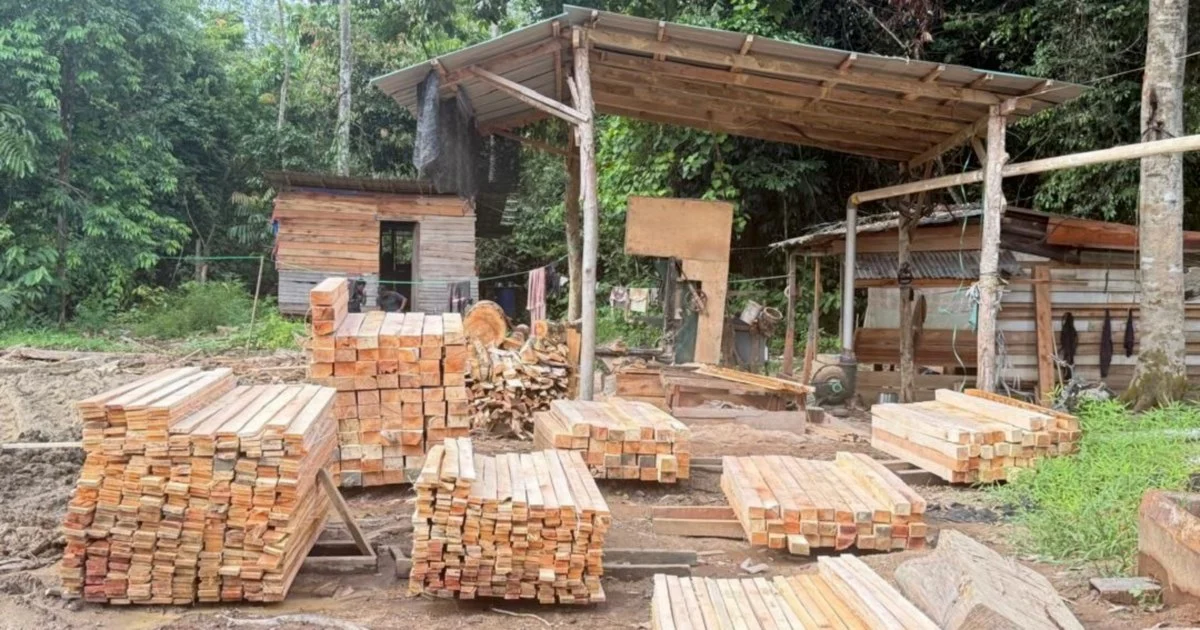
Authorities swooped on an illegal timber milling operation in Gua Musang yesterday, leading to the detention of five suspects and the seizure of substantial assets valued at RM1.69 million. The General Operations Force conducted the raid in Kampung Sungai Bayu after establishing that the sawmill had been operating without proper licensing for approximately a month. Four men and one woman were held at the scene and subsequently taken into custody for further investigation into timber trafficking and related offences.
The discovery of the unlicensed facility underscores the persistent problem of illegal logging and timber processing in Peninsular Malaysia's forested regions. Kelantan, with its extensive timber reserves and remote jungle areas, has historically been a focal point for such operations. The swift identification and shutdown of this particular facility demonstrates enhanced enforcement efforts by authorities tasked with protecting the nation's forest resources and ensuring compliance with forestry regulations.
The RM1.69 million haul encompasses both processed and unprocessed timber products discovered on the premises, along with machinery and equipment used in the milling operation. Such seizures represent significant financial losses to criminal networks operating in the timber trade, though authorities acknowledge that combating illegal sawmills requires sustained vigilance given the terrain's accessibility to clandestine operators. The value of confiscated goods often reflects the profitability of black-market timber sales, where buyers circumvent legitimate supply chains and regulatory oversight.
The month-long operation period raises questions about detection mechanisms and monitoring capabilities in forest areas. Despite increased patrols and improved information sharing between agencies, illicit sawmills can establish operations relatively quickly, particularly in locations distant from urban centres. The fact that this facility operated for approximately thirty days before detection suggests that perpetrators exploit gaps in surveillance or exploit remote geography to conceal their activities from authorities.
Illegal timber trafficking carries serious environmental consequences for Malaysia. Unregulated logging operations often ignore sustainability protocols, stripping forest areas without regard for ecosystem recovery or biodiversity protection. The harvesting methods employed by unlicensed operators typically lack the environmental safeguards mandated for legitimate forestry companies, resulting in soil erosion, habitat destruction, and loss of forest cover. These impacts extend beyond immediate environmental concerns, affecting watershed quality and contributing to long-term forest degradation in regions critical to Malaysia's ecological balance.
The financial incentives driving such operations remain substantial despite enforcement efforts. Illegal timber commands premium prices in underground markets, particularly when sourced from protected species or harvested from conservation areas. Criminal syndicates profit from buyers willing to overlook the dubious origins of their materials, effectively subsidising environmental destruction. The five detainees in this case likely represent a small segment of networks engaged in timber trafficking, raising questions about the broader scale of unlicensed milling activities across Peninsular Malaysia.
Coordination between federal and state enforcement agencies plays a crucial role in disrupting these operations. The General Operations Force works alongside the Forestry Department, police, and customs authorities to identify and shut down illegal facilities. Information gathering from local communities, tip-offs from legitimate timber operators, and surveillance activities all contribute to successful raids. However, perpetrators continuously adapt their methods, relocating operations or disguising activities to evade detection, perpetuating a cycle of enforcement and evasion.
The legal framework governing timber extraction in Malaysia provides substantial penalties for unlicensed operations, including imprisonment and heavy fines. Those detained in connection with the Gua Musang sawmill face investigation under various statutes covering forestry violations, environmental crimes, and potentially organised crime legislation if links to larger trafficking networks emerge. Prosecution outcomes carry implications for sentencing severity and may influence future deterrence strategies.
For Malaysia's timber industry, such illegal operations undermine the reputation of legitimate exporters and create complications in international trade. Buyers increasingly scrutinise supply chain documentation to ensure legal and sustainable sourcing. Unlicensed sawmills operating concurrently with legitimate businesses create market distortions, allowing illegal operators to undercut prices and damage the competitiveness of law-abiding enterprises. Eliminating this shadow market therefore benefits both environmental protection and legitimate commercial interests.
The seizure in Gua Musang reflects broader regional challenges with timber trafficking across Southeast Asia. Vietnam, Thailand, and Cambodia have similarly grappled with extensive networks of illegal logging and milling operations. International cooperation through mechanisms like ASEAN environmental agreements and enforcement information sharing remains essential for addressing transnational dimensions of timber trafficking. As demand for timber continues, authorities across the region recognise that disrupting illegal supply chains requires coordinated, sustained effort alongside investment in monitoring technology and personnel.
%22%2F%3E%3C%2Fpattern%3E%3C%2Fdefs%3E%3Crect%20width%3D%22100%25%22%20height%3D%22100%25%22%20fill%3D%22url(%23ph1ap43g)%22%2F%3E%3Crect%20width%3D%22100%25%22%20height%3D%22100%25%22%20fill%3D%22url(%23ph1ap43p)%22%2F%3E%3Ctext%20x%3D%2250%25%22%20y%3D%2250%25%22%20text-anchor%3D%22middle%22%20dominant-baseline%3D%22central%22%20fill%3D%22rgba(255%2C255%2C255%2C0.95)%22%20font-family%3D%22Georgia%2C%20'Times%20New%20Roman'%2C%20serif%22%20font-weight%3D%22700%22%20font-size%3D%22320%22%20letter-spacing%3D%22-0.02em%22%3EMiri%3C%2Ftext%3E%3C%2Fsvg%3E)
%22%2F%3E%3C%2Fpattern%3E%3C%2Fdefs%3E%3Crect%20width%3D%22100%25%22%20height%3D%22100%25%22%20fill%3D%22url(%23ph3qw4bg)%22%2F%3E%3Crect%20width%3D%22100%25%22%20height%3D%22100%25%22%20fill%3D%22url(%23ph3qw4bp)%22%2F%3E%3Ctext%20x%3D%2250%25%22%20y%3D%2250%25%22%20text-anchor%3D%22middle%22%20dominant-baseline%3D%22central%22%20fill%3D%22rgba(255%2C255%2C255%2C0.95)%22%20font-family%3D%22Georgia%2C%20'Times%20New%20Roman'%2C%20serif%22%20font-weight%3D%22700%22%20font-size%3D%22170%22%20letter-spacing%3D%22-0.02em%22%3EMalaysia%3C%2Ftext%3E%3C%2Fsvg%3E)