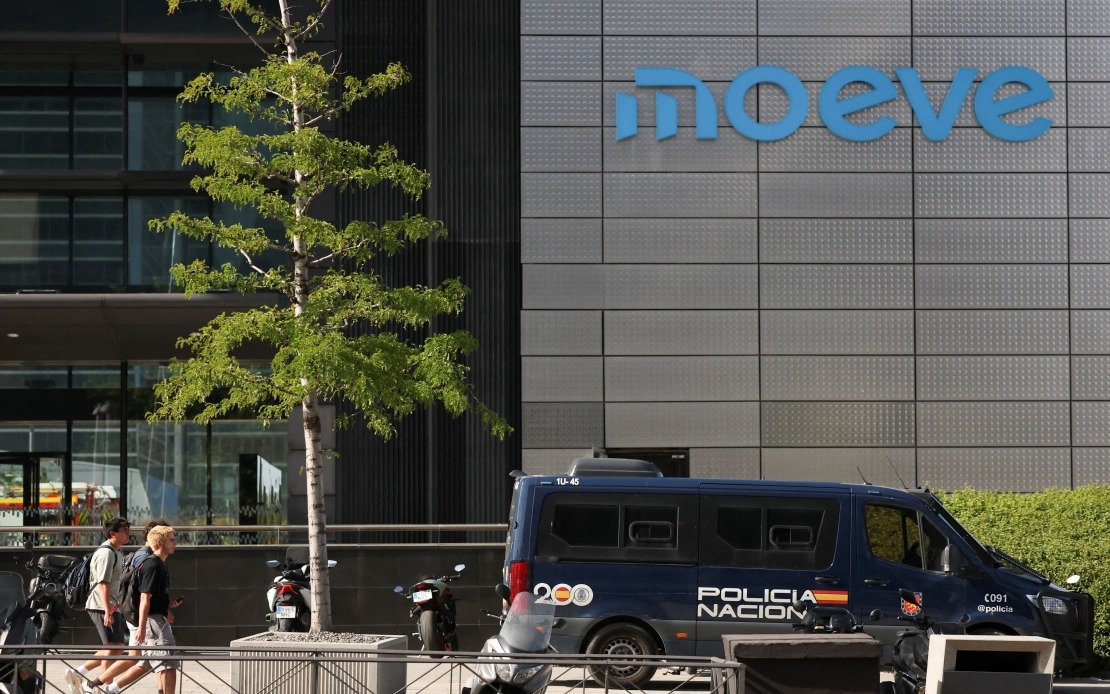
A significant fire erupted at Torre Moeve in central Madrid on Tuesday afternoon, briefly drawing emergency services and public attention to Spain's second-tallest residential and office building. The incident commenced with an explosion around 5:00 pm local time within the structure, prompting immediate evacuation protocols and a visible cloud of smoke that could be seen across multiple districts of the Spanish capital.
The blaze originated on the 25th floor, a section dedicated to technical installations and mechanical systems rather than occupied office or residential spaces. This location proved advantageous in limiting potential harm to building occupants, as these rooms typically contain fewer people during operating hours. The Spanish government delegation in Madrid confirmed the fire's starting point and severity, allowing emergency responders to focus containment efforts on a defined area.
Madrid's firefighting services responded swiftly to the emergency call, with crews from the Madrid City Council arriving and deploying resources to combat the spreading flames. Their intervention proved effective, with firefighters declaring the fire fully extinguished within a reasonable timeframe. Following suppression, emergency personnel conducted thorough internal inspections of the building to ensure no hidden hot spots remained and to assess structural integrity across affected levels.
The evacuation procedure, executed as a precautionary measure, proceeded without significant incident. Building management and emergency coordinators successfully moved occupants away from potential danger, demonstrating effective emergency protocols for a high-rise structure of this magnitude. The absence of fatalities or serious injuries stands as testimony to both the swift response capabilities and the building's safety infrastructure.
According to accounts from local media outlets, the incident resulted in minimal medical impact on those present. Two workers experienced mild smoke inhalation but required no hospital admission, receiving treatment at the scene before being cleared for departure. A passing pedestrian outside the building experienced anxiety related to the dramatic nature of the event but likewise needed no formal medical intervention. All three individuals were discharged without requiring transport to healthcare facilities.
Torre Moeve's position as Spain's second-tallest skyscraper elevated the significance of this incident in the public consciousness. Such events at prominent urban landmarks in major European cities tend to attract considerable attention from media and residents alike, particularly when visible consequences such as smoke plumes become apparent across a cityline. The successful management of this emergency underscored the effectiveness of established safety protocols in modern high-rise structures.
For Malaysian and Southeast Asian observers, such incidents serve as reminders of the importance of rigorous fire safety standards in metropolitan development. As regional cities continue vertical expansion with increasingly ambitious architectural projects, the maintenance of technical systems and regular safety audits remain critical. The Torre Moeve incident highlights how proper evacuation planning and emergency response coordination can substantially reduce harm even when unexpected incidents occur.
The origin and exact cause of the initial explosion triggering the fire remain under investigation by Spanish authorities. Understanding what triggered the incident could provide valuable lessons for building managers and safety inspectors across European cities and potentially inform best practices internationally. Such post-incident analyses frequently identify preventative measures applicable to similar technical installations in other structures.
The successful extinguishing of the fire and the building's structural integrity following the incident allowed Madrid authorities to assess damage and determine when normal operations could resume. Such rapid recovery timelines in modern European cities reflect both advanced firefighting capabilities and robust building codes that limit fire spread and structural compromise. For comparison, high-rise incidents in less developed urban environments sometimes result in prolonged closures and more extensive damage due to differences in infrastructure and emergency response systems.
This episode demonstrates why continuous investment in fire safety technology, staff training, and evacuation procedures remains essential for metropolitan areas worldwide. Buildings of Torre Moeve's prominence serve not only as commercial and residential spaces but as symbols of urban development and municipal preparedness. The professional response from Madrid's emergency services reinforced public confidence in crisis management capabilities during frightening urban incidents.

