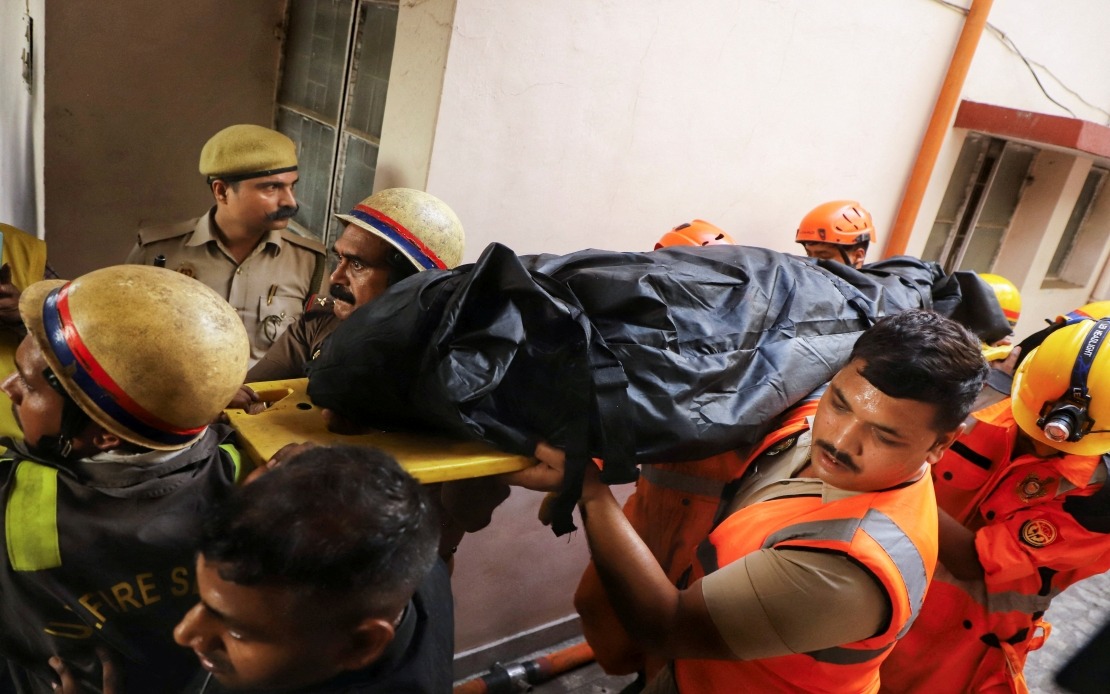
A catastrophic fire ripped through a three-storey commercial building in Lucknow on Monday, claiming the lives of at least 15 people, the majority of them young students attending an animation training institute housed within the structure. The blaze erupted in the Aliganj area of Uttar Pradesh's capital, engulfing the facility that also contained retail stores and training spaces. The incident has revived serious questions about building safety standards and emergency response mechanisms in India's densely populated urban centres, with particular concern about how educational institutions are regulated and monitored.
Eyewitness accounts and social media footage captured the harrowing moments as desperate individuals, including children, leapt from the smoke-choked building as panicked crowds below attempted to summon emergency services. The chaotic scenes reflected the rapid spread of the fire and the apparent difficulty occupants faced in escaping through conventional routes. Bystanders described the intensity of the blaze and the speed with which it consumed the structure, leaving little time for orderly evacuation. The footage has since circulated widely, serving as a stark reminder of how quickly such incidents can turn catastrophic when safety protocols are inadequate or poorly implemented.
Emergency responders transported more than 20 victims to the trauma centre at King George's Medical University (KGMU), the region's premier medical facility. Of those admitted, five individuals were receiving treatment for their injuries, though their conditions remained uncertain. However, the remaining 15 victims were pronounced dead upon arrival at the hospital, indicating that rescue teams reached them only after the fire had claimed their lives. The death toll makes this one of the deadliest building fires in Uttar Pradesh in recent years and raises troubling questions about the time it took for fire services to respond and the capacity of rescue operations.
Uttar Pradesh Chief Minister Yogi Adityanath issued a statement expressing his sorrow at the tragedy, describing the loss of life as "extremely tragic and heart-rending" and extending condolences to bereaved families. His remarks, delivered at a rally in another city, represented the obligatory political response but offered little insight into what measures the state government intends to implement to prevent similar incidents. The statement notably lacked specific commitments regarding immediate investigations, accountability for building code violations, or enhanced safety oversight of educational institutions operating within commercial structures.
The Lucknow disaster arrives in the immediate aftermath of another major fire tragedy that gripped India just two weeks earlier. A devastating hotel fire in Delhi on June 9 claimed at least 22 lives, many of them foreign medical tourists visiting the country for affordable healthcare procedures. That incident similarly exposed the vulnerability of buildings to fire and the inadequacy of safety measures in establishments housing transient populations. The proximity of these two major fire incidents within such a short timespan suggests systemic issues rather than isolated lapses, pointing to widespread non-compliance with building codes and fire safety regulations across India's commercial sector.
The focus on an animation training centre in this case is significant for Southeast Asian readers, as India has become a major hub for digital and creative services training, with thousands of students from across the region enrolling in such institutions. The presence of young trainees in the Lucknow facility underscores how educational entrepreneurship has expanded into informal or inadequately regulated spaces, often housed in older commercial buildings that predate modern safety standards. The vulnerability of these institutions to fire hazards represents a broader concern for the rapidly growing digital skills training sector across South Asia, where rapid expansion has frequently outpaced regulatory oversight.
Investigations will likely focus on multiple factors: whether the building possessed valid fire safety certificates, whether emergency exits were adequately marked and accessible, whether alarm systems functioned properly, and whether occupancy limits were respected. The presence of multiple commercial activities within a single structure—animation classes alongside retail stores—raises questions about how fire loads were managed and whether different tenant activities were properly coordinated from a safety perspective. The involvement of a training centre compounds concerns, as such facilities typically house younger, less familiar occupants who may struggle to navigate unfamiliar buildings during emergencies.
For Malaysian stakeholders, this incident carries direct relevance. Malaysia's rapid urbanisation and the proliferation of educational and commercial activities in multi-use buildings mirror conditions in Indian cities. While Malaysia has stronger building codes and fire safety enforcement mechanisms than many regional neighbours, complacency remains a risk. The Lucknow fire serves as a reminder that even routine commercial spaces can harbour catastrophic risks if safety measures are treated as bureaucratic formalities rather than essential protections. Malaysian authorities responsible for building regulation, fire safety certification, and educational facility oversight can extract valuable lessons about the importance of unannounced inspections, rigorous enforcement, and prosecuting violations.
The human cost of the Lucknow fire extends far beyond the immediate death toll. Families have been bereaved, survivors face physical and psychological trauma, and the broader community experiences collective grief. For students and their families from across India and potentially other South Asian countries who had enrolled at the training centre seeking to improve their career prospects, the tragedy represents a devastating disruption of their aspirations. The incident will likely trigger insurance disputes, legal proceedings against building owners and authorities, and demands for compensation, processes that may stretch over years while victims' families seek justice.
Moving forward, the Lucknow incident should catalyse serious reassessment of how India regulates commercial buildings housing educational activities. Fire safety audits, mandatory sprinkler systems, clearly marked emergency exits, regular evacuation drills, and surprise inspections should become standard rather than exceptional. The involvement of students—a vulnerable population with limited agency over their environment—demands heightened protections. For regional observers, the tragedy underscores the false economy of weak enforcement; cutting corners on safety costs lives and ultimately imposes far greater economic and social burdens through litigation, loss of reputation, and lost human potential. Southeast Asian nations can strengthen their own safety cultures by treating such incidents not as distant tragedies but as cautionary tales applicable to their own contexts.