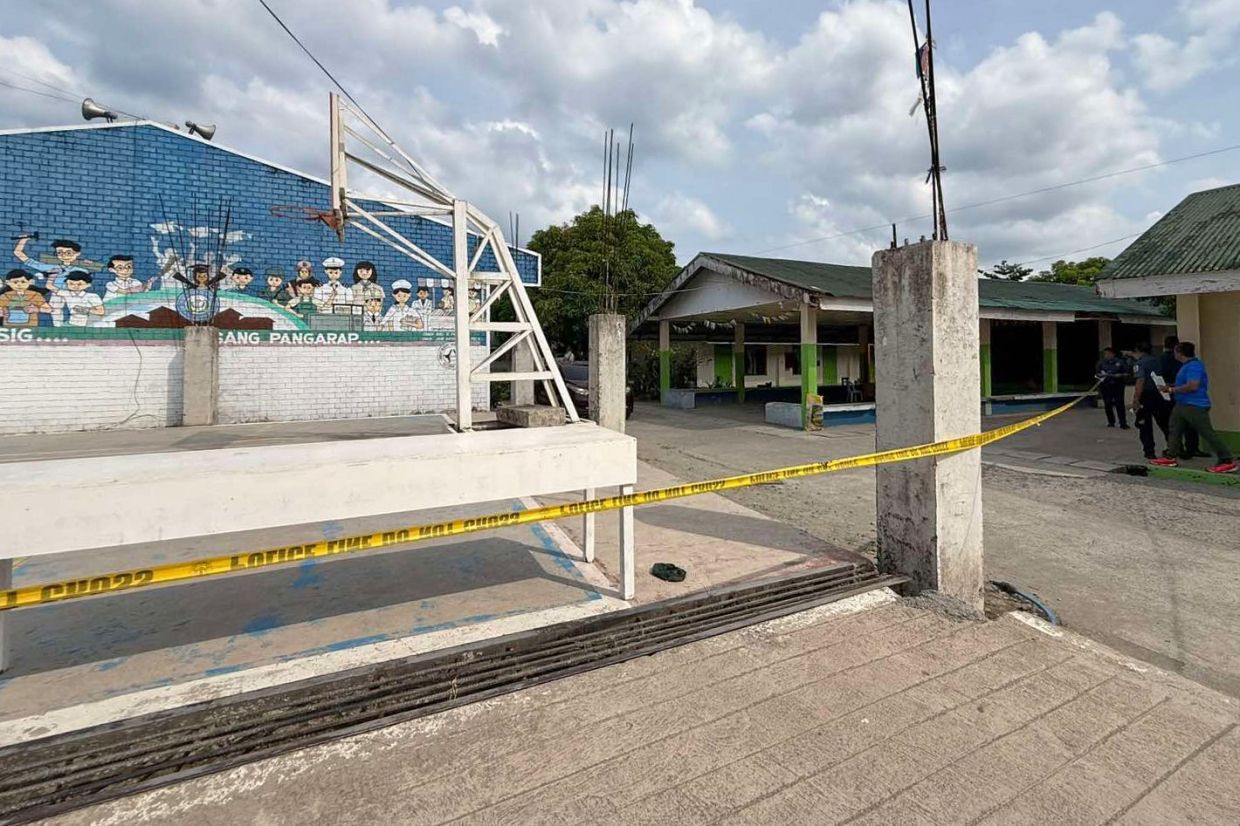
A 14-year-old Filipino student has been detained by police for allegedly threatening an armed attack on her school through social media posts, marking another concerning incident in the wake of last week's deadly shooting at a Tacloban City institution. Interior Secretary Jonvic Remulla disclosed the arrest during a press conference at Camp Crame on Thursday, revealing that the Grade 10 student from Tolosa National High School in Leyte had created multiple Facebook accounts to spread the threatening messages to classmates.
The Philippine National Police Criminal Investigation and Detection Group acted on a referral from Senator Bam Aquino after the student's inflammatory posts appeared online late Wednesday evening. In the messages, the teenager declared that she would "disrupt the school" and warned classmates to "prepare yourselves" for potential victims of violence, stating ominously that "there is no time nor day" and that students should be ready for "whoever gets shot or stabbed." The tone and content of the posts deliberately echoed the characteristics of premeditated violence, causing alarm among school administrators and parents in the region already traumatised by the recent Tacloban tragedy.
Authorities moved swiftly to identify the source of the threats through social media analysis and information provided by concerned community members. Investigators determined that the student had deliberately created several accounts to amplify the reach and impact of her messages, a tactic often employed to increase psychological impact and evade quick detection. However, by the time officials made contact with the minor, her accounts and posts had already been scrubbed from the platform, suggesting some awareness of the severity of her actions or external pressure to remove the evidence.
The adolescent's lack of cooperation during questioning, coupled with her parents' refusal to engage with investigators from the Tolosa Municipal Police Station, complicated the initial investigation. Remulla attributed the teenager's reticence to fear of consequences, while the family's reluctance to participate suggested potential domestic tensions that might underlie the concerning behaviour. Nevertheless, police determined that neither the minor nor her household had access to firearms, significantly reducing the perceived immediate threat level, though authorities acknowledged the psychological impact of such threats on school communities already on heightened alert.
Because the student was a minor, the Philippine legal system afforded her protection under Republic Act No. 9344, the Juvenile Justice and Welfare Act, which prohibits formal criminal charges against children below a certain threshold. Consequently, the PNP transferred custody to the Department of Social Welfare and Development, which subsequently released her pending further intervention. This outcome, while consistent with juvenile justice principles aimed at rehabilitation over punishment, underscores the limitations authorities face when addressing online threats originating from young perpetrators.
Investigators identified psychological and familial strain as probable motivating factors behind the teenager's conduct. Remulla indicated that "personal and family issues" appeared central to her decision-making, suggesting interpersonal conflicts at home or school may have precipitated the desperate cry for attention manifested through violent rhetoric. After authorities engaged with her family, the official assessment concluded that the threat had been "neutralised and inactive," with no evidence of genuine planning, collaboration with others, or realistic capacity to execute such violence.
A striking pattern emerged when authorities examined the minor's online behaviour: she was identified as an enthusiastic player of GoreBox, a violence-themed video game that has attracted scrutiny following its connection to the Tacloban shooting perpetrators. The two teenage gunmen who opened fire at San Jose National High School on Monday, killing three fellow students and wounding at least twenty others, were likewise documented as devoted fans of the same game. This convergence has prompted the Cybercrime Investigation and Coordinating Centre to temporarily suspend access to GoreBox across Philippine platforms, signalling official concern about potential causal links between the game's graphic content and real-world violence inspired by or modelled after such simulations.
The Tolosa incident represents the second documented instance in less than a week of a teenager threatening or perpetrating school-based violence in Leyte province, a troubling acceleration that has alarmed educators, parents, and policymakers across the Philippines. The concentration of incidents within a compressed timeframe suggests possible contagion effects, whereby initial tragedy generates copycat impulses among vulnerable adolescents struggling with emotional regulation and access to social media platforms that amplify and normalise violent ideation.
For Malaysian readers and Southeast Asian observers, the Tolosa case illuminates vulnerabilities in regional school security and youth mental health infrastructure that transcend national boundaries. The Philippines' experience demonstrates how rapid information dissemination through social media, combined with limited regulatory oversight of violent gaming content and insufficient support systems for at-risk teenagers, creates conditions where threatening rhetoric can proliferate rapidly. The relative ease with which minors can create multiple accounts, the delayed detection of threatening posts, and the difficulty in securing parental cooperation all represent systemic challenges recognised across the region.
The legal and procedural complications arising from juvenile involvement in serious threats underscore tensions between protective legislation designed to rehabilitate young offenders and urgent public safety imperatives. While Republic Act No. 9344 aims to redirect troubled youth away from the criminal justice system toward counselling and support, cases like Tolosa's raise questions about whether such frameworks adequately balance rehabilitation with community protection, particularly when threats target entire school populations.
Authorities in the Philippines remain committed to disrupting the apparent cycle of violence and threats, with Remulla's public statements emphasising that both the Tacloban shooting suspects and the Tolosa student were identified as GoreBox enthusiasts. This linkage has catalysed discussions about content regulation, parental monitoring, and the adequacy of mental health services available to adolescents experiencing crisis. Whether the temporary ban on GoreBox will prove effective in preventing further incidents, or whether underlying social and psychological factors require more comprehensive intervention, remains an open question as the region grapples with escalating school-based violence.

