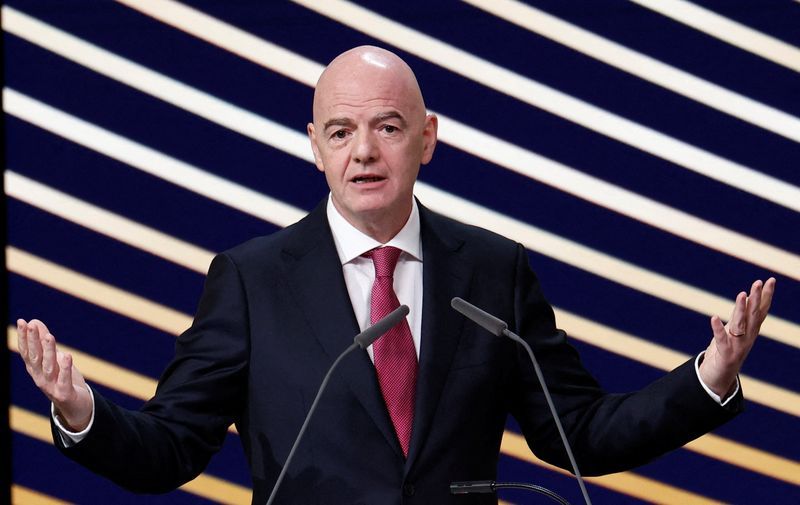
The Oceania Football Confederation has thrown its support behind FIFA's handling of a controversial private investment proposal that triggered international backlash, even as New Zealand—the region's most prominent football nation—broke with the regional bloc to withdraw backing for President Gianni Infantino's anticipated reelection campaign next year. The contrasting positions reveal deepening fissures within global football's governance structures, with smaller confederations viewing FIFA leadership as beneficial for development while larger footballing powers demand accountability.
Infantino faces mounting pressure as three major football confederations have publicly challenged his leadership. UEFA, the Asian Football Confederation, and CONCACAF have each called for a comprehensive review of his conduct, specifically focusing on the mishandled attempt to commercialize the World Cup and other FIFA competitions through private investment. This coordinated regional opposition represents an unprecedented challenge to the FIFA president's authority and suggests his path to reelection may face stronger resistance than previously anticipated.
The Oceania Football Confederation, which represents just 11 full member nations across the Pacific region, described the situation differently in its official response. Meeting on Wednesday, the OFC's executive committee welcomed FIFA's decision to abandon the FFE proposal and endorsed the organization's commitment to examine how the scheme had been developed and promoted. The confederation's leadership suggested that the region had tangibly benefited from FIFA's stewardship over the past decade, particularly in advancing football development initiatives across Oceania's small and geographically dispersed member states.
For developing football nations in the Pacific, FIFA's centralized resources and development programs carry substantial weight. The OFC's statement emphasized that the confederation recognized the progress achieved under FIFA's current leadership structure and encouraged the organization to view the ongoing review as an opportunity to implement necessary reforms rather than as a threat to its governance model. This perspective reflects the reality that smaller confederations often rely heavily on FIFA's technical and financial support to maintain competitive football programs.
New Zealand's position stands in stark contrast to its regional confederation's stance. As the sole Oceania representative to qualify for the World Cup and the region's most developed football nation, New Zealand Football has concluded that trust within international football governance has fundamentally broken down. The organization formally announced its withdrawal of support for Infantino's reelection and simultaneously demanded an independent investigation into how FIFA developed and presented the FFE scheme to member associations.
New Zealand Football's statement carried pointed language about the crisis of confidence afflicting global football administration. Officials noted that decisions and actions taken within FIFA have contributed to breakdown in trust and have increased divisions among international football bodies. The New Zealand federation's insistence on independent review rather than an internal FIFA investigation suggests skepticism about the organization's capacity to investigate itself fairly, a concern shared by the three major confederations that have already challenged Infantino's leadership.
The aborted FFE proposal had promised immediate financial incentives to member associations while dangling substantially larger compensation for those willing to support the commercialization framework. Member federations were told they could receive $20 million in grants during the next funding cycle, with the possibility of doubling that amount should they endorse the investment scheme. This carrot-and-stick approach appears to have backfired spectacularly, generating suspicion that FIFA was leveraging financial pressure to secure approval for a controversial restructuring of how football's premier competitions would be financed and operated.
The collapse of the FFE proposal followed a crisis meeting in Morocco where FIFA leadership attempted damage control. The organization issued a formal apology to all 211 member associations for what it termed mistakes in how the proposal had been handled and presented. Simultaneously, FIFA executives sought to reassure the membership that the organization's leadership retained full institutional support, a statement presumably intended to shore up Infantino's authority despite the unprecedented public criticism from major confederations.
For Malaysian football stakeholders and Southeast Asian observers more broadly, these developments carry significant implications for how FIFA governance will evolve. Malaysia competes within the Asian Football Confederation, which has joined UEFA and CONCACAF in calling for leadership review. The AFC's intervention suggests that Asian football priorities—which include sustainable development funding and transparent governance structures—may diverge increasingly from FIFA's centralizing tendencies under Infantino's administration. The regional confederation's willingness to challenge the FIFA president publicly indicates that even major confederations are prepared to risk institutional confrontation over governance principles.
The divergence between Oceania's endorsement and New Zealand's withdrawal of support also highlights how economic dependency shapes voting patterns within international sports governance. Smaller confederations with limited alternative revenue sources may feel constrained to support FIFA leadership despite broader concerns about governance quality. New Zealand's relative financial independence and World Cup qualification experience may have given it the confidence to stake out a more adversarial position, a dynamic that wealthier and more established football nations can leverage more easily.
The independent review that New Zealand Football has demanded—alongside the UEFA, AFC, and CONCACAF positions—suggests that even if Infantino secures reelection through support from smaller confederations, his second term would commence with legitimate questions about FIFA's governance structures remaining unresolved. The organization faces pressure to demonstrate that internal reform is possible and that member associations' voices carry weight in shaping FIFA's strategic direction, particularly regarding how future commercial ventures will be evaluated and approved.
Infantino's path forward depends substantially on whether the three major confederations' criticism gains momentum among the broader membership or whether smaller, FIFA-dependent confederations provide sufficient votes to ensure his reelection despite the challenge. The outcome will likely determine not only his personal political future but also whether FIFA's governance model evolves toward greater transparency and member consultation, or whether centralized decision-making continues to characterize the organization's approach to major strategic initiatives.

