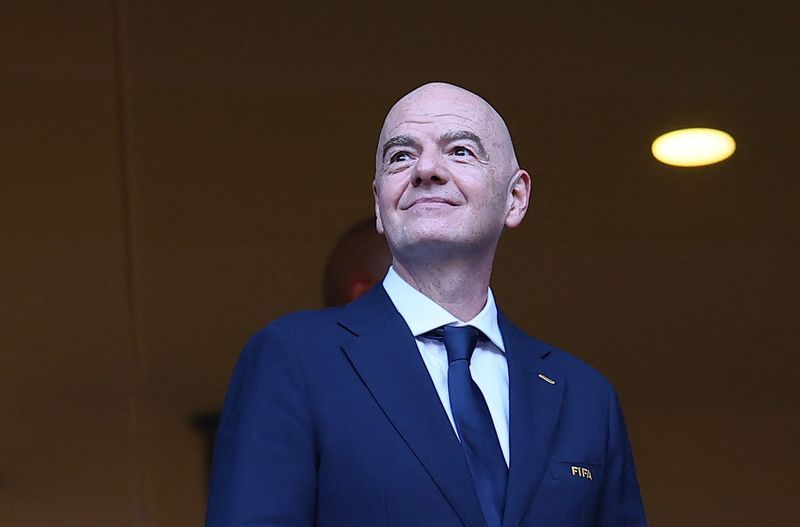
The fallout from FIFA President Gianni Infantino's hastily abandoned proposal to monetise World Cup commercial rights continues to reverberate through global football administration, with reports suggesting a coordinated effort by three major regional confederations to unseat him from office. The 56-year-old Swiss-Italian leader, who has dominated FIFA since 2016, withdrew his plan to establish a new commercial entity that would have raised $4.2 billion in private investment last Friday evening, but the damage to his political standing appears irreversible. By attempting to fundamentally restructure how the world's most prestigious sporting event generates revenue, Infantino sparked a three-day crisis that exposed deep fractures within FIFA's governance structure and united previously competing power bases against his continued leadership.
Infantino's retreat came after his proposal triggered unexpected resistance across the football world. The plan, which would have introduced private sector investment to the World Cup for the first time in its history, blindsided national associations and regional confederations who were kept largely in the dark about the commercial initiative. In his apology, the FIFA president acknowledged that the proposal had fractured the sport's unity, yet this belated recognition of his misstep has done little to repair the political damage. The initial shock to FIFA's internal politics was severe enough that two of the organisation's four main regional confederations issued strongly worded statements withdrawing confidence in his leadership almost immediately after the proposal surfaced.
The political realignment is already evident in concrete ways. Five major European national associations, notably including the Football Association of England, have formally rescinded their endorsement for Infantino's reelection, which is scheduled for the FIFA Congress taking place in Morocco in March 2026. Denmark, meanwhile, indicated it had never intended to support him regardless of circumstances. On the opposite side, federations from Morocco, Qatar, Kuwait, Lebanon and Sri Lanka have publicly declared continued backing for the FIFA president, reflecting the geographic divide in support that has characterised his tenure. While these publicly stated positions represent only a fraction of the 211 national federations entitled to vote at the Congress, they signal the emergence of hardened battle lines that could intensify over the coming months.
The loss of support among regional confederations represents a far more serious threat to Infantino's position than individual national associations withdrawing endorsements. UEFA, European football's governing body, and CONCACAF, which oversees the sport in North and Central America alongside the Caribbean region, issued stern statements on Saturday expressing they had lost confidence in his leadership. Most significantly, the AFC, football's Asian confederation, stopped short of outright condemnation but described the complete absence of consultation regarding the proposal as "totally unacceptable" and called for sweeping institutional reforms at FIFA. According to reporting from the Times of London, these three confederations have allegedly coordinated a strategy not merely to challenge Infantino at the Congress but potentially to force his resignation by creating administrative paralysis at FIFA or even launching breakaway competitions.
The mechanics of Infantino's survival now become a matter of urgent calculation. His immediate priority must be preventing the convening of an Extraordinary Congress, a special session that would require formal written requests from a minimum of 43 FIFA member associations. Such an unprecedented gathering would likely accelerate his downfall and provide a platform for rival candidates to articulate their vision for FIFA's future. With seven months remaining before the March Congress, Infantino must simultaneously stabilise relationships with his remaining supporters while attempting to persuade wavering confederations and national associations that his leadership remains essential. The compressed timeline and his damaged credibility create formidable obstacles to this recovery effort.
Infantino's political strategy has historically relied on building support among less wealthy national associations outside Europe, particularly those dependent on FIFA distributions to sustain their operations. He succeeded his predecessors, João Havelange and Sepp Blatter, by cultivating this coalition among developing football nations. His controversial stake-sale proposal was explicitly designed to appeal to these constituencies, with promises of dividend payments ranging from $20 million to $40 million annually to each national federation endorsing the scheme. This financial incentive structure reflected Infantino's understanding that poorer associations lack the independent revenue streams available to wealthy European clubs and federations, making FIFA distributions critical to their financial viability.
The challenge facing Infantino's potential challengers is equally complex. Any candidate hoping to unseat him must demonstrate credibility both with the traditional centres of football power in Europe and with the developing nations that form Infantino's core support base. The nomination deadline for the FIFA election falls on November 18, allowing potential rivals less than four months to build campaigns, secure endorsements across geographic regions, and articulate compelling alternatives to Infantino's vision. This timeline disadvantage favours the incumbent, even one operating from a damaged political position, as mounting a coordinated challenge to an entrenched leader within such a brief window requires resources and organisation that may prove difficult to assemble.
The institutional questions raised by Infantino's proposal extend beyond individual personalities and touch on fundamental governance issues within FIFA. The AFC's emphasis on the necessity for institutional reform highlights broader concerns about consultation, transparency, and democratic accountability within FIFA's decision-making structures. The fact that a proposal with such vast implications could advance to the point of public announcement without systematic engagement with regional confederations suggests systemic failures in FIFA's processes. These governance deficits may ultimately prove more damaging to Infantino's position than any individual policy disagreement, as they address questions of principle rather than substance.
UEFA has signalled its intention to maintain pressure on this front by transmitting a "document preservation letter" to FIFA, requiring the organisation to safeguard all materials related to the failed proposal. This action typically precedes legal proceedings and suggests that European football's governing body is preparing potential litigation against Infantino or FIFA itself over the controversial proposal. The document preservation requirement effectively signals UEFA's determination to investigate whether proper procedures and fiduciary duties were observed in developing the stake-sale plan. Such legal action, even if it ultimately proves unsuccessful, would further distract Infantino and consume his political capital during the critical months before the Congress election.
For Malaysian and Southeast Asian football observers, the political turbulence at FIFA carries distinct significance. The AFC's forceful criticism of Infantino's consultation failures suggests the confederation may be positioning itself for greater influence within FIFA's governance structure, potentially benefiting member nations that can align with the AFC's reform agenda. Additionally, the emergence of three confederations united against Infantino could reshape FIFA's internal power dynamics in ways that affect competition scheduling, tournament allocation, and revenue distribution—matters of direct concern to national associations across the region. The outcome of this leadership struggle will likely determine whether FIFA's governance becomes more transparent and consultative or whether centralised executive authority ultimately prevails.
The stakes extend beyond mere administrative reorganisation. FIFA's decisions on matters including World Cup expansion, tournament formats, and the distribution of tournament revenues have profound implications for football development and commercial opportunities throughout Asia and Southeast Asia. A weakened Infantino facing perpetual political challenges may struggle to implement major strategic initiatives, potentially creating periods of governance drift at a time when global football is undergoing significant transformation. Conversely, should Infantino successfully navigate this crisis and consolidate his position, he may emerge more authoritarian in his leadership style, less inclined toward the consultative approach that regional confederations are demanding. Either outcome will reshape the landscape in which Southeast Asian football operates for years to come.

