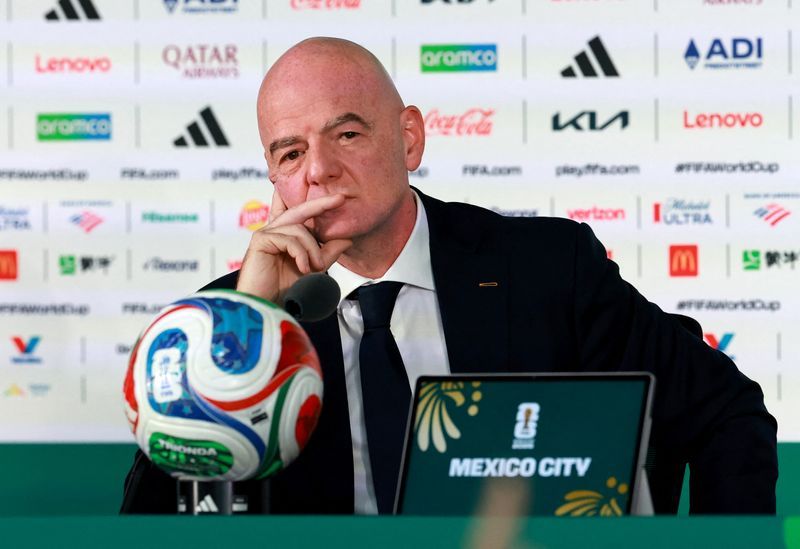
FIFA's attempt to draw a line under the biggest governance crisis of Gianni Infantino's leadership appears unlikely to quieten broader concerns about how world soccer's governing body conducts its affairs, even as senior officials publicly rallied behind the president during an emergency gathering in Rabat. The controversy surrounding an abandoned proposal to monetise future World Cup commercial rights has exposed fundamental rifts between FIFA's central administration and the confederation of national associations that form its backbone, raising questions that will persist well beyond the immediate political scramble to contain the fallout.
The conciliatory statement issued by FIFA after Wednesday's leadership meeting marked a sharp reversal from weeks of mounting pressure. The organisation formally apologised to its 211 member associations for mishandling the ill-fated commercial proposal, acknowledging that the process "should have been handled differently" and that consultation channels had been inadequate. Recognising that national federations felt sidelined from strategic discussions, FIFA committed to a comprehensive review of the decision-making mechanisms that allowed such a contentious initiative to advance without proper stakeholder engagement.
Yet even as Infantino secured vocal endorsements from FIFA's management board and Secretary General Mattias Grafstrom during Wednesday's session, the underlying governance issues that triggered the revolt show no signs of resolution. The crisis has effectively spotlighted a systemic pattern where confederations, leagues and national associations find themselves presented with fait accompli decisions rather than invited into genuine deliberation. This dynamic extends far beyond the commercial rights debacle, encompassing everything from how major tournament reforms are evaluated to how competing interests within world football are balanced.
The European Leagues, representing over 1,300 clubs across the continent, have been particularly vocal in criticising what they characterise as an artificially compressed consultation period. FIFA's proposal to expand the 2030 World Cup from 48 to 64 teams was evaluated on what these leagues consider an unrealistically tight four-week timeline, leaving insufficient room for genuine feedback from organisations with substantial stakes in tournament scheduling and player welfare. This complaint encapsulates a broader frustration: that FIFA's bureaucracy operates according to its own timetable and preferences rather than accommodating the legitimate needs of entities whose participation is essential to the organisation's legitimacy and financial success.
European football's governing body UEFA has emerged as perhaps the most prominent critic of Infantino's stewardship, publicly questioning his leadership approach. Other confederations including CONCACAF, which oversees the game across North and Central America and the Caribbean, alongside the Asian Football Confederation, have similarly voiced concerns about inclusion and accountability. These institutions represent billions of people and enormous financial interests within professional soccer, yet they report feeling marginalised from the decision-making processes that shape the sport's future architecture.
Infantino and FIFA's leadership have attempted to reframe the controversy as one primarily concerning process and communication rather than substantive breaches of governance regulations. The organisation maintains that its actions regarding the commercial rights proposal adhered to existing rules and procedures, emphasising that the problematic aspects related to how decisions were handled and conveyed rather than the legality of the decisions themselves. This technical defence rings hollow to many stakeholders who argue that existing regulations, if they permit such unilateral action, are themselves inadequate.
The political mathematics favour Infantino heading into next March's presidential election, where he will seek a fourth term extending his tenure to 2031. No credible challenger has emerged from within FIFA's fractious membership, and Infantino retains crucial support from numerous smaller associations, particularly across Africa and Asia, where FIFA's development funding programmes are instrumental to national football infrastructure. The display of unity at Wednesday's Rabat meeting, including the carefully choreographed moment where Infantino and Grafstrom posed smiling together at a women's Africa Cup of Nations match, was designed to signal that the crisis had passed and internal divisions had healed.
However, this apparent reconciliation masks simmering tensions that run deeper than any election cycle. The commercial rights controversy has fundamentally altered how FIFA's stakeholders approach the organisation's strategic proposals. Future initiatives involving tournament expansion, commercial arrangements or governance matters will face substantially heightened demands for transparency and consultation, creating friction regardless of who occupies the presidency. FIFA's leadership has effectively been put on notice that unilateral decision-making, however technically compliant with existing rules, will provoke organised resistance from confederations with genuine leverage.
The broader implications for Asian and Pacific football are significant. Organisations like the Asian Football Confederation represent enormous geographical and demographic reach, yet their voice in FIFA's governance structures remains disproportionately modest relative to their importance. The governance crisis has created an opportunity for regional confederations to assert stronger claims for meaningful participation in decisions that affect their members. As FIFA confronts pressure to reform its consultation processes and decision-making architecture, Asian football stakeholders should expect to see greater emphasis on transparency and stakeholder inclusion in matters affecting tournament scheduling, commercial arrangements and competitive formats.
The pathway forward for FIFA appears to involve grudging acknowledgement that its decision-making culture requires substantial modernisation. The promised review of processes and governance frameworks will take months to complete and present, with substantive reforms unlikely before the presidential election. This extended timeline raises the prospect that governance improvements will remain incomplete or contestable, potentially setting the stage for renewed conflict if a controversial proposal emerges during the transition period. The organisation's warning that it will no longer tolerate "attacks on its integrity" rings somewhat hollow given that the original crisis stemmed from its own misjudgements about how to engage its membership.
As the football world watches how FIFA navigates these governance challenges, the experience carries lessons applicable across international sport. Organisations that operate as hierarchies dominated by professional bureaucrats, with limited meaningful input from member bodies, cultivate legitimacy crises that persist even after formal reconciliations. The Rabat truce may have papered over immediate political damage, but the fundamental questions about how world soccer should be governed remain unresolved and unlikely to disappear before the 2027 election or well beyond.

