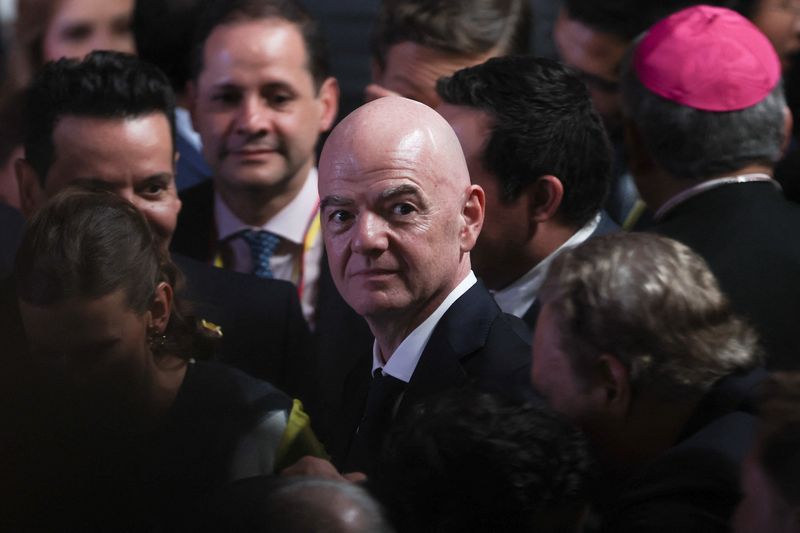
FIFA has issued a combative defence of its embattled president, Gianni Infantino, warning against what the global football governing body characterises as a "concerted and ongoing effort" to challenge his authority. The strongly-worded statement, released on Saturday, makes clear that FIFA will not tolerate efforts to remove Infantino outside its established democratic framework, even as the crisis surrounding his leadership intensifies.
The escalating tensions within football's international hierarchy stem from the spectacular collapse of Infantino's ambitious proposal to generate approximately $4.2 billion by monetising World Cup commercial rights and those of other major tournaments. The scheme, which would have fundamentally altered FIFA's revenue model, encountered fierce resistance from multiple quarters, triggering resignations calls and forcing an emergency leadership summit this week in Morocco.
The European football confederation UEFA has already withdrawn its confidence in Infantino, a significant blow given Europe's traditional influence within FIFA's corridors of power. Norway's football federation president, Lise Klaveness, has similarly called for his departure, arguing that institutional trust—essential for governing a body that coordinates global football—has eroded beyond repair. These high-profile departures represent serious challenges to Infantino's authority and signal deepening fractures within football's elite.
Yet the picture remains considerably more complicated than a simple revolt against the president. Despite vocal criticism from Europe, Infantino retains substantial backing from FIFA's broader membership, particularly from Africa and the Americas. The Confederation of African Football threw its weight firmly behind Infantino on Thursday with a unanimous endorsement, while South America's CONMEBOL explicitly rejected any attempt to unseat him that circumvented a full membership vote. This geographic split reveals a fundamental tension in FIFA's structure, where European federations and African federations command differing levels of influence and hold divergent strategic interests.
FIFA's statement, while avoiding specific accusations or identifying particular opponents, appears designed to preempt escalation and reassert institutional control over any challenge to presidential authority. The organisation pointedly emphasised that recent reporting has contained "unsubstantiated assertions and demonstrably false claims," referencing allegations published by The Daily Telegraph concerning payments UEFA made to a former employee during Infantino's tenure as the European body's general secretary. Infantino has consistently denied these allegations, and FIFA has similarly dismissed them as baseless, but the persistence of such questions threatens to erode his standing.
The timing of FIFA's statement carries particular significance given that Infantino is preparing to seek a fourth consecutive term as president at the FIFA Congress scheduled for Morocco in March 2025. Though no credible challenger has yet materialised, the current turmoil creates space for potential opponents to organise. FIFA's insistence that any presidential election must adhere strictly to its statutes and procedures suggests the organisation is determined to preserve what it views as legitimate institutional processes, even as the legitimacy of those processes themselves comes under scrutiny.
The internal divisions also reflect broader regional power dynamics within global football. Mexico's federation, despite sitting within the CONCACAF region that has called for a "comprehensive reckoning" with Infantino's presidency, has backed the president and explicitly rejected any challenge launched outside FIFA's official framework. This fragmentation within regional confederations complicates any coordinated effort to remove Infantino and demonstrates that opposition to the president is neither universal nor uniformly organised.
For Malaysian football stakeholders and Southeast Asian observers, these developments carry implications beyond the drama of international politics. FIFA's governance arrangements directly influence how competitions are structured, how commercial opportunities are distributed, and how development assistance flows to smaller football nations. The ongoing instability at the federation's apex creates uncertainty about future World Cup expansion plans, the allocation of tournament hosting rights, and the terms under which emerging football nations can participate in lucrative international tournaments.
The specific allegation concerning UEFA payments, while formally rejected by both Infantino and FIFA, reflects genuine concerns about accountability and transparency in international sports governance. These are questions that resonate across Asian football, where member associations have historically wielded less influence over FIFA's direction than European or South American counterparts. The contest over Infantino's future will significantly shape FIFA's governance culture going forward.
The situation also underscores how commercial ambitions can destabilise international sports institutions. Infantino's failed revenue-generation scheme represented a dramatic attempt to reshape FIFA's financial foundation, but the backlash revealed deep reservations among member federations about unilateral executive decision-making. The fallout from this episode will likely constrain future presidents' ability to implement major institutional reforms without securing prior consensus.
Infantino's survival as president remains probable given his current support levels, but the margin of safety has visibly narrowed. The March congress will provide a crucial test of his political standing among the full membership, and the months leading up to that vote will likely feature intensifying manoeuvring from supporters and opponents alike. For Southeast Asian federations seeking influence within FIFA, these divisions create both risks and opportunities as they navigate an organisation clearly divided against itself.

