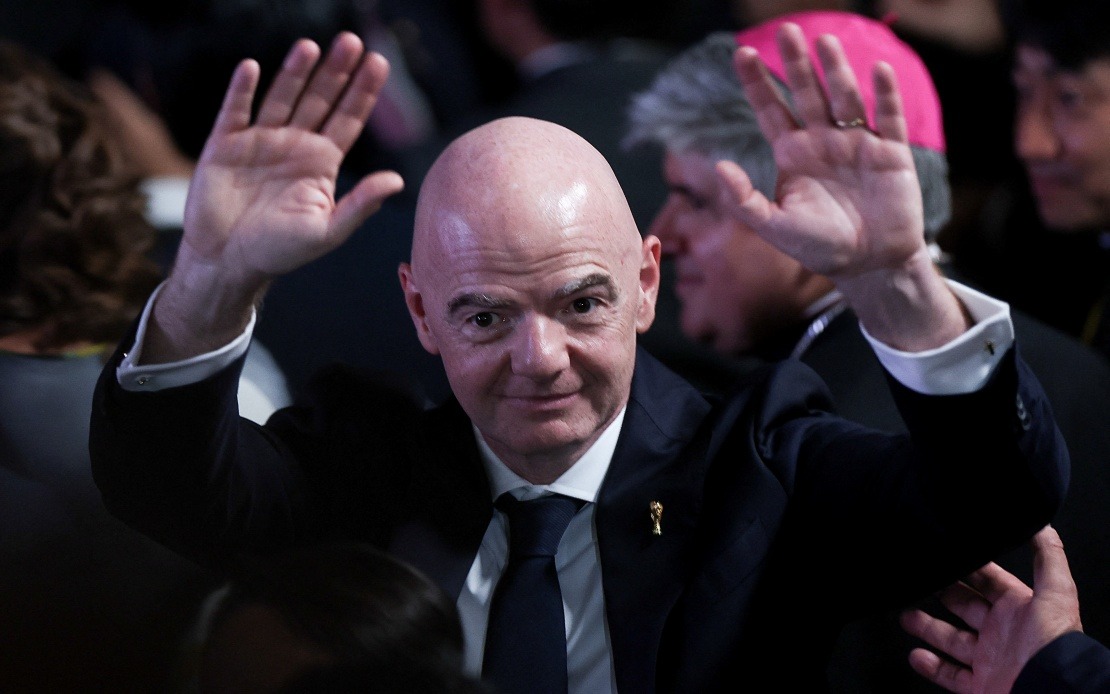
Football's governing body has moved to shield its embattled president as Gianni Infantino prepares his campaign for a fourth consecutive term, issuing a forceful statement from Istanbul that rejects what FIFA characterises as a coordinated campaign to undermine both the organisation and its leader. The statement, released late Saturday, makes clear that FIFA will not recognise or facilitate any presidential election process that circumvents the institution's established governance framework and constitutional procedures.
The timing of FIFA's declaration underscores the intensifying friction within world football's administrative hierarchy. Infantino, who has held the presidency since 2016 and presided over significant changes to the sport's global calendar and commercial structures, now faces questions about his tenure that FIFA attributes to a deliberate effort to exploit allegations and insinuations rather than engage through legitimate democratic channels. The organisation has positioned itself as the guardian of procedural integrity, suggesting that critics are attempting to achieve through extra-institutional means what they could not accomplish through formal constitutional mechanisms.
FIFA's statement explicitly references recent positions articulated by two of the sport's most influential continental bodies: the South American Football Confederation and the Confederation of African Football, both of which have apparently lent their support to Infantino's continued leadership. These endorsements from CONMEBOL and CAF carry particular weight, as these confederations collectively represent football's most developed and economically significant markets outside Europe and Asia. Their public backing suggests that opposition to Infantino, while vociferous, may remain concentrated among minority voices rather than commanding substantial support among FIFA's broader membership base.
The football body has adopted a notably combative posture in addressing what it characterises as disinformation campaigns. FIFA has explicitly accused unnamed individuals of propagating what it calls unsubstantiated assertions and demonstrably false claims, arguing that repetition of these allegations does not confer legitimacy upon them. This defensive stance reveals an organisation wrestling with credibility challenges that extend well beyond routine administrative disputes, touching upon matters of governance, transparency, and institutional reform that have preoccupied football stakeholders globally.
Infantino's professional trajectory, as FIFA presents it, spans more than three decades of involvement in European and global football administration, during which he has reportedly championed the expansion of access, resources, and competitive opportunities across the sport. The president's tenure has introduced significant changes including expanded World Cup formats, restructured international club competitions, and enhanced financial distribution to continental federations and member associations. These initiatives have generated both support and considerable resistance, with critics contending that certain reforms prioritise commercial considerations over sporting tradition and competitive integrity.
The statement articulates a distinction FIFA wishes to establish between legitimate oversight and what it characterises as illegitimate distortion. The organisation acknowledges that scrutiny represents an appropriate function within any democratic institution, yet argues that such scrutiny must operate within factual parameters rather than amplifying unverified claims or manufacturing diversions from substantive operational matters. This framing positions FIFA as the reasonable institutional actor while portraying critics as propagandists pursuing predetermined conclusions rather than engaging in good-faith examination of Infantino's record.
For Malaysian football stakeholders and Southeast Asian readers more broadly, these institutional turbulences carry practical implications extending beyond administrative theatre. FIFA's governance decisions directly affect resource allocation to continental confederations, which in turn distribute funding and tournament opportunities to national associations. The Football Association of Malaysia and other Southeast Asian bodies depend substantially upon FIFA's financial mechanisms and tournament scheduling, making the stability and direction of FIFA's leadership consequential for regional football development at all levels.
The statement's reference to discussions with FIFA member associations and confederations worldwide suggests that FIFA has conducted what amounts to a confidence consultation among its constituent membership. This canvassing of support, whether formal or informal, appears designed to demonstrate that Infantino retains the backing necessary to secure re-election through the organisation's established procedures. The invocation of 211 member associations collectively anchors FIFA's legitimacy claim, implying that opposition represents a marginal phenomenon rather than systemic institutional crisis.
Critical observers of FIFA note that the organisation's historical governance challenges have often centred on questions of transparency, ethical conduct, and accountability mechanisms. The present conflict, framed by FIFA as a struggle between procedural integrity and extra-institutional agitation, can also be interpreted as reflecting genuine concerns about institutional reform and the extent to which FIFA's leadership remains responsive to legitimate demands for enhanced governance standards. The distinction between illegitimate attack and legitimate reform advocacy frequently depends upon perspective and the underlying substantive disagreements about institutional direction.
Infantino's pursuit of a fourth term represents a significant consolidation of power within global football governance, occurring at a moment when the sport itself confronts substantial pressures regarding labour standards, environmental impact, and social responsibility. The presidential election will occur within this broader context of evolving expectations regarding how international sporting organisations should balance commercial imperatives against social and ethical considerations. FIFA's defensive posture suggests an institution confident in procedural victory but perhaps less certain regarding the legitimacy questions that have animated the criticism in recent months.
The statement's emphasis on FIFA's responsibility to its member associations and to football globally positions the organisation as focused on operational delivery and institutional stability. Yet this framing also implicitly acknowledges that divisions do exist and that confidence in Infantino's leadership is not universal. The precise magnitude of support and opposition will become evident only when FIFA's member associations convene for the presidential ballot, at which point the organisation's claims about Infantino's mandate will face empirical testing through the democratic processes FIFA has invoked throughout its defence.

