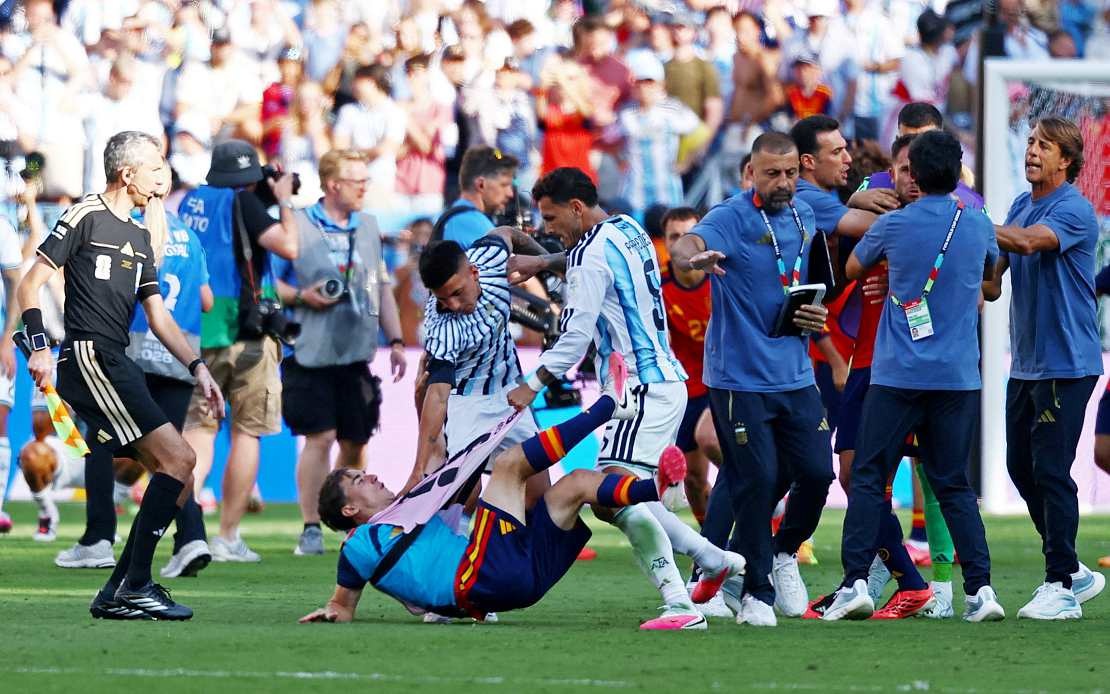
FIFA has opened a formal investigation into Argentina's behaviour during the World Cup final against Spain, marking another chapter in the controversy surrounding the South American nation's disciplinary record throughout the tournament. The governing body announced the move following a comprehensive review of match commissioner reports from the encounter played in New Jersey, triggering the appointment of a Disciplinary and Ethics Prosecutor to examine alleged breaches of the FIFA disciplinary code.
The investigation centres on post-match incidents that occurred immediately after the final whistle, when Argentina midfielder Leandro Paredes was caught on camera appearing to throw punches at members of the Spain squad who were celebrating their victory on the pitch. Such confrontations in the aftermath of high-stakes matches have increasingly drawn scrutiny from governing bodies seeking to maintain standards of player conduct, and this case appears poised to become a precedent-setting decision within the broader context of international football discipline.
Argentina's overall approach throughout the tournament had already drawn considerable criticism from commentators and rival teams alike. Beyond the final incident, the South American side faced repeated accusations of excessive physicality in their matches. This pattern became particularly evident during their semi-final victory over England, where midfielder Enzo Fernandez received a red card for accumulating two bookable offences. The consistency of these concerns raised questions about whether Argentina's tactical approach crossed the line from competitive intensity into behaviour that violated the spirit of fair play that FIFA ostensibly champions.
The formal statement issued by FIFA's Disciplinary Committee indicates that the investigation will be thorough and systematic. According to the governing body's communication, the process follows Article 36 of the FIFA Disciplinary Code, which establishes protocols for investigating potential violations identified through post-match reports. The committee emphasised that additional information would be released once the appointed prosecutor completes a comprehensive examination of the evidence and circumstances surrounding the incident in question.
A separate dimension to the potential investigation involves political gestures that Argentina's players may have made during the tournament. Following their victory over England in the semi-finals, Argentine players were reported to have displayed a banner asserting Argentina's sovereignty claim over the Falkland Islands. If this action is being examined as part of the broader investigation, it would represent a direct violation of Article 34.3 of the tournament regulations, which restrict political messaging at World Cup events. The Argentina Football Association (AFA) has previous experience with sanctions of this nature, having been fined following a similar banner display during a 2014 friendly match against Slovenia.
FIFA's stance on politically-motivated gestures and nationalist displays has evolved over recent years, though enforcement remains inconsistent across confederations and tournaments. In a precedent that may inform how FIFA handles Argentina's banner, the Union of European Football Associations (UEFA) imposed one-match bans on Spanish players Rodri and Alvaro Morata following Euro 2024 after they were found to have chanted about Spain's claims to Gibraltar. That response suggests that UEFA takes a considerably stricter approach to territorial and political statements than FIFA has historically demonstrated, potentially creating questions about regulatory consistency across international football's governing structures.
The broader context of FIFA's disciplinary record reveals a complicated relationship with political expression in football. During the 2022 World Cup in Qatar, FIFA took a hardline stance against the English Football Association regarding Harry Kane's intention to wear a 'OneLove' rainbow-coloured armband in support of LGBTQ+ rights. The governing body warned that Kane would face sporting sanctions beginning with a yellow card if he proceeded with wearing the armband, citing tournament regulations—a decision that drew considerable criticism given Qatar's criminalisation of homosexuality. This juxtaposition between FIFA's treatment of progressive social messaging versus nationalist territorial claims highlights inconsistencies in how the organisation applies its regulatory framework.
The investigation into Argentina's World Cup final conduct arrives at a moment when international football is grappling with questions about what constitutes acceptable player behaviour in high-pressure environments. The physical demands of modern football, particularly in knockout matches where single results determine progression, create intense competitive pressures that sometimes manifest in confrontational on-pitch conduct. However, the post-match period, when the competition itself has concluded, generally carries higher expectations for professional restraint and sportsmanship.
For Malaysian and Southeast Asian football observers, the Argentina investigation carries relevance beyond the specific incident. Regional football confederations and national associations frequently reference FIFA's disciplinary decisions when establishing their own standards and enforcement practices. How FIFA ultimately adjudicates the Argentina case will set precedents that could influence how misconduct is handled in AFC competitions and domestic leagues throughout Asia. The consistency and severity of any sanctions imposed will signal FIFA's evolving priorities regarding discipline, fair play, and the balance between competitive intensity and acceptable conduct standards.
The investigation also underscores broader questions about institutional accountability in international football governance. FIFA's decision to commission a full investigation rather than immediately dismiss the matter suggests the organisation recognises the severity of the allegations and the public expectations for transparent, rigorous examination of disciplinary matters. The appointment of a dedicated prosecutor signals that the process will proceed with formal structure, documentary evidence collection, and presumably opportunities for Argentina to present their perspective on the incidents in question.
As the investigation proceeds, attention will focus on whether FIFA's ultimate determination reflects the organisation's stated commitment to protecting player safety and maintaining standards of sportsmanship, or whether the decision will again reveal inconsistencies in how FIFA applies its disciplinary code across different nations, confederations, and types of violations. The timeline for the prosecutor's report remains unannounced, meaning the football world will await further developments as FIFA concludes its examination of Argentina's World Cup final conduct.

