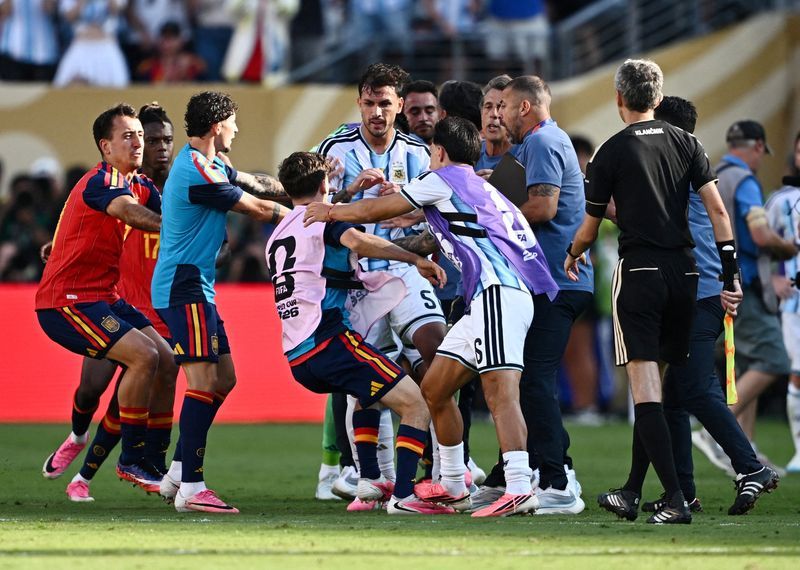
FIFA has launched a formal disciplinary inquiry into violent scenes that marred the conclusion of the World Cup final, appointing a dedicated prosecutor to investigate the brawl that broke out between Spain and Argentina after the match ended. The confrontation occurred immediately after Spain secured their second world championship through a Ferran Torres extra-time goal, with the incident casting a shadow over what should have been the tournament's crowning moment.
Spain's triumph came under controversial circumstances, with Argentina already operating with numerical disadvantage after midfielder Enzo Fernandez received his marching orders in the 93rd minute of regular time for a second cautionable offence. This reduction in numbers changed the tactical complexion of the encounter, setting the stage for heightened emotions in the closing stages of the match.
The breakdown in composure was triggered when Argentine midfielder Leandro Paredes initiated physical contact with multiple Spanish players as the final whistle sounded. The clash involved Spanish defender Eric Garcia and midfielder Gavi among others, quickly escalating from an isolated confrontation into a widespread melee involving substantial portions of both squads. Players from either side engaged in shoving matches and had to be forcibly separated by match officials and support staff.
Argentine head coach Lionel Scaloni undertook efforts to restore order among his players following the tumultuous conclusion, attempting to defuse tensions and reinstate professionalism amid what had become an increasingly fractious atmosphere. The scenes represented a significant departure from the sportsmanship typically expected at the sport's highest level, and raised immediate questions about player conduct and disciplinary standards in elite international competition.
FIFA's decision to investigate represents the body's standard protocol when serious misconduct occurs during officially sanctioned matches. The appointment of a disciplinary and ethics prosecutor indicates the severity with which world soccer's governing authority is treating the incident, suggesting that potential sanctions may follow for players or officials deemed culpable. Such investigations can result in fines, suspension orders, or other disciplinary measures designed to maintain order within the sport.
The timing and context of the confrontation add layers of complexity to the investigation. The heightened emotions surrounding a World Cup final—football's most watched and significant tournament—combined with the controversial circumstances of Argentina's reduced complement of players, created an environment where passions ran exceptionally high. Whether these contextual factors prove relevant to any eventual disciplinary findings remains to be determined.
For Malaysian and Southeast Asian readers, the incident underscores broader questions about discipline and conduct standards in international sport. As regional football develops and participation in global tournaments increases, the expectations placed on players regarding comportment become increasingly important. The investigation will likely influence how Asian Football Confederation members approach player education and disciplinary frameworks.
The broad nature of the brawl—involving multiple players from both teams rather than isolated individuals—complicates the investigation process considerably. Prosecutors must determine which players bore primary responsibility, which engaged in retaliatory conduct, and which were secondary participants caught up in the larger confrontation. Distinguishing between instigators and responders typically requires detailed video analysis and witness testimony.
No timeline has been established for the investigation's conclusion, leaving considerable uncertainty about when findings and any resulting sanctions will be announced. This extended process reflects FIFA's approach to serious disciplinary matters, which typically involve comprehensive fact-finding before conclusions are reached. The lack of an announced deadline may suggest the organization anticipates a thorough examination.
The incident has already generated significant commentary within football circles regarding player discipline standards and the pressures inherent in competitive environments at the highest level. Analysis will likely extend beyond the immediate match circumstances to broader questions about how sporting organisations can maintain standards of conduct whilst accommodating the intense emotions that championship-level competition naturally generates.
As investigations proceed, the episode will serve as a reference point for future discussions about behaviour expectations in international football. The involvement of prominent players and coaches ensures the matter receives continued scrutiny from media, fans, and football administrators globally. The outcomes reached by FIFA's investigation process may influence how similar incidents are handled in future tournaments.

