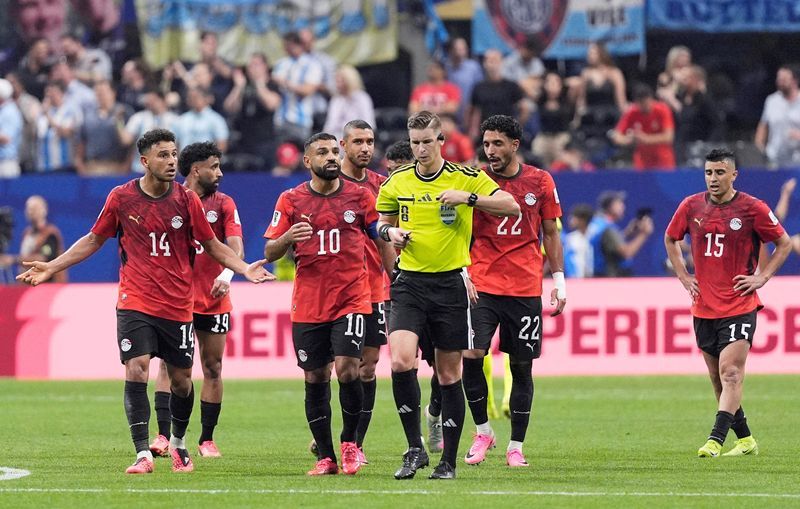
The integrity of World Cup refereeing came under scrutiny following Argentina's dramatic 3-2 triumph over Egypt in the knockout stage, with Egypt's football authorities challenging several key decisions that ultimately determined the tournament outcome. FIFA's chief of referees, Pierluigi Collina, has now moved to defend the officiating performance, asserting that match officials upheld the highest standards of independence and that allegations of unfair treatment lack substance.
Egypt's complaints centred on three pivotal moments: a disallowed goal by Mostafa Zico in the second half, the non-awarding of a penalty after contact between Mohamed Salah and Julian Alvarez, and broader questions about consistency in how fouls were interpreted throughout the match. The Egyptian Football Association issued a formal statement suggesting that "several key incidents raised serious concerns and left profound questions about the consistency and fairness of decisions that directly influenced the course of the game." Coach Hossam Hassan went further, implying that external pressure may have influenced the referee to keep Argentina, a tournament favourite, in contention.
Collina's defence, published through FIFA's official channels, emphasised that criticism of individual decisions remains an inevitable and acceptable part of football discourse. However, he drew a firm distinction between constructive debate about refereeing choices and what he characterised as "unfounded allegations" questioning officials' integrity. This distinction reflects a broader tension in modern football between legitimate transparency regarding decision-making and concerns that excessive questioning of referee impartiality can create a chilling effect on the profession and expose match officials to personal harassment.
The specific incident at the heart of Egypt's complaint involved Zico's second-half strike, which was annulled after VAR intervention identified what officials judged to be a foul by Marwan Attia on Argentina defender Lisandro Martinez during the build-up play. Collina explained that VAR's role includes reviewing incidents that the on-field referee may not have clearly observed, applying consistent interpretations of the laws regardless of how obvious the infringement might appear to observers. This principle—that VAR can intervene even for fouls deemed subtle or marginal—has generated considerable debate among fans and analysts, particularly when such decisions prove decisive in knockout football where a single goal determines progression.
Regarding the Salah incident, Collina and FIFA adjudged the contact between the Egyptian star and Alvarez to constitute "normal football contact" rather than a penalty-worthy challenge. The distinction Collina articulated—that a defender who touches the ball first and then makes incidental contact has not committed an infraction, whereas stepping on an opponent's foot constitutes a foul—illustrates how subjective interpretation remains embedded within the laws despite efforts to standardise enforcement through technology. For Malaysian readers accustomed to passionate local football discourse, this explanation may resonate with familiar debates about how referees distinguish between legitimate defending and misconduct.
Collina's comments also addressed the broader implications of casting doubt on referee integrity. He noted that allegations of bias can provoke threats against match officials and their families, underscoring how high-stakes tournament football can generate hostility that extends beyond the pitch. This concern has particular relevance across Southeast Asia, where football commands enormous emotional investment and social media amplifies grievances instantaneously.
The World Cup refereeing controversy reflects deeper questions about how technology should shape decision-making in sport. While VAR was introduced to correct clear errors, its application in situations requiring subjective judgment—such as determining the severity of contact or the timing of fouls—has proven contentious. Collina's position essentially contends that VAR principles have been consistently applied throughout the tournament, suggesting that if concerns exist about fairness, they stem from the inherent nature of football's laws rather than from biased implementation.
Argentina's comeback from a 2-0 deficit, culminating in Enzo Fernandez's stoppage-time winner, remains dramatic regardless of the refereeing decisions. However, the controversy underscores how knockout football's binary outcomes—progression or elimination—can amplify scrutiny of marginal calls. Egypt's exit from the tournament, combined with the feeling among their supporters that injustice occurred, created conditions for the integrity questions that Collina felt compelled to address.
For Southeast Asian football observers, the Argentina-Egypt episode carries instructive lessons about how major tournaments navigate the tension between technological accuracy and human judgment. Regional competitions increasingly adopt VAR systems, and the controversies surrounding high-profile matches inform how football governance evolves across the ASEAN region. Collina's insistence on officials' independence and the appropriateness of VAR intervention, even in marginal situations, establishes principles that tournament organisers from Malaysia to Vietnam will reference as they implement similar technologies.
Collina's defence ultimately rests on a defence of institutional authority rather than a detailed rebuttal of Egypt's specific complaints. By asserting that FIFA's refereeing infrastructure cannot be compromised and that match officials operated according to consistent principles, he positioned the controversy as inevitable friction within sport rather than evidence of systemic bias. Whether Egypt's football authorities find this explanation satisfactory remains uncertain, but Collina's comments clarify FIFA's official stance: the decisions were correct, the officials were independent, and further questioning of their integrity is unwelcome.

