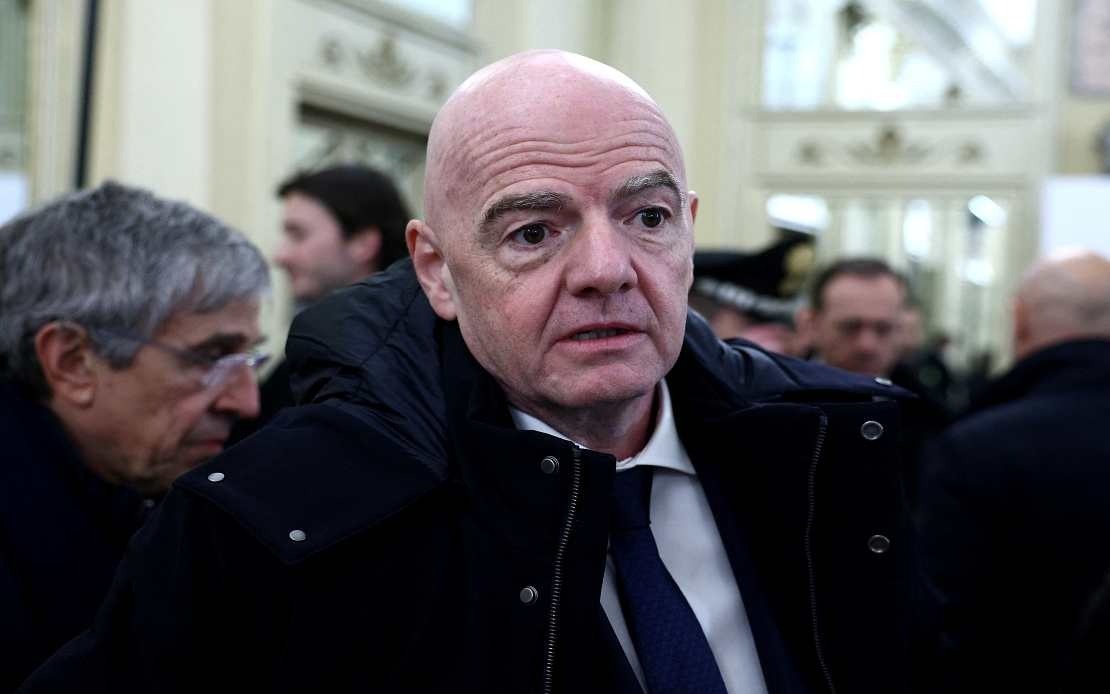
The International Olympic Committee has received a formal complaint against FIFA President Gianni Infantino, accusing him of repeatedly violating the Olympic Charter's rules on political neutrality during his tenure as an IOC member. The complaint, filed by human rights organisation FairSquare, raises serious questions about the independence of FIFA's decision-making processes and the appropriate boundaries between sports governance and political interference.
Infantino, who joined the IOC in 2020, stands accused of breaching the governing body's code of ethics in multiple instances, with the most contentious case involving the handling of a disciplinary matter for a prominent footballer. The timing of these allegations comes as international scrutiny of FIFA's governance practices remains intense, particularly regarding the organisation's ability to maintain impartiality in high-stakes decisions affecting competition outcomes.
At the centre of the controversy is the suspension of a one-match ban that had been issued through FIFA's disciplinary processes. The ban, which would have prevented the player from participating in a critical World Cup knockout stage match against Belgium, was mysteriously suspended by FIFA's disciplinary committee just prior to the fixture. This reversal proved consequential for the tournament's progression, and the lack of transparency surrounding the decision has fuelled concerns about proper administrative procedure.
The chain of events leading to the ban's suspension appears particularly problematic when examined in context. A phone call between United States President Donald Trump and Infantino preceded the disciplinary committee's decision to suspend the punishment, raising immediate questions about undue political influence on sporting matters. While Infantino has publicly maintained that FIFA's committees operate with complete independence from his office, critics argue that the proximity of these events strains credibility and demands explanation.
FairSquare's formal complaint to the IOC documents what it characterises as five definitive breaches of Olympic Charter provisions governing political neutrality. The organisation has additionally identified two further serious violations that it describes as having substantial prima facie evidence, meaning reasonable grounds exist to believe misconduct occurred. The Balogun disciplinary matter features prominently in both categories of alleged violations, serving as the most recent and most visible example of the pattern FairSquare alleges.
This is not the first time FairSquare has raised these concerns through official channels. In December of the previous year, the organisation lodged a separate complaint specifically with FIFA's own ethics committee, providing detailed documentation of the alleged breaches. Rather than resolving the matter internally, the complaint's existence has attracted increasing international attention and formal support from influential political institutions.
Support for FairSquare's allegations has materialised from multiple quarters of the international community. The Norwegian football federation took the formal step of writing directly to FIFA's ethics committee, requesting that it give serious consideration to FairSquare's documented complaints. This intervention from a respected national sporting body lends institutional weight to the allegations and suggests concerns about FIFA governance extend beyond human rights advocacy circles.
Legislative bodies have similarly engaged with the complaint. Fifty members of the European Parliament submitted a coordinated letter to FIFA's ethics committee on June 29, explicitly urging the committee to investigate and address FairSquare's allegations. This parliamentary intervention represents a notable escalation of political pressure on FIFA and indicates that concerns about the organisation's independence have reached the highest levels of European governance.
The broader significance of these developments extends beyond the specific disciplinary case or even individual instances of alleged misconduct. The complaint raises fundamental questions about whether FIFA can maintain the institutional independence necessary for credible international sports governance when senior officials maintain direct communication channels with political leaders regarding competition outcomes. The pattern alleged by FairSquare suggests a systematic vulnerability to political pressure rather than isolated incidents.
For Southeast Asian sports governance and Malaysian stakeholders, these developments carry important implications. As nations within the region aspire to host or participate in major international sporting events, the credibility and integrity of FIFA's administrative processes directly affects tournament legitimacy and fairness. Weakened confidence in FIFA's independence could compromise regional hosting ambitions and undermine trust in the organisation's capacity to administer competitions equitably.
The IOC's response to the formal complaint will likely establish precedent for how international sporting organisations handle allegations of political interference in decision-making. The Olympic Committee faces pressure to demonstrate that its own code of ethics possesses real enforcement power when applied to senior sporting officials, particularly those in positions as prominent as the FIFA presidency. The investigation and its findings could reshape how sports bodies approach separation between political and sporting spheres.
Crucially, FIFA has yet to provide substantive explanation for the disciplinary committee's decision to suspend the ban, a silence that has only intensified scrutiny. Professional sports administration typically demands detailed reasoning for disciplinary reversals, particularly when the outcomes affect major international competitions. The absence of transparent justification fuels speculation about decision-making processes and lends credibility to allegations of improper influence.
The coming months will prove pivotal in determining whether the IOC investigation validates FairSquare's allegations and whether international pressure prompts FIFA to undertake more rigorous governance reforms. The outcome will not only affect Infantino's position but will establish whether modern international sports bodies can genuinely insulate themselves from political pressure when powerful national interests intersect with sporting decisions.

