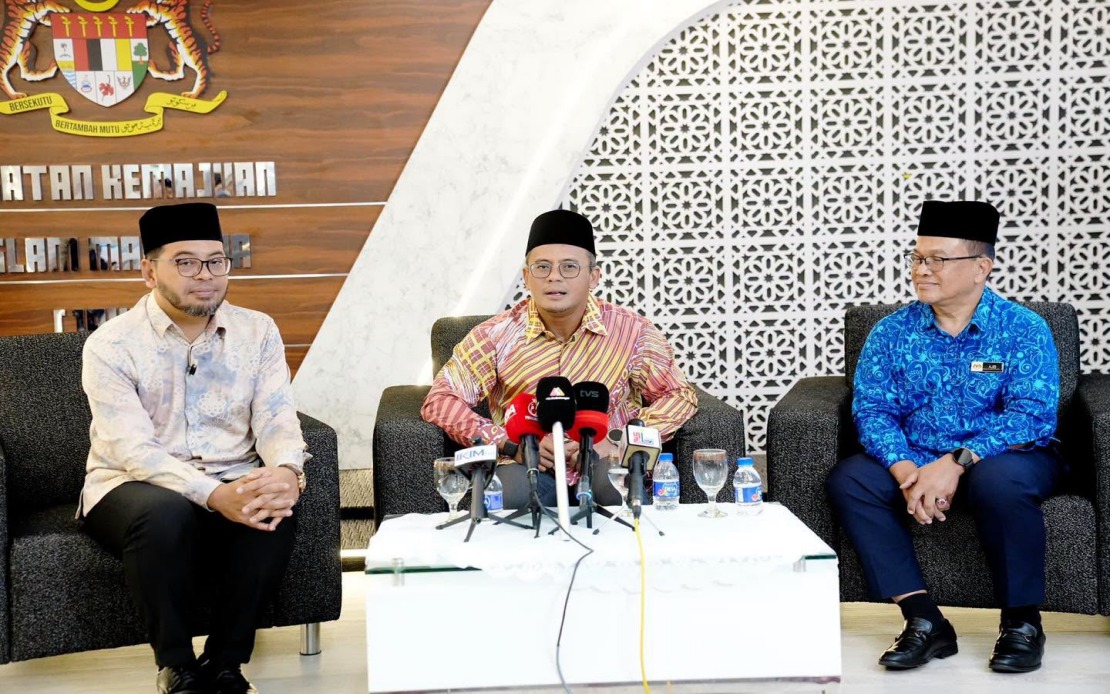
The Festival Turath Islami Selangor has outgrown its state boundaries and will now operate as a national initiative, marking a significant expansion of Malaysia's engagement with classical Islamic scholarship. The fourth edition of what was previously a Selangor-based programme will be rebranded as Festival Turath Islami Malaysia 2026, reflecting enhanced collaboration between state and federal authorities. This institutional upgrade signals deepening governmental commitment to preserving and promoting Islamic intellectual heritage as a resource for contemporary Malaysian society.
Selangor Menteri Besar Datuk Seri Amirudin Shari unveiled the restructured festival during a media briefing in Putrajaya, revealing that the eight-day programme will commence on September 13 with the majority of activities relocated to the Putra Mosque in Putrajaya. The shift from the Selangor State Mosque represents a symbolic and practical transition from regional to federal prominence, providing access to a venue of national significance and accommodating the expanded scope of proceedings. This relocation also underscores the federal government's central role in the initiative through the Prime Minister's Department (Religious Affairs), led by Minister Dr Zulkifli Hasan.
The festival's intellectual centrepiece is Ibn Ata-illah As-Sakandari's Al-Hikam al-Ata'iyyah, a classical Sufi text chosen under the overarching theme "Hikmah Warisan Islam". This 14th-century work represents a foundational text in Islamic mystical tradition, offering philosophical guidance on sincerity, spiritual trust, and the deeper dimensions of faith. Its selection reflects a deliberate curatorial strategy within Malaysia's Islamic discourse—one that emphasises contemplative and ethical dimensions of Islamic learning rather than exclusively jurisprudential or political frameworks. The work's profound influence throughout the Malay World and broader Islamic scholarly tradition provides particular resonance for Malaysian audiences seeking continuity with their intellectual heritage.
Building upon three successful iterations since 2023, the festival has established itself as a platform for systematic engagement with seminal Islamic texts. Previous editions examined Imam Al-Ghazali's Ihya' 'Ulumuddin, Imam al-Nawawi's Al-Arba'in al-Nawawiyah, and Imam Jalaluddin al-Suyuti's Tafsir al-Jalalain. This progression through foundational works demonstrates a methodical approach to Islamic intellectual recovery, gradually expanding participant familiarity with classical scholarship. The 2026 expansion suggests confidence in this model's resonance and sustainability within Malaysia's religious and educational landscape.
The 2026 festival will convene an unprecedented assembly of Islamic scholarship talent, bringing together 23 scholars from Malaysia and internationally to deliver more than 42 scholarly sessions. Among international participants is Sheikh Dr Ali Jum'ah, a prominent contemporary Islamic scholar whose participation signals the event's rising profile within global Islamic academic circles. Domestic speakers include Prof Dr Sayyid Idris al-Fasi al-Fihri, Ustaz Dr Adi Hidayat, Ustaz Wadi Annuar and Selangor Mufti Datuk Setia Dr Haji Anhar Haji Opir, representing Malaysia's established religious leadership and emerging intellectual voices. This breadth of expertise ensures multidisciplinary perspectives ranging from classical Islamic jurisprudence to contemporary applications.
The festival programme incorporates both scholarly and devotional components, reflecting Islam's integration of intellectual and spiritual dimensions. Kuliah Subuh sessions will provide early-morning spiritual reflections, while Dalail al-Khairat recitations and Talaqqi Kitab Al-Hikam discussions will occur over five consecutive days. Evening programmes including Tausiah Perdana addresses and Qasidah ceremonies will reinforce community participation. An Islamic Book Festival component will facilitate engagement with contemporary Islamic publishing, suggesting the organisers' recognition that heritage engagement must connect classical texts to modern intellectual production.
A novel component is the National Muzakarah Ulama Turath, a gathering designed to unite Islamic scholars across Malaysia's diverse regions and intellectual traditions. This assembly aims to strengthen collaborative networks among the country's religious leadership whilst identifying shared approaches to contemporary challenges facing Muslim communities. Such a convening space addresses a longstanding fragmentation within Malaysia's Islamic discourse, where regional differences and institutional competition sometimes impede coordinated intellectual response to pressing social questions. The muzakarah format—rooted in Islamic advisory tradition—institutionalises collegial problem-solving at the highest levels of Malaysian religious authority.
For Malaysia's broader religious and intellectual ecosystem, this elevation to national status carries substantial implications. The festival demonstrates official recognition that engagement with classical Islamic scholarship constitutes legitimate national cultural priority, not merely sectarian interest. This positioning potentially strengthens Islam's presence in Malaysia's secular public sphere by emphasising its historical depth and civilisational achievements rather than exclusively contemporary political dimensions. Additionally, the international scholar participation may enhance Malaysia's standing within global Islamic academic networks, positioning the country as a site of serious intellectual engagement rather than purely devotional or political expression.
The strategic emphasis on Sufi-inflected texts like Al-Hikam al-Ata'iyyah warrants particular attention for Malaysian readers. Sufism has historically enriched Islam throughout Southeast Asia, including in Malaysia's own traditions, yet contemporary Islamic discourse sometimes marginalises this heritage. By centering Ibn Ata-illah's work on spiritual sincerity and servant-God relationships, the festival implicitly argues for balanced Islamic identity incorporating mystical depth alongside juridical rigour. This represents a subtle but significant intervention in Malaysia's religious culture, potentially moderating exclusively legalistic approaches to faith.
The festival's expansion also reflects demographic and educational trends within Malaysia's Muslim population. Rising numbers of university-educated Muslims seek intellectually substantive religious engagement beyond conventional pulpit sermons. The 42 scholarly sessions addressing complex philosophical and theological questions respond to this appetite for rigorous Islamic learning. By institutionalising such provision at national level, the government acknowledges both the legitimacy and social benefit of this scholarly orientation toward Islamic heritage.
Looking forward, the Festival Turath Islami Malaysia 2026 establishes a template potentially replicable across other domains of Islamic cultural recovery. Success with classical Islamic texts might inspire parallel initiatives examining Islamic scientific heritage, architectural traditions, or musical practices. For Southeast Asian neighbours observing Malaysia's religious policy evolution, this festival demonstrates how governments might engage Islamic heritage as vehicle for intellectual development and social cohesion without either instrumentalising religion politically or marginalising it from public discourse. The initiative thus carries significance extending beyond Malaysia's borders into broader regional conversations about Islamic modernity and tradition.
Participation details and registration information for the eight-day Festival Turath Islami Malaysia 2026 remain forthcoming through official channels, with comprehensive programme schedules to be announced progressively. Interested scholars, religious leaders, and engaged Muslims can monitor developments through dedicated festival communications as the September 13 commencement approaches.

