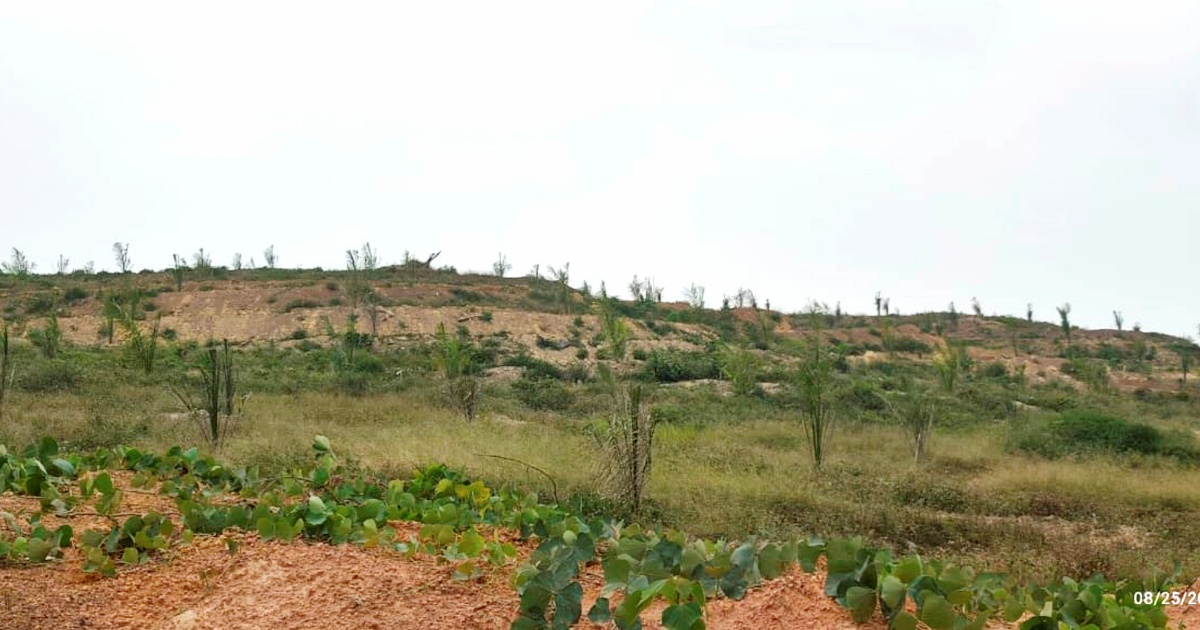
Residents of Felda Palong 7 in Jempol have escalated their grievances to the Malaysian Anti-Corruption Commission, citing the provision of defective oil palm seedlings as a significant issue undermining their agricultural operations. The complaint represents growing frustration among smallholder farmers regarding the quality of planting materials supplied through official channels, a critical concern in an industry where initial crop inputs directly determine productive yield and long-term viability.
The problem of non-uniform seedling quality strikes at the heart of palm cultivation efficiency. Oil palm farmers depend on consistent, healthy saplings to establish uniform plantations that mature and produce fruit synchronously. When seedlings vary significantly in vigour and genetic characteristics, they grow at different rates, creating patches of trees that reach peak production at misaligned intervals. This heterogeneity disrupts harvesting schedules, complicates pest and disease management across the estate, and ultimately reduces the commercial value of the harvest. For smallholders whose margins are already tight, such inefficiencies translate directly into financial losses across their productive lifetime.
The decision to involve the MACC suggests settlers view this issue as potentially extending beyond simple quality control lapses into systemic irregularities. Their recourse to Malaysia's premier anti-graft agency implies suspicion that procurement processes may have been compromised, specifications deliberately overlooked, or cost-cutting measures implemented at the expense of farmer interests. This escalation reflects a broader pattern in which agricultural stakeholders increasingly channel operational grievances through institutional oversight mechanisms rather than relying solely on conventional complaint procedures.
Felda, the Federal Land Development Authority, has historically served as a critical institutional framework for smallholder farming in Malaysia, providing settlers with land, technical support, and supply chains. However, the organization has periodically faced scrutiny regarding procurement standards and input supply consistency. Complaints about seedling quality are not unprecedented, yet their formalization through MACC referral indicates that conventional internal resolution channels may have proven inadequate or ineffective. This dynamic underscores persistent governance challenges in agricultural development schemes.
The broader implications extend across Malaysia's palm oil sector, which remains a cornerstone of the nation's agricultural economy and export revenue. Quality inputs at the farm level represent a foundational element of international competitiveness. As global markets increasingly demand traceable, sustainably-produced palm oil and as certification standards tighten, the reliability of seedling supply becomes ever more consequential. Poor-quality foundation stocks undermine not only individual farmer productivity but also the sector's capacity to meet evolving market requirements and maintain premium positioning.
For settlers reliant on oil palm cultivation as their primary livelihood, the seedling problem carries immediate economic consequences. Many Felda scheme participants operate on relatively thin operational margins, with costs for land preparation, fertilization, pest management, and labour representing substantial fixed investments before the first productive harvest. When foundational inputs—the seedlings themselves—fall below acceptable standards, farmers face compounded production inefficiencies that cascade through the productive cycle. Substandard genetics or vigour means slower canopy development, delayed fruit bunch emergence, and extended payback periods on their overall investment.
The investigation pathway through the MACC will likely examine procurement documentation, supplier qualification processes, quality assurance procedures, and the chain of responsibility from input acquisition through distribution to farmers. Such scrutiny may reveal whether standardized specifications were established and maintained, whether testing protocols existed to verify seedling conformity before distribution, and whether accountability mechanisms functioned to address deviations. The findings could prompt systemic adjustments to how agricultural inputs are sourced, verified, and delivered within Felda structures.
Regional agricultural development agencies across Southeast Asia face comparable challenges in ensuring input quality reaches smallholder farmers reliably. Malaysia's experience with this issue provides instructive precedent for neighbouring countries grappling with similar governance questions in their own development schemes. The prominence of this complaint also signals that farmers themselves are increasingly willing to pursue formal accountability channels when conventional resolution proves inadequate, a shift that carries implications for how agricultural bureaucracies must operate.
The resolution of this complaint will likely influence operational protocols across Felda's seedling procurement and distribution network. Whether findings point toward supplier accountability, internal process deficiency, or systemic oversight gaps will determine the scope of remedial measures required. For settlers depending on forthcoming planting cycles, swift resolution becomes urgent, as planting seasons represent fixed windows that cannot easily be recovered if delayed by protracted investigations.
Beyond the immediate Felda context, this report highlights the vulnerability of smallholder farmers when supply chain governance breaks down. Quality inputs represent a non-negotiable prerequisite for agricultural productivity, yet verification mechanisms protecting farmer interests often remain underdeveloped. The willingness of Felda Palong 7 residents to lodge a formal complaint signals that institutional accountability mechanisms must remain responsive and transparent, particularly when basic agricultural inputs determine livelihoods across entire farming communities.

