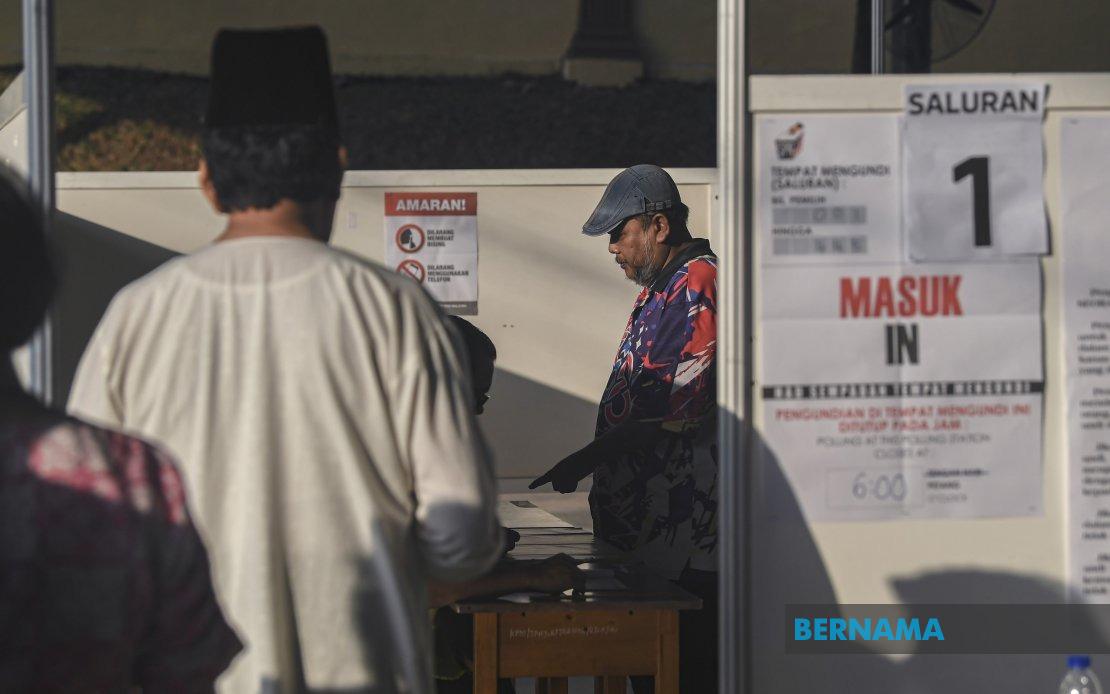
The 16th Johor State Election unfolded across the southern state on July 11, with several federal cabinet members and their deputies exercising their voting rights alongside millions of ordinary citizens. The presence of these high-ranking officials at polling stations underscored the significance of the electoral contest, which would determine the composition of Johor's government for the coming term. The participation of ministers across different portfolios reflected the nationwide importance of the Johor outcome, particularly given the state's economic weight and political influence within Malaysia's federal framework.
Datak Seri Azalina Othman Said, who holds the ministerial position in the Prime Minister's Department (Law and Institutional Reform), was among the earliest to cast her vote, arriving at Sekolah Kebangsaan Bandar Penawar in Pengerang at 8.15 am. Her early participation set the tone for the day's proceedings, demonstrating the leadership's commitment to the electoral process. Defence Minister Datuk Seri Mohamed Khaled Nordin followed shortly after, voting at 8.30 am at Sekolah Kebangsaan Rinting 1 in Masai, exercising his constitutional right as a registered voter despite his demanding portfolio responsibilities.
Other members of the federal government also made their way to polling stations across Johor. Plantation and Commodities Minister Datuk Seri Dr Noraini Ahmad cast her ballot at Sekolah Menengah Kebangsaan Dato' Onn in Batu Pahat at 8.50 am, while Deputy Works Minister Datuk Seri Dr Ahmad Maslan voted ten minutes earlier at Sekolah Kebangsaan Seri Bahagia in Benut. These officials represented different regions of Johor, reflecting the geographic spread of the polling exercise and the statewide nature of the electoral engagement.
Deputy Communications Minister Teo Nie Ching also participated in the voting process, casting her ballot at Sekolah Jenis Kebangsaan Cina (SJKC) Kulai Besar at 9.30 am. Her presence at a vernacular Chinese school as a polling location highlighted the inclusive nature of Malaysia's electoral infrastructure, accommodating diverse communities across the state. The coordination of voting among federal ministers, despite their various portfolios and geographic constituencies, demonstrated the unified approach of the government towards the democratic process.
The electoral machinery mobilised for the Johor state election was substantial in scale. A total of 1,076 polling centres were activated across the state, each equipped with multiple polling streams to manage the voting flow efficiently. The infrastructure accommodated 4,889 polling streams in total, allowing the electoral commission to distribute voters effectively and minimise congestion. This extensive network ensured that the 2.7 million registered voters across Johor could exercise their franchise within reasonable timeframes and distances from their respective residences.
The voting commenced simultaneously at 8.00 am across all polling locations, establishing a coordinated start to the day's electoral proceedings. The synchronised opening of polling centres reflected the meticulous planning required to conduct democratic elections across a geographically dispersed state, where accessibility and fairness required careful logistical coordination. The operational scale of the exercise, involving tens of thousands of election workers and officials, demonstrated the significant administrative resources deployed to conduct the state elections.
The electoral timetable for the day extended until 6.00 pm, providing voters with a ten-hour window to cast their ballots. This extended voting period was designed to accommodate working individuals, students, and others whose schedules might otherwise prevent them from participating. The timing reflected a recognition that maximising voter turnout required practical consideration of citizens' daily obligations and time constraints. The full-day voting window ensured that geographical factors and time availability would not serve as barriers to participation.
The campaign period leading up to election day had concluded at midnight the previous evening, marking the end of a two-week intensive period of political advocacy and messaging. Political parties and candidates had utilised this fourteen-day window to present their platforms, engage with voters, and mobilise their support networks. The strict demarcation between the campaigning phase and the voting day itself reflected established electoral norms designed to ensure that the final decision rested purely with voters exercising their individual judgment.
For Malaysian observers and political analysts, the Johor election carried implications beyond the state itself. As one of Malaysia's most economically significant states and a major political battleground, the outcome in Johor often signals broader patterns in Malaysian electoral behaviour and factional alignments within the ruling coalition and opposition blocs. The participation of federal ministers in the voting process, while routine in democratic practice, also served as a visible reminder of the interconnected nature of state and federal politics in Malaysia's constitutional framework.
The election itself represented an important checkpoint in Malaysia's continuing democratic practice, allowing residents of Johor to determine the direction of state governance. The active participation of federal office holders, including ministers responsible for critical national portfolios such as defence and communications, demonstrated that electoral participation transcended hierarchical distinctions within government. Their presence at ordinary polling stations, voting alongside their constituents, reinforced the principle of universal suffrage that underpins Malaysia's democratic system.

