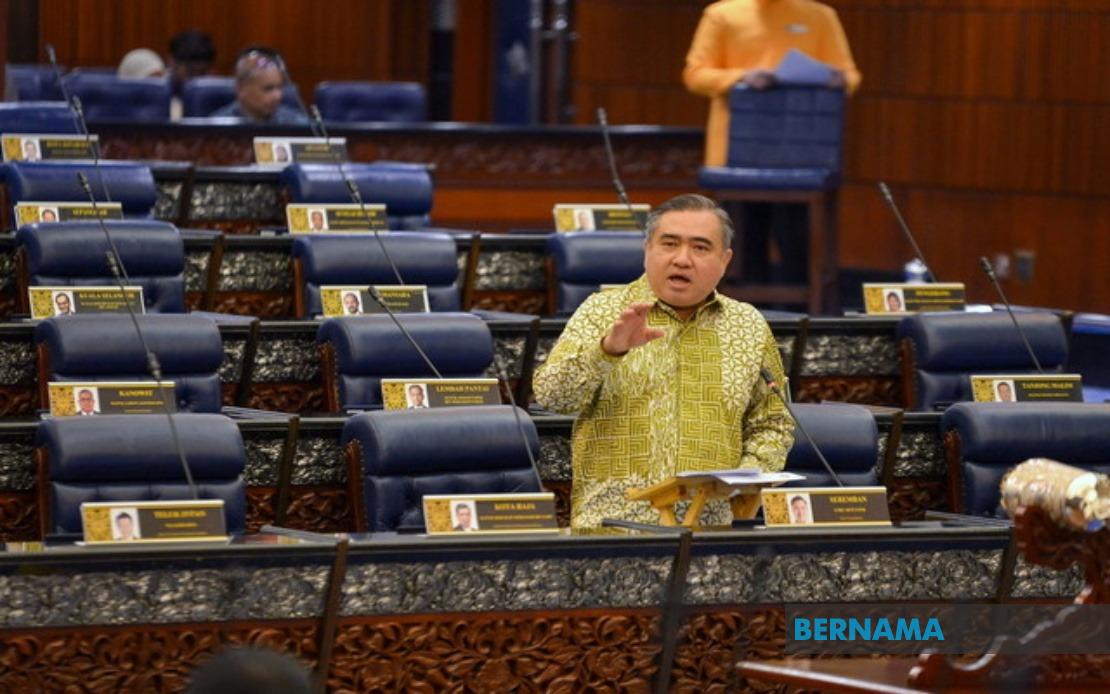
Transport Minister Anthony Loke has confirmed that the Federal Government will shoulder the financing burden for Johor's Elevated Autonomous Rapid Transit (E-ART) project, a decision reached after preliminary assessments revealed the venture cannot operate solely on private sector investment. Speaking in Parliament during oral question-and-answer proceedings, Loke acknowledged that while the appointed consortium would initially bear some financial responsibility, the scale and complexity of this major infrastructure undertaking demand substantial government backing to ensure viability.
The minister indicated that negotiations surrounding the project's financing architecture remain fluid, with critical details still being hammered out between government agencies and project stakeholders. The specific funding mechanisms, total financial commitment required, and repayment arrangements across the concession period have not yet been finalised, pending further technical and financial evaluations. These particulars will eventually be presented to Cabinet for scrutiny and formal approval before the Concession Agreement can be executed, marking a crucial gatekeeping step in the project's progression toward implementation.
Loke's statement addresses a substantive concern raised by Datuk Seri Dr Wee Ka Siong, the BN-Ayer Hitam member, who sought clarity on whether the Federal Government would provide direct financial support or proceed through a hybrid model incorporating private sector participation. Dr Wee also highlighted potential traffic implications when the Johor Bahru-Singapore Rapid Transit System Link commences operations in January 2027, several years ahead of the E-ART's anticipated completion, creating a complex transportation landscape requiring coordinated planning.
The government's commitment to fund the E-ART represents a strategic shift toward ensuring that critical transport infrastructure development is not constrained by commercial return thresholds. This approach recognises that high-capacity transit systems, particularly in high-growth corridors like Johor, generate broader economic and social benefits that transcend conventional commercial viability metrics. By absorbing substantial financial responsibility, the Federal Government positions itself to prioritise accessibility and regional connectivity over profit maximisation, a principle increasingly adopted across Southeast Asia's major urban expansion centres.
Construction is projected to commence within four years following the formal Letter of Acceptance, establishing a timeline that requires careful synchronisation with complementary transport initiatives already underway. The Transport Ministry, working alongside the Johor government, has crafted a comprehensive traffic management strategy designed to distribute vehicular load and passenger demand across multiple public transport modes. This coordinated approach acknowledges that no single system can absorb Johor's projected transport needs, necessitating an integrated network of complementary services operating in tandem.
The BAS.MY intercity bus network expansion illustrates this multi-modal strategy in action. The service will be augmented to encompass 28 routes utilising 254 vehicles, with a deliberate shift toward electric bus integration reflecting regional climate commitments and operational efficiency gains. This expansion extends well beyond Johor's urban core into secondary cities and suburban corridors, broadening accessibility for populations currently underserved by premium transit options. Furthermore, the Stage Bus Service Transformation (SBST) 2.0 programme will dedicate 157 buses specifically to the JB Sentral and Bukit Chagar corridors, with operations scheduled to commence in early 2027, coinciding strategically with the RTS Link launch.
Rail transport enhancement forms another critical pillar. The ministry is advancing procurement of twelve additional KTM Komuter Southern train sets to expand regional rail capacity, though final approval remains pending. As an interim measure, the newly launched Shuttle Selatan service, which commenced June 16, connects three significant transport nodes—Kulai, Kempas, and Johor Bahru—plus the Pasir Gudang corridor, operating fourteen daily trips with modest but meaningful capacity augmentation. These incremental improvements, though modest individually, accumulate into substantial system-wide enhancements when integrated strategically.
Fare policy emerged as a secondary concern during parliamentary proceedings, with Rusdan Rusmi, BN-Padang Besar, questioning whether the government would impose ceiling limits on public transport fares. Loke confirmed that fares across government-funded projects remain under direct government control, a mechanism that necessarily reduces commercial competitiveness but demands compensatory public funding. This control mechanism reflects a deliberate policy calculus prioritising affordability for lower-income commuters over commercial returns, effectively subsidising transport access as a social good rather than a purely commercial service.
The interconnection between fare regulation and government subsidy reveals fundamental economic tensions within public transport provision. When government-mandated fare caps prevent operators from achieving revenue thresholds necessary for self-sustainability, the shortfall must be bridged through direct budgetary allocations. Loke's articulation of this trade-off demonstrates grown governmental recognition that genuinely accessible transport systems require explicit financial support mechanisms rather than commercial viability alone. This philosophy underpins not merely the E-ART project but the entire emerging transport ecosystem Loke's ministry is constructing across Johor.
For Malaysian readers, particularly those in Johor and the Klang Valley, the E-ART decision carries substantial implications for regional connectivity and economic development trajectories. A functioning autonomous rapid transit system would fundamentally reshape transport patterns, potentially catalysing employment distribution across greater Johor and reducing congestion-related economic losses currently estimated in billions annually. The project signals government willingness to invest in transformative infrastructure despite demanding initial capital requirements, contrasting with previous eras when such initiatives faced protracted development cycles due to financing uncertainties.
The E-ART's eventual operation will also establish technological and operational precedents for autonomous transit systems across Malaysia and Southeast Asia. Success would demonstrate viability of automated rail systems in tropical, high-density environments, potentially influencing future transit planning decisions across the region. Conversely, delays or cost overruns would dampen enthusiasm for similar autonomous systems, making prudent project management essential beyond mere transport functionality.
Regionally, Malaysia's commitment to funding the E-ART positions it alongside Singapore and other advanced Southeast Asian economies prioritising rapid transit expansion. The January 2027 RTS Link launch will be complemented by these enhanced domestic transport systems, creating a more integrated cross-border mobility ecosystem. This coordination between Singapore's external connectivity and Malaysia's internal distribution capacity strengthens the bilateral economic relationship while facilitating labour mobility and trade facilitation across the Causeway and Second Crossing.
Looking forward, the detailed Cabinet deliberations on financing mechanisms will prove instructive for future infrastructure projects elsewhere in Malaysia. How the government structures repayment obligations, manages operational subsidies, and balances commercial considerations against social accessibility will establish templates potentially applicable to MRT3 expansions, provincial transport networks, and other pending initiatives. The E-ART thus represents not merely a Johor-specific development but rather a consequential policy statement regarding government's evolving relationship with infrastructure financing in an era of constrained fiscal space and competing developmental priorities.

