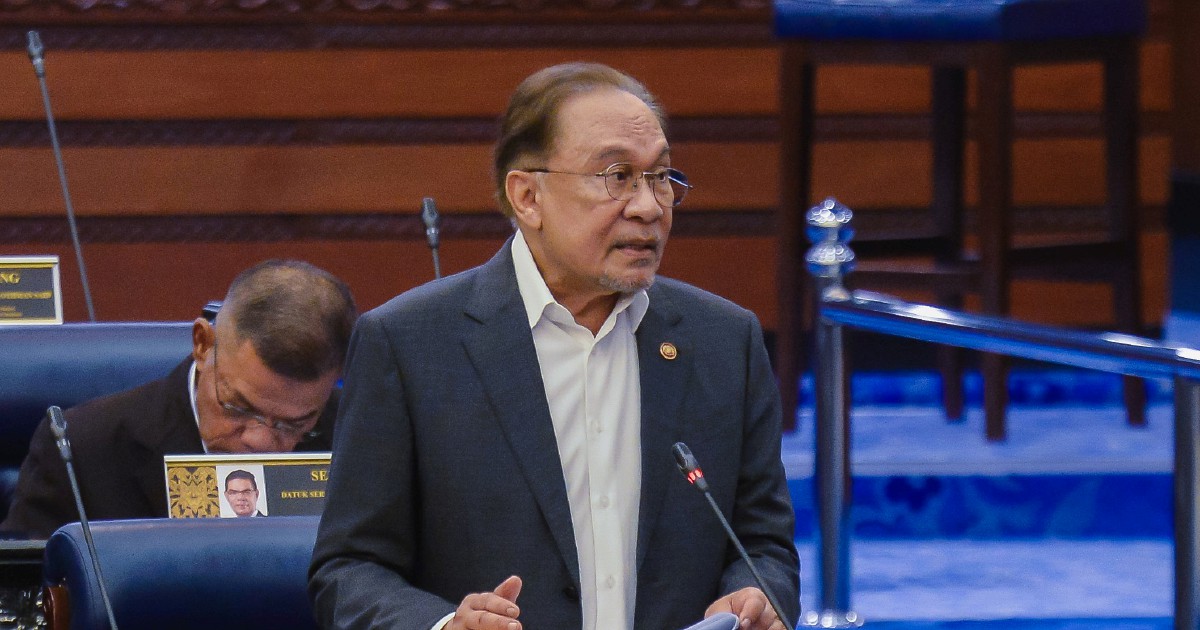
Prime Minister Datuk Seri Anwar Ibrahim has revealed that the federal government is engaged in discussions with Sarawak to raise the value of the state's special grant under the Malaysia Agreement 1963 (MA63), signalling Putrajaya's willingness to revisit the foundational fiscal arrangements that have governed the state's relationship with the federation since independence.
The MA63, which formed the constitutional basis for Sarawak's accession to Malaysia in 1963, contains specific provisions regarding federal grants and financial allocations to the state. These provisions have become increasingly contentious in recent years, with Sarawak's political leadership arguing that the original quantum has failed to keep pace with inflation, rising governance demands, and the state's expanding population and economic requirements.
For Malaysian policymakers and observers, this development represents a significant shift in how Putrajaya approaches the fundamental question of federal-state fiscal relations. Sarawak, with its strategic geographic position, substantial petroleum resources, and distinct political dynamics, has long held considerable leverage in negotiations with the federal centre. The state's historical tendency to form alliances with whichever bloc controls Kuala Lumpur has made maintaining cordial federal-state relations a priority for any government.
The timing of these negotiations carries particular weight given the broader political landscape in Malaysia. Regional tensions surrounding devolved powers, resource revenue sharing, and states' rights have periodically surfaced as flashpoints in federal politics. By engaging substantively with Sarawak on MA63 enhancements, Anwar's administration appears to be consolidating support among the East Malaysian states and demonstrating a commitment to honouring the constitutional bargain that underpinned Malaysia's formation.
Sarawak's fiscal position presents a compelling case for adjustment. The state government has long maintained that the fixed special grant has not evolved sufficiently to match the costs of delivering public services across a geographically vast territory with dispersed population centres. Infrastructure development, healthcare provision, and education expansion in rural areas demand substantially more resources than when the MA63 was originally drafted, creating genuine pressures on state finances despite revenues from the petroleum sector.
The substance of these talks remains unclear, including whether discussions centre on a straightforward increase to the existing grant amount, modifications to the indexation formula, or more complex arrangements involving tied versus untied funding. Different approaches would carry distinct implications for Sarawak's fiscal autonomy and Putrajaya's overall budget allocation strategy. The federal government must balance commitments to Sarawak against similar pressures from other states and federal development priorities.
From a regional Southeast Asian perspective, this negotiation exemplifies how long-standing federal arrangements require periodic recalibration to remain legitimate and effective. Other federations in the region, particularly those with significant geographic or demographic variation between constituent units, face analogous challenges. The manner in which Malaysia addresses Sarawak's claims may establish precedents affecting how other East Malaysian concerns are handled.
For investors and businesses operating in Sarawak, clarity on the state's future fiscal position holds material significance. An enhanced special grant would strengthen the state government's capacity to invest in infrastructure, potentially improving the business environment and competitive positioning. Conversely, protracted negotiations accompanied by political friction could introduce uncertainty affecting investment decisions and economic planning.
The broader context includes Sarawak's political evolution and its independent political character within the Malaysian federation. The state has demonstrated capacity to shift political alignments based on its assessment of which coalition best serves state interests. By proactively engaging with Sarawak on MA63 enhancement, Anwar's government signals recognition of this political reality and attempts to ensure that Sarawak remains a stable component of the federal coalition.
Historically, Sarawak's relationship with the peninsula has been marked by careful negotiation of the state's distinctive interests. The original MA63 contained provisions that guaranteed Sarawak certain powers and financial arrangements as preconditions for joining Malaysia. Whether the current federal administration can secure agreement on enhanced allocations while maintaining broader fiscal responsibility remains an open question that will unfold through these talks.
The outcome of these negotiations will likely establish expectations for similar discussions with Sabah, Malaysia's other major East Malaysian state, which has its own constitutional arrangements and financial grievances. How equitably Putrajaya manages these parallel discussions will test the coherence and fairness of its approach to federal-state relations more broadly.
These negotiations also reflect evolving recognition among federal leadership that East Malaysian concerns merit substantive engagement rather than procedural dismissal. The legitimacy of Malaysia's federal arrangements depends partly on whether constituent states perceive the system as respectful of their interests and constitutional standing. Anwar's visible involvement in Sarawak talks suggests his government considers this dimension important to national stability and cohesion.

