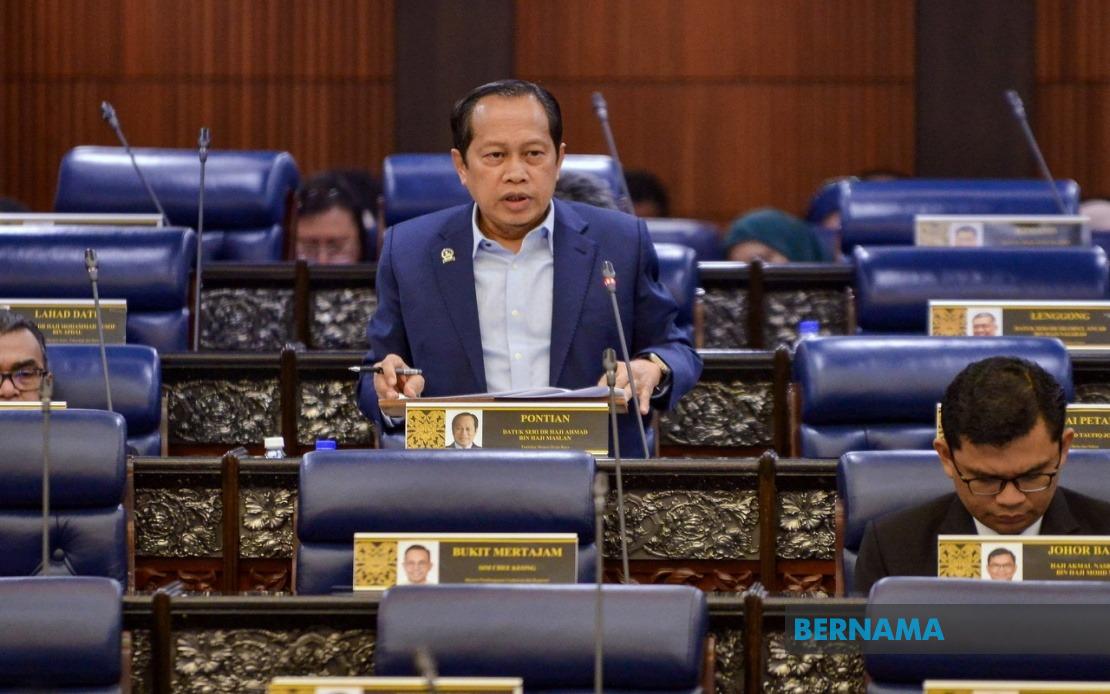
The Malaysian federal government has channelled RM1.2 billion towards compensating landowners affected by the Sabah Pan Borneo Highway Phase 1 Project, according to Deputy Minister of Works Datuk Seri Ahmad Maslan during parliamentary proceedings on July 14. In a parallel development, the Sarawak section of the same infrastructure initiative has attracted RM737 million in compensation disbursements. The government has assumed full financial responsibility for all compensation packages, resulting losses, and related administrative expenses to shield affected landowners from bearing any financial burden.
The revelation emerges against a backdrop of significant cost escalation that has drawn parliamentary scrutiny. The Sabah PBH Phase 1 undertaking has ballooned to RM24.889 billion, nearly doubling the RM12.86 billion initial projection established in 2015. WARISAN parliamentarian Isnaraissah Munirah Majilis representing Kota Belud pressed Ahmad Maslan for clarification on the cost inflation, prompting the deputy minister's detailed parliamentary response outlining the factors contributing to the substantial revision.
The primary catalyst for the cost restructuring traces to a fundamental shift in project delivery methodology implemented during 2019. When the federal government terminated the Project Delivery Partner model, it necessitated a comprehensive reassessment of the remaining construction phases and technical requirements. This transition to the Federal Conventional Contractor method required fresh engineering evaluations and updated cost calculations across the entire remaining scope, reflecting circumstances markedly different from the original 2015 assessment parameters. Ahmad Maslan attributed this pivotal transition to overarching national interest considerations that superseded the original contractual framework.
Decomposing the project into its constituent phases reveals the magnitude of individual components. Phase 1A encompasses 16 distinct work packages commanding RM10.9 billion in aggregate costs, whilst Phase 1B comprises 19 packages valued at RM13.989 billion. This bifurcated structure allows contractors and authorities to manage discrete sections with greater operational efficiency, though the compartmentalisation also contributed to the complexity of cost reassessment following the PDP termination.
Beyond administrative restructuring, Ahmad Maslan identified substantial technical factors underpinning the financial escalation. Modifications to the original design specifications, enhanced geotechnical engineering standards requiring sophisticated soil treatment methodologies, and expansive utility relocation operations have materially expanded the project's technical footprint. These adjustments typically emerge during advanced planning stages when detailed site investigations reveal subsurface conditions or infrastructure conflicts necessitating design refinements to ensure structural integrity and safety compliance.
The macroeconomic environment has substantially amplified construction expenses across the region. Inflationary pressures have eroded purchasing power for critical construction commodities, with particular impact on iron, bitumen, and cement—materials essential to highway construction. Global supply chain disruptions and domestic market dynamics have driven commodity price volatility, directly translating into elevated material costs. Simultaneously, machinery rental and labour expenses have escalated, reflecting both increased operator wages in a competitive employment market and enhanced rental rates for specialised equipment.
For Malaysian observers, this trajectory underscores the escalating complexity of major infrastructure financing in the contemporary economic environment. The Pan Borneo Highway programme represents one of Southeast Asia's most ambitious connectivity initiatives, designed to enhance regional integration across East Malaysian states. Sabah's economic development increasingly hinges on improved transportation links facilitating resource extraction, agricultural commerce, and tourism development. The project's ultimate completion, despite cost escalations, remains strategically essential for Sabah's long-term competitiveness within the Malaysian federation.
The compensation framework warrants particular attention from regional policymakers grappling with land acquisition challenges. By assuming full financial responsibility, the federal government has established a precedent that shields affected communities from bearing project-related financial losses. This approach contrasts with alternative models where landowners negotiate individual settlements with contractors or bear partial costs through reduced compensation packages. For Malaysia's development ambitions, such protective measures may enhance social cohesion in affected communities and reduce protracted compensation disputes that historically delayed major infrastructure projects.
Looking forward, the substantial land compensation disbursements reflect a broader commitment to managing the human dimensions of infrastructure expansion. As Southeast Asian nations pursue connectivity objectives and economic integration, balancing developmental imperatives against equitable treatment of displaced or affected populations remains increasingly contentious. Malaysia's approach through the PBH initiative offers instructive lessons for neighbouring countries contemplating comparable megaprojects, particularly regarding stakeholder management and financial transparency.

