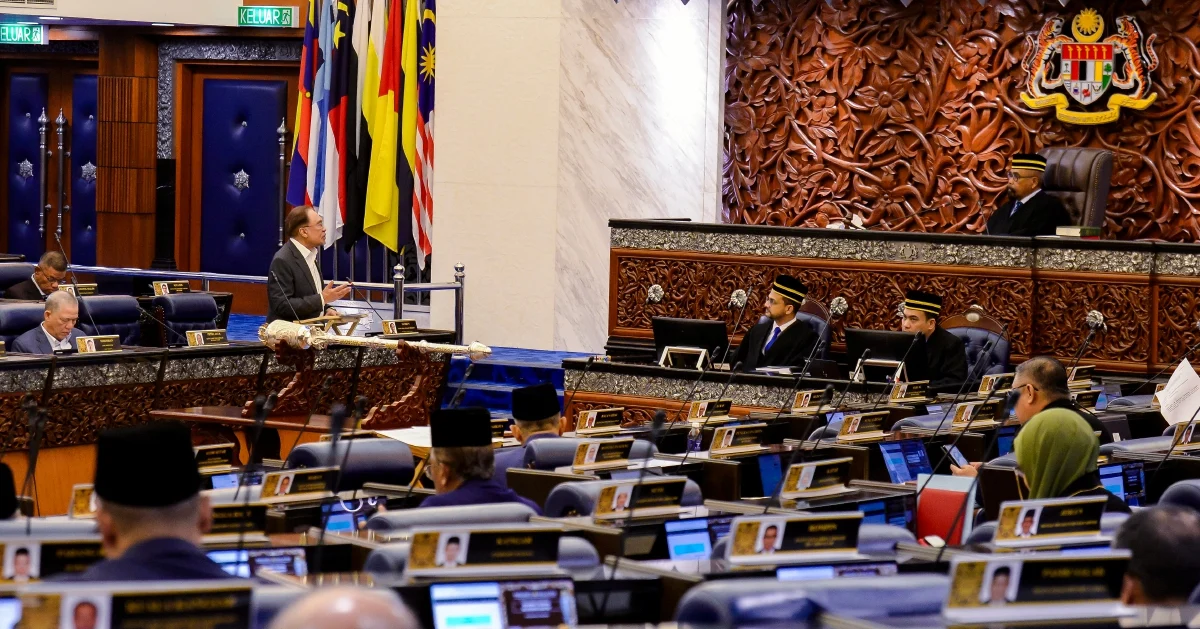
Prime Minister Datuk Seri Anwar Ibrahim has drawn a clear line on fiscal responsibility between federal and state authorities, declaring that Putrajaya should not routinely shoulder the financial consequences of policy decisions made at the state level. His statement addresses growing tensions over budgetary obligations and signals a more stringent approach to inter-governmental cost-sharing arrangements in Malaysia's federal system.
The Prime Minister's assertion comes amid broader discussions about the distribution of governance responsibilities and expenditures within Malaysia's layered administrative structure. State governments have considerable autonomy in implementing their own projects and policies, yet disputes frequently arise about who ultimately pays when those initiatives incur unforeseen or escalating costs. Anwar's comments suggest the federal administration intends to establish firmer demarcation lines on what constitutes federal liability versus state accountability.
This positioning reflects a significant shift in how Kuala Lumpur may approach its relationship with state-level administrations going forward. Rather than the federal government acting as a financial backstop for all state-initiated expenses, the principle being articulated is one of fiscal discipline where each level of government bears the consequences of its own planning and execution decisions. Such a framework could have far-reaching implications for how major development projects are conceptualised and funded across Malaysia's thirteen states and three federal territories.
For Malaysian readers, the practical significance of this stance relates to how public funds are allocated and managed. If implemented rigorously, state governments would need to conduct more thorough financial due diligence before launching major initiatives, knowing they cannot rely on federal bailouts. This could improve the quality of project planning at the state level, though it might also slow development in financially weaker states that have historically depended on federal support for infrastructure investments.
The federal-state financial relationship in Malaysia has historically been complicated by several structural factors. States derive their revenues from limited sources and often lack the tax bases available to the federal government. Consequently, many state administrations have traditionally relied on federal transfers and grants to fund their operations and development plans. Anwar's comments suggest this dependency model may need recalibration, with expectations of greater state self-reliance and more transparent cost projections before projects commence.
This principle would particularly affect how state governments approach large-scale infrastructure projects, social programmes, and strategic initiatives. Before breaking ground on major endeavours, state administrations would need absolute confidence in their financial projections and resource availability. The burden would shift to state planners to either reduce project scope, secure alternative funding sources, or build more generous contingency buffers into their budgets. Such discipline could either strengthen state-level governance or create implementation bottlenecks, depending on how strictly the principle is enforced.
For multinational corporations and investors operating in Malaysia, Anwar's statement carries implications for project certainty. If state governments can no longer rely on federal financial rescue packages, investment decisions tied to major state infrastructure must factor in the genuine risk that projects could stall or be scaled back if costs escalate. This transparency, while potentially reducing speculative overcommitment, could also deter some investment unless states demonstrate credible financial management.
The Southeast Asian context adds another dimension to this discussion. Throughout the region, federal-state fiscal tensions are increasingly visible. Thailand, Indonesia, and the Philippines all grapple with similar questions about where responsibility should lie for managing the financial consequences of subnational government decisions. Malaysia's approach could influence how neighbouring countries manage their own hierarchical governance arrangements, particularly regarding accountability and financial prudence at state and provincial levels.
Anwar's clarification also reflects the fiscal pressures facing the federal government itself. With Malaysia's debt burden remaining elevated and federal revenues facing constraints, Putrajaya has limited capacity to continuously absorb state-generated costs. By articulating a boundary on federal liability, the Prime Minister is essentially signalling that the federal government must prioritise its own fiscal sustainability and core functions rather than functioning as an unlimited fund for state-level decisions.
The statement does not eliminate federal support for states entirely but rather reframes it as discretionary rather than automatic. Federal grants and loans would presumably continue, but their allocation would likely depend on demonstrable state-level fiscal management and justifiable need rather than blanket coverage of all state expenditures. This distinction creates incentives for states to manage their finances more prudently and present compelling cases for federal assistance when genuinely warranted.
Implementing this principle consistently across all thirteen states will test the federal government's resolve, particularly when politically sensitive projects in key states face funding shortfalls. State leaders may resist what they perceive as a withdrawal of federal support, especially those governing less developed regions with genuine resource constraints. The practical application of Anwar's statement will ultimately reveal whether this represents a fundamental restructuring of federal-state relations or rhetoric designed to encourage greater state accountability.
Longer term, establishing clearer fiscal boundaries could strengthen Malaysia's overall governance framework. States forced to live within their genuine means may become more efficient administrators, while the federal government gains breathing room to address national priorities without being perpetually stretched thin by state-level emergencies. However, the transition period will likely involve difficult negotiations and potentially deferred development initiatives in states lacking independent financial capacity, making the next few years a critical test of how firmly this principle will be upheld.

