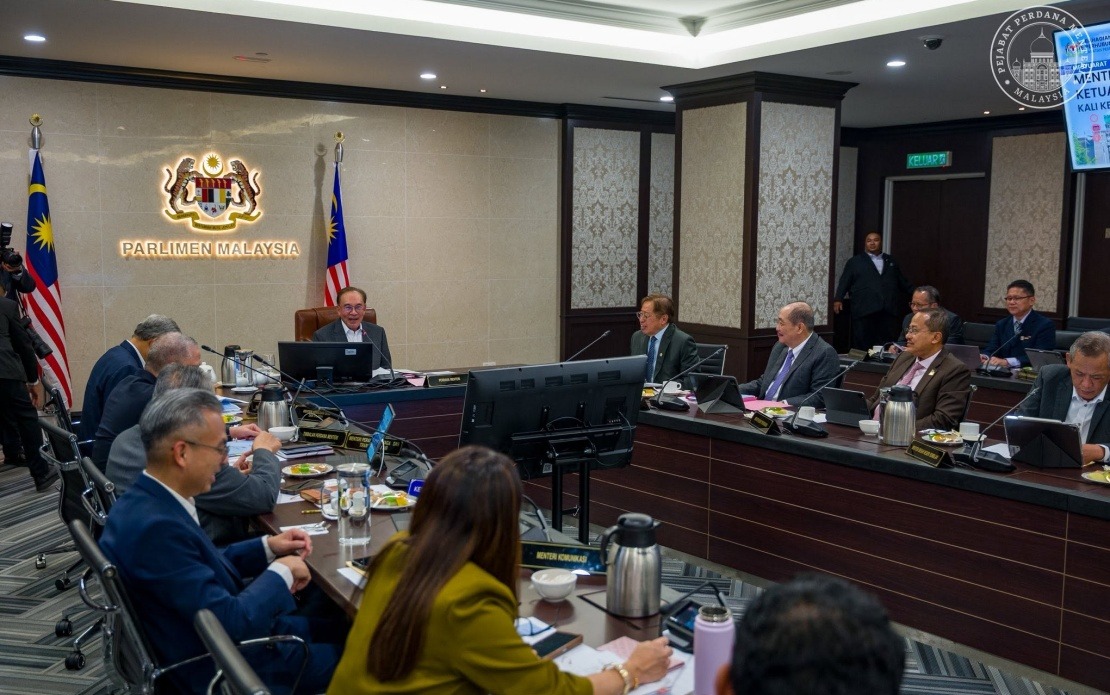
Prime Minister Datuk Seri Anwar Ibrahim brought together the nation's Menteris Besar and Chief Ministers at the Parliament Building to sharpen Malaysia's economic strategy in the face of mounting external pressures and environmental challenges. The 149th such gathering underscored the government's determination to pursue coordinated action across federal and state administrations, moving beyond siloed policymaking toward a unified vision for national recovery. The summit's timing reflects concerns over how international instability—particularly regional conflicts emanating from West Asia—could derail Malaysia's growth trajectory and investment appeal.
The deliberations centered on fortifying Malaysia's economic resilience as geopolitical uncertainty weighs on global markets and supply chains. West Asian tensions have already disrupted energy prices, trade routes, and investor confidence across Asia-Pacific economies, prompting Malaysian policymakers to recalibrate expectations and identify domestic levers for stimulating growth. The meeting signaled that rather than waiting passively for global conditions to improve, the government is mobilizing state-level resources and capabilities to cushion the economy against external shocks. This reflects a maturing recognition that federal-state coordination remains critical to effective crisis management, particularly when economic challenges transcend administrative boundaries.
Beyond immediate economic concerns, the assembled leaders grappled with emerging environmental threats that carry serious implications for food production, water management, and public health across the nation. El Niño, the warming ocean pattern expected to intensify over coming months, poses multifaceted risks that demand rapid response. Higher temperatures, reduced rainfall in vulnerable regions, and increased wildfire potential could strain agricultural output at a time when global food supplies already face pressure from conflicts and climate disruption. Malaysia's tropical climate and dependence on seasonal monsoons mean that prolonged dry spells would threaten both peninsular and East Malaysian farming communities, potentially elevating food prices for consumers and pressuring household budgets.
Water security emerged as a paramount concern during discussions, reflecting the sector's vulnerability to prolonged droughts. Several Malaysian states, particularly in the north and east, have experienced water rationing in previous dry spells, prompting authorities to review dam management protocols, pipeline maintenance, and demand-side conservation measures. The consensus reached during the meeting suggests a commitment to auditing state water infrastructure and implementing preventive measures before El Niño impacts materialize. For an increasingly urbanized nation, any disruption to water supply carries acute political and social consequences, making this dimension of the meeting particularly consequential for public confidence in governance.
Prime Minister Anwar emphasized that the gathering reinforced a commitment to policy integration and operational efficiency, signaling frustration with traditional departmental silos that often prevent timely, coordinated responses. By bringing state executives into a collective deliberation, the federal government aims to ensure that economic initiatives, environmental preparedness strategies, and social welfare measures are calibrated at multiple administrative levels simultaneously. This approach acknowledges that state governments control significant development levers—including land planning, licensing, and local infrastructure—and that federal objectives cannot succeed without their genuine buy-in and active participation.
The meeting also underscored an ambition to attract quality foreign investment despite global headwinds. Malaysia's manufacturing base, digital economy, and resource sectors depend on continuous capital inflows and technology transfer. The prime minister's emphasis on strengthening economic competitiveness reflects awareness that rival Southeast Asian economies, particularly Vietnam and Thailand, are aggressively courting multinational firms seeking alternatives to China-dependent supply chains. By demonstrating federal-state alignment and policy predictability, Malaysian authorities aim to project stability and operational proficiency to potential investors evaluating regional options.
Critically, the forum reaffirmed the spirit of federalism by positioning state governments as partners in national recovery rather than subordinate administrators. This messaging carries particular weight in Malaysia's competitive political landscape, where state administrations controlled by opposition parties have sometimes felt excluded from major decision-making processes. By convening this 149th gathering with emphasis on consensus-building and shared responsibility, Anwar's government signals respect for federal structures and attempts to depoliticize responses to economic and environmental challenges.
The implications for ordinary Malaysians are substantial. Economic revival efforts could translate into job creation and wage growth, though much depends on execution and whether benefits genuinely trickle down to workers in manufacturing, services, and agriculture. El Niño preparedness could determine whether households face food price spikes, water restrictions, or energy rationing during the dry season. The meeting's focus on people-centric implementation suggests an acknowledgment that top-down policies often fail without frontline accountability and responsiveness to citizen concerns.
Looking forward, the critical test lies in converting this collaborative gathering into tangible outcomes. State governments must implement federal economic initiatives while customizing them to local contexts; water authorities must invest in infrastructure upgrades; agricultural extension services must advise farmers on drought-resistant practices. The meeting's success ultimately hinges not on rhetoric but on whether the federal government can sustain coordination mechanisms, provide necessary funding, and hold all tiers of administration accountable for delivering results that enhance both economic prosperity and environmental resilience for all Malaysians.