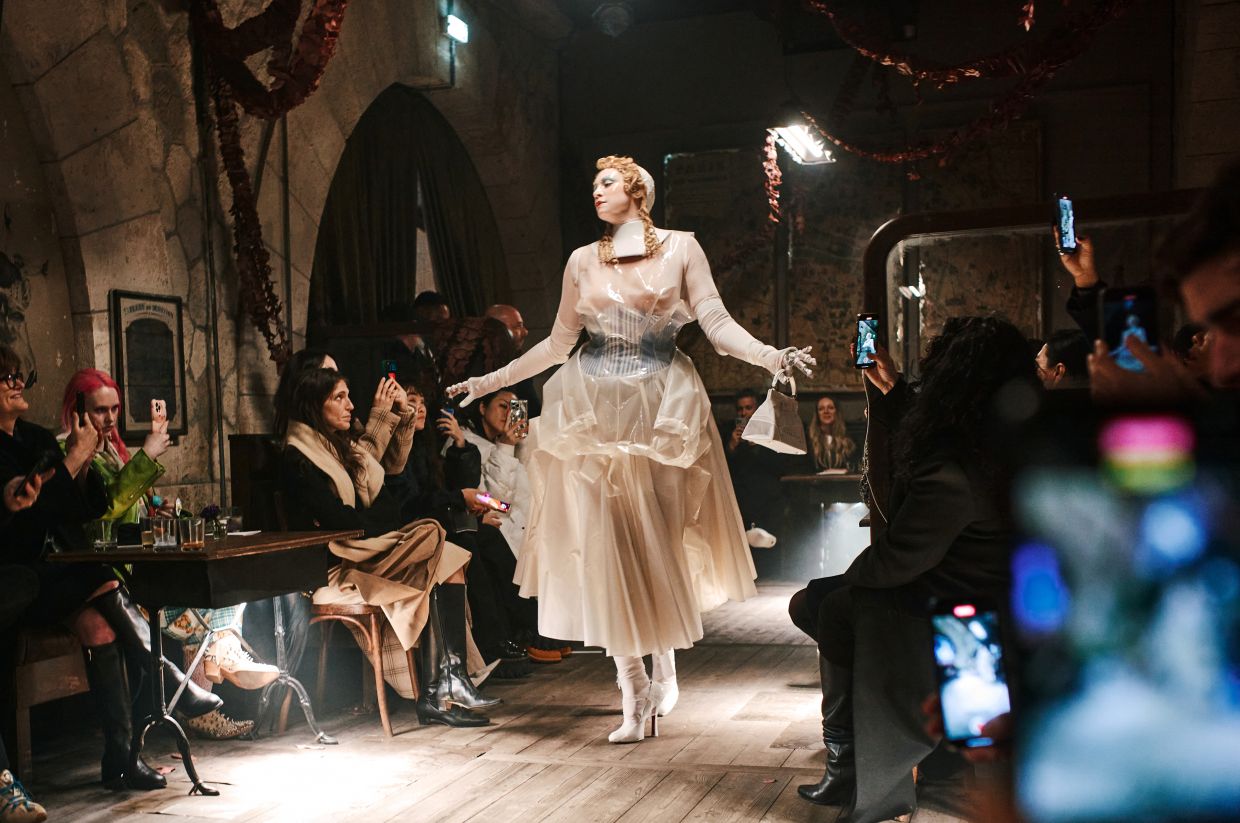
The Metropolitan Museum of Art's forthcoming exhibition dedicated to John Galliano represents one of contemporary fashion's most delicate balancing acts: honouring an undeniably influential designer while confronting the gravity of his past hate speech. The retrospective, set to launch with next year's Met Gala, would make Galliano only the third living designer to receive such a solo honour at the prestigious institution, placing him alongside Yves Saint Laurent and Rei Kawakubo. Yet this elevation comes at a moment of acute tension, with antisemitism rising sharply and Jewish communities grappling with a series of violent incidents across major American cities, most recently a stabbing attack near a Manhattan Jewish community centre.
The museum's leadership, recognising the potential minefield, has undertaken extensive consultations with Jewish community leaders over the past year. In May, curators convened a closed-door meeting at the Met bringing together prominent voices including Rabbi Rick Jacobs, president of the Union For Reform Judaism in North America, and Rabbi Joshua Davidson of Temple Emanu-El, located mere blocks from the museum. These conversations were not ceremonial pleasantries but substantive engagements aimed at securing community perspectives on whether the institution could ethically mount such an exhibition without appearing to whitewash Galliano's actions or trivialise the pain they caused.
Galliano's fall from grace remains one of fashion's defining cautionary tales. During his thirteen-year tenure as creative director of Dior, from 1996 to 2011, he transcended mere fashion design to become a world-building visionary, transforming the French heritage house into a global commercial and artistic force. His mastery of the bias-cut dress and his theatrical sensibility made him one of the industry's most celebrated figures. Yet in 2011, video footage emerged of him making antisemitic remarks in a Paris bar, including the statement "I love Hitler," alongside other shocking comments that immediately became international news. The consequences were swift and severe: he was dismissed from Dior, convicted of inciting hatred in a French court, and effectively exiled from the fashion establishment.
What followed, however, was a carefully documented period of rehabilitation that Galliano undertook with evident seriousness. He entered therapy and worked extensively with both Rabbi Lord Jonathan Sacks in London and Abe Foxman of the Anti-Defamation League in New York, committing himself to education about Judaism, antisemitism, and Holocaust history. In 2014, he resurged as creative director of Maison Margiela, beginning a decade-long tenure that saw his designs gradually reintegrated into fashion's highest echelons. Today, celebrities including Zendaya, Amal Clooney, and Tyla regularly wear his vintage designs on red carpets worldwide, while his pieces command record prices at auction houses. To many observers, fashion has collectively moved past any lingering discomfort with Galliano's presence in the industry.
Yet the museum's approach suggests a more nuanced understanding of what redemption requires in the public sphere. Thomas Bolton, the Met's director, has acknowledged that while Galliano's contributions to fashion history are "undeniable," the institution cannot simply celebrate his aesthetic achievements without meaningfully engaging with his past. Bolton revealed that he had been conceptualising a Galliano exhibition since 2010 but did not pursue it seriously until 2024, when both he and the museum's board determined that deeper consideration was necessary. Crucially, Bolton denied that hesitation stemmed from anxiety about Galliano's history, instead framing the current moment—one of intensifying antisemitism and heightened communal vulnerability—as making the exhibition even more relevant and timely.
The conversations with Jewish leaders yielded important guidance for how the exhibition might be structured and presented. Participants referenced the Jewish principle of teshuvah, or genuine repentance, emphasising the religious and moral importance of second chances when sincere transformation has occurred. Yet they also urged the museum to view the retrospective as an educational opportunity rather than a straightforward celebration. Rabbi Joshua Davidson suggested that the museum should "leverage it as an opportunity to teach about the reality of antisemitism, and somehow wrap into the exhibition the importance of fighting back and the dangers of antisemitism in this moment." This framing transforms the show from a conventional retrospective into something more ambitious: a space where artistic achievement and historical accountability coexist.
Bolton's proposed solution—an "orientation gallery" that delineates what he terms "the rupture" defining Galliano's career—attempts to operationalise this dual approach. The curator has committed to using Galliano's own words as much as possible rather than sanitised interpretation, a choice that emerged directly from his dialogues with community leaders who stressed that clarity and directness must supersede euphemistic language. Bolton also acknowledged that his role is not to present Galliano's own version of events but rather the most historically accurate account, a distinction that subtly but importantly centralises institutional truth-telling over personal narrative. Additionally, the museum is considering an online forum to extend discussions beyond the physical exhibition, potentially creating space for continued dialogue and disagreement.
The precedent matters enormously for how institutions globally navigate the rehabilitation of controversial figures. Fashion, as an industry, has often chosen to separate artistic merit from personal conduct, allowing talented but morally compromised individuals to continue their work with minimal institutional friction. The Met's approach signals a different model: one that does not deny Galliano's rehabilitation or contributions but insists that public institutions have a responsibility to contextualise and educate rather than celebrate uncritically. For Malaysian and Southeast Asian readers, this moment resonates beyond the fashion world, raising broader questions about how societies reckon with past wrongdoing, how redemption functions in public spaces, and whether artistic genius can or should be decoupled from ethical accountability.
The exhibition also reflects the particular vulnerabilities of contemporary Jewish communities across Western cities. Antisemitic incidents have proliferated in recent years, ranging from street-level harassment to organised violence. Within this context, institutions like the Met cannot treat Galliano's rehabilitation as a purely individual matter; they must acknowledge how celebrating a designer with his specific history might be received by communities living with heightened anxiety. The fact that the museum's leadership sought blessing and input rather than proceeding unilaterally suggests an emerging recognition that institutional choices carry social weight and moral consequence.
Galliano himself emerged from these consultations, according to Rabbi Jacobs, as unexpectedly forthcoming and sincere. Jacobs noted that the designer "was open" and "looked right at us and spoke in a clear way, not as if he had memorised talking points," suggesting genuine engagement rather than performative redemption. Jonathan Greenblatt of the Anti-Defamation League stated that Galliano's "efforts to repair the damage his words caused and to learn from that incident should be applauded." Yet approbation from community leaders, however significant, does not automatically resolve the exhibition's complexity. The retrospective will inevitably attract visitors with vastly different views on forgiveness, accountability, and whether certain actions render individuals unworthy of institutional honour.
The Met Gala launch adds another layer of scrutiny, as the event represents perhaps fashion's most globally observed moment, amplified across social media and traditional press. Every design worn, every statement made, every artistic choice on display will be interpreted through the lens of whether the institution is genuinely grappling with Galliano's history or simply using Jewish community approval as cover for business as usual. The exhibition's success will depend not on unanimous agreement—which is impossible and perhaps undesirable—but on whether it demonstrates that serious, good-faith institutional reckoning with past harm is possible without requiring perpetual exile or career annihilation.
Ultimately, the Galliano exhibition represents a test case for how Western cultural institutions can balance artistic legacy with moral accountability in an era of heightened identity consciousness and communal pain. For the fashion world specifically, it may signal a shift away from the industry's historical tendency to compartmentalise personal conduct from professional achievement. Whether the Met succeeds in threading this needle—celebrating Galliano's undeniable contributions to fashion while maintaining rigorous honesty about his past and its ongoing implications—will offer important lessons for how other institutions, globally and across sectors, might navigate similar challenges.

