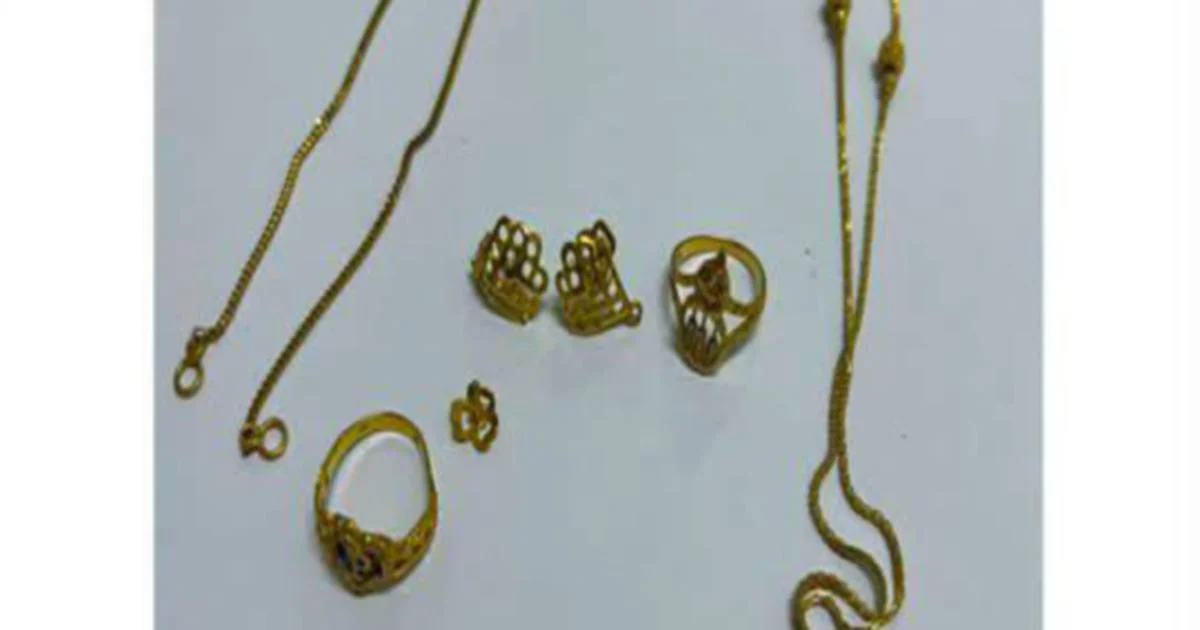
Police in Ipoh have arrested a mother and her two children for defrauding a 67-year-old woman of jewellery valued at around RM8,000 by fraudulently posing as social welfare officers. The arrests represent yet another troubling instance of elderly residents falling victim to carefully orchestrated scams that exploit trust in government institutions and the vulnerability of senior citizens who often lack digital literacy or awareness of modern criminal tactics.
The scheme involved the three family members approaching their target under the pretence of conducting an official inspection or assessment related to government welfare benefits. By adopting the guise of legitimate government workers, they gained access to the woman's home and earned sufficient trust to manipulate her into surrendering valuable personal items. This methodology underscores how criminals leverage institutional authority to overcome the natural caution that elderly individuals might otherwise exercise when dealing with strangers.
The value of the stolen jewellery—approximately RM8,000—represents a substantial amount for most ordinary households and particularly devastating for retirees living on fixed incomes. For many senior citizens in Malaysia, such accumulated jewellery often represents both financial security and emotional significance, passed down through generations or carefully purchased over decades. The loss consequently carries implications that extend beyond mere material value into the realm of psychological harm and eroded confidence in public services.
This case exemplifies a growing trend across Malaysia and Southeast Asia where criminal syndicates systematically target elderly populations through impersonation scams. By assuming the identities of government officials—whether from welfare, tax, or health agencies—perpetrators exploit the instinctive respect many older Malaysians hold for authority figures and government institutions. The sophistication of such operations, where family members coordinate and execute the fraud together, suggests either organized criminal networks or criminal apprenticeships being passed down family lines, both scenarios indicating a concerning evolution in scam methodologies.
The decision to arrest all three family members indicates that investigators determined each played a material role in executing the fraud rather than treating any as unwilling participants. This raises questions about the nature of family-based criminal enterprises and whether such involvement reflects desperation, coercion, or deliberate criminal intent cultivated within household dynamics. Understanding these motivations would inform more targeted prevention and rehabilitation strategies.
For elderly Malaysians and their families, this incident reinforces critical lessons about verifying identities before granting access to homes or surrendering valuables. Legitimate government officials typically carry visible identification, announce themselves formally, and can be verified through direct contact with official agency phone numbers. Yet many seniors, particularly those who live alone or isolate themselves from family support networks, lack the resources or confidence to conduct such verification without feeling they might insult or obstruct government business.
The Perak police operation responsible for these arrests demonstrates ongoing commitment to combating financial crimes against vulnerable groups, though the persistence of such scams suggests that awareness campaigns and community outreach efforts require strengthening. The police and social welfare agencies should consider joint initiatives where genuine welfare visits are communicated in advance and residents can expect official contact with proper credentials readily available for inspection.
State authorities might also evaluate whether their own systems inadvertently assist fraudsters by maintaining public-facing processes that criminals can superficially replicate. If scammers possess enough knowledge about how welfare assessments typically occur to convince elderly residents, this suggests a need for security improvements in how official communications and home visits are conducted and verified.
The arrest of this family unit also signals to other potential perpetrators that law enforcement takes such crimes seriously and will pursue multi-person conspiracies with determination. In jurisdictions where elderly fraud receives lower priority, criminal groups become emboldened. Conversely, high-profile arrests and prosecutions contribute to deterrence, particularly when sentences appropriately reflect the vulnerability and impact on victims.
For the victim in this case, recovery of stolen jewellery is unlikely even if the items are located, as they may have been quickly sold or pawned. Her recourse depends on whether suspects are prosecuted, convicted, and ordered to make restitution—an outcome that remains uncertain. More immediately, she faces the psychological trauma of having her home invaded, her trust violated, and her sense of security shattered by those claiming official sanction.
The broader implications for Malaysian society centre on the tension between institutional trust and personal security. As governments increasingly encourage residents to cooperate with officials for legitimate purposes—welfare assessments, tax compliance, health initiatives—criminals exploit this cooperative spirit. Resolving this tension requires public education that emphasizes healthy skepticism without breeding cynicism toward genuine government services.
Moving forward, community groups, family members, and residential associations should establish mechanisms for assisting isolated elderly residents in verifying official contact. This might include clear guidance on identifying fraudulent callers, protocols for family members to check in regularly, and neighbourhood watch programmes specifically designed to protect seniors from such targeted scams. The arrest of this family provides an opportunity to renew public awareness campaigns specifically directed at senior citizens and their caregivers across Malaysia.

