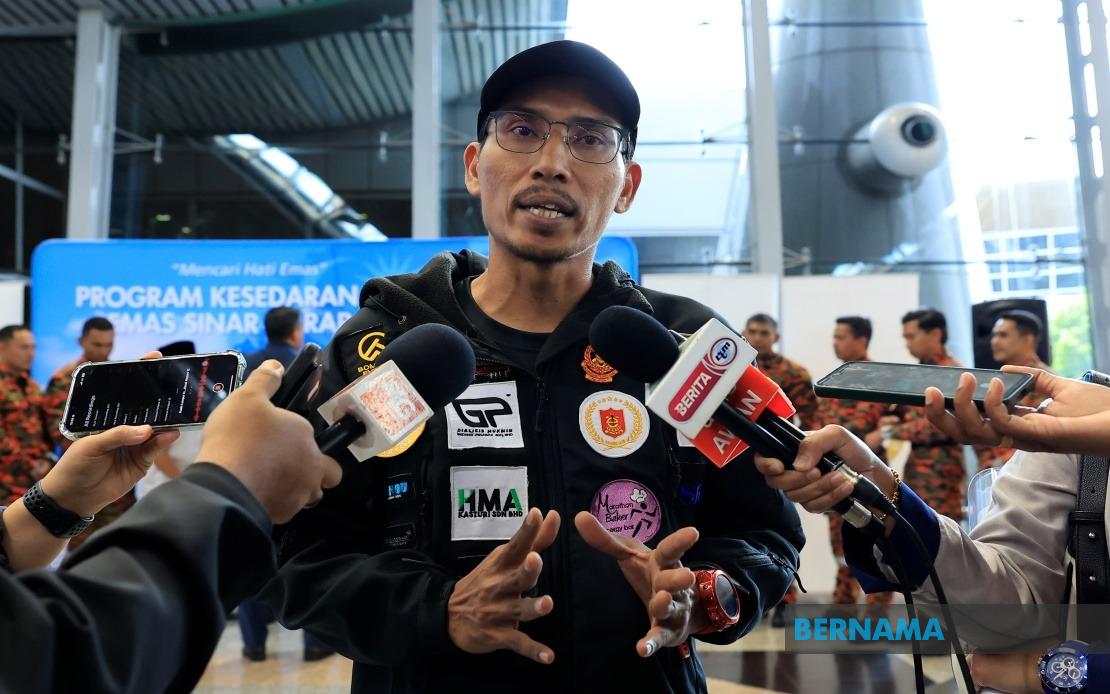
The family of Mohd Fakhrul Munir Mohd Isa, a 44-year-old member of Malaysia's Fire and Rescue Department special forces unit, is clinging to hope as search efforts continue in Nepal following devastating flash floods and landslides that swept through the Rasuwa region. The experienced climber, known professionally as Loe, vanished alongside nine other Malaysians who were trekking towards Everest Base Camp when the natural disaster struck, cutting off communication and leaving rescue teams to navigate treacherous terrain in their search for the missing group.
Speaking on behalf of the family in Sik, Kedah, Mohd Fakhrul Munir's brother Mohd Saiful Munir, 46, expressed the household's determination to maintain optimism during this uncertain period. He described how the family has interpreted the prolonged silence from the disaster zone not as a harbinger of tragedy, but rather as an inevitable consequence of the catastrophic event that has devastated the area. The family's stance reflects a measured approach that balances hope with the sobering recognition that such situations can produce unpredictable outcomes, particularly in regions where infrastructure has been compromised by natural calamities.
Mohd Saiful Munir, who serves as an operations officer at the Port Klang Fire and Rescue Station, revealed that continuous prayer has become central to the family's coping mechanism. The household's spiritual and emotional focus has shifted entirely towards the safe recovery of Loe and his entire expedition team, with relatives and extended family members united in their daily supplications. Yet beneath this hope lies a mature acknowledgment that circumstances may not unfold according to their wishes. In a poignant reflection on the uncertainty ahead, Mohd Saiful Munir articulated the family's readiness to accept whatever outcome emerges, however difficult that acceptance might prove to be.
The mountaineering community and rescue authorities have noted that Loe's expertise and frequent travels to Nepal render such expeditions routine elements of his professional and recreational life. According to his brother, the accomplished climber visits Nepal between three and five times annually, treating the Himalayan nation almost as a second home where he pursues his passion for mountaineering and scaling some of the world's most challenging peaks. Beyond climbing, Loe maintains an active involvement in cycling, reflecting a lifestyle centred on adventure and physical challenge. His deep familiarity with Nepal's terrain and climbing culture has actually intensified rather than diminished the family's confidence in his ability to navigate extraordinary circumstances.
Communication with Loe ceased during his preparation phase for the expedition, approximately one week before his scheduled departure for Nepal. Based on the group's predetermined itinerary, rescue coordinators have determined that the ten-member party was most likely traversing a valley region when the flash floods and accompanying landslides were triggered. This geographical assessment has guided search and rescue operations, as teams attempt to locate survivors in areas that match the expedition's planned route. The isolation of valley terrain, while scenic and relatively accessible during favourable weather, transforms into a death trap when seasonal flooding occurs.
Mohd Saiful Munir has adopted a cautious stance regarding information dissemination, determining to rely exclusively on official communications from Malaysian and Nepalese authorities rather than engaging with unverified reports circulating through media channels. This disciplined approach reflects both his position within Malaysia's emergency services sector and the family's desire to base their hope on factual developments rather than speculation. He has characterized their loved one's predicament as an entrapment scenario—a situation where Loe and his companions are likely alive but geographically isolated and unable to establish contact with the outside world owing to topographical barriers, environmental hazards, or damaged communication infrastructure.
The Malaysian Fire and Rescue Department's director-general, Datuk Seri Nor Hisham Mohammad, confirmed the involvement of two JBPM personnel in the missing group. Beyond Mohd Fakhrul Munir Mohd Isa, the second officer identified was Mohd Sani Harul, who holds the position of deputy director within the Planning and Research Division. These two professionals represented Malaysia's emergency services sector during the expedition, a detail that has mobilized additional government resources and diplomatic channels in coordinating the response. The remaining eight members of the expedition comprised private citizens and other Malaysian adventurers who had organized the Everest Base Camp trek.
The disaster in Rasuwa represents one of Nepal's periodic weather-related catastrophes, where seasonal monsoons trigger cascading geological failures across the mountainous landscape. These events occur with relative regularity during specific seasons, presenting inherent risks to trekking groups regardless of their preparedness level or expertise. The particular vulnerability of valley routes during such events has long been documented in mountaineering literature and accident reports, yet adventurers continue to navigate these passages as integral components of major Himalayan expeditions. The juxtaposition of Loe's extensive experience against the indiscriminate destructive power of natural disasters underscores why even skilled mountaineers face genuine jeopardy in such circumstances.
Malaysia's diplomatic and emergency services apparatus has engaged actively with Nepalese counterparts to coordinate rescue operations across the affected region. The involvement of government personnel in the missing group has elevated the incident's profile within both nations' official channels, potentially accelerating response coordination and resource allocation. Search teams have faced considerable obstacles owing to terrain damage, weather unpredictability, and the sheer difficulty of accessing remote Himalayan valleys in the aftermath of environmental catastrophe. Each passing day presents both challenges and possibilities—challenges in locating survivors across vast, unstable terrain, yet possibilities that trapped individuals may have found shelter and are simply awaiting rescue.
The family's measured optimism, grounded neither in blind hope nor premature despair, reflects the emotional complexity inherent in waiting for news of loved ones caught in distant disasters. Their determination to maintain faith while simultaneously preparing for adverse possibilities demonstrates the psychological resilience required during extended periods of uncertainty. For the broader Malaysian community, particularly those engaged in outdoor adventure pursuits and rescue professions, this incident serves as a reminder of both the allure and the genuine peril associated with high-altitude mountaineering in regions prone to severe weather events.

